How Account Executives Can Use LinkedIn to Understand Buyer Priorities
In B2B sales, the difference between a successful Account Executive and an average one often comes down to one thing: a deep understanding of the buyer's priorities. A generic sales pitch that ignores what a prospect truly cares about is destined to fail. To win complex deals, you must align your solution with the problems your buyers are actively trying to solve right now.
But how do you uncover these priorities? You could wait for the discovery call, but top performers don't wait. They use LinkedIn as an intelligence-gathering tool to understand their buyers' world long before the first conversation. This guide provides a clear, actionable framework for using LinkedIn to decode your buyer's priorities, helping you craft a message that resonates and a sales process that closes.
1. Look Beyond the Job Title: Analyze Their Digital Body Language
A prospect's job title tells you what they do, but their activity on LinkedIn tells you what they care about. This is their "digital body language," and it's a goldmine of information.
- What They Post and Share: The content a person creates or shares is a direct reflection of their professional focus. A VP of Sales sharing articles about "improving forecast accuracy" is telling you exactly what's on their mind.
- What They Like and Comment On: This is even more powerful. Likes and comments are unfiltered signals of interest. If a prospect is consistently engaging with posts about a specific challenge (e.g., "reducing customer churn"), that challenge is likely a top priority for them.
- Who They Follow: Look at the influencers and companies they follow. Are they following experts in a particular niche? This can reveal the direction of their professional development and strategic interests.
2. Decode Company-Level Priorities
Individual priorities are often a reflection of broader company goals. The company's activity on LinkedIn can provide crucial context.
- Analyze Job Postings: A company's job descriptions are a public declaration of their strategic investments. Are they hiring a team of data scientists? They're likely focused on AI and data analytics. Are they hiring their first-ever Head of Customer Success? They are prioritizing retention.
- Monitor Company Page Updates: Pay close attention to what the company is announcing. A new product launch, a partnership with another company, or an expansion into a new market are all significant events that create new priorities and needs.
3. Listen in on Industry Conversations
Your buyers don't operate in a vacuum. They are part of larger industry conversations where they discuss their challenges openly.
- Join Relevant LinkedIn Groups: Find niche groups related to your industry or your prospect's role. Don't go in to pitch; go in to listen. You'll find prospects asking for advice, complaining about problems, and discussing potential solutions.
- Follow Industry Hashtags: Track hashtags relevant to your field (e.g.,
#SalesEnablement,#DemandGen). This will surface posts and conversations that reveal the trending topics and challenges in your space. - Attend Virtual Events and Webinars: The topics of industry events are a strong indicator of current priorities. The people who attend these events are actively seeking solutions. Use the attendee list as a source of high-intent leads.
4. Engage to Validate Your Assumptions
Once you've gathered your intelligence and formed a hypothesis about a prospect's priorities, you can use strategic engagement to test it.
- The Insightful Comment: Find a post by your prospect and leave a thoughtful comment that relates to their suspected priority. For example, if you believe they are focused on efficiency, you could comment, "Great point. I've seen that teams who focus on [Specific Efficiency Metric] in Q4 tend to have a much stronger start to the new year." Their response will tell you if you're on the right track.
- Share Relevant Content: Share an article or a resource that speaks directly to their likely priority and tag them in the post with a question like, "This is a great take on [Topic]. What are your thoughts?"
5. Systematize Your Intelligence Gathering with Automation
Manually tracking the activity of hundreds of prospects, monitoring company pages, and participating in group discussions is not a scalable strategy. To do this effectively, you need to build a system that combines your strategic insights with smart automation.
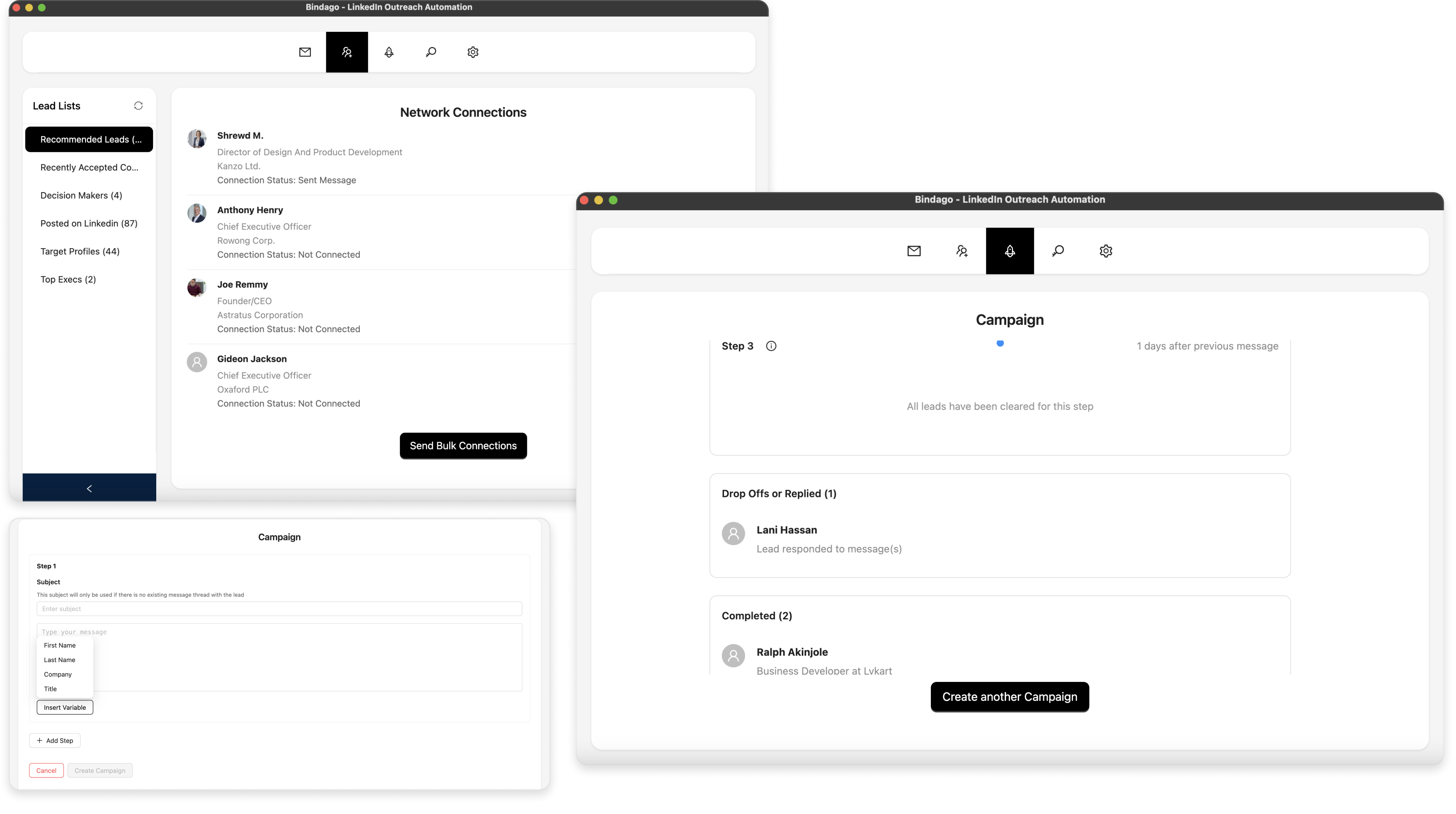
This is where a secure and powerful tool like Bindago becomes your engine for understanding buyer priorities at scale.
Here’s how you can use Bindago to systematize this process:
- Build and Nurture Your Target Lists: Use Sales Navigator to create hyper-targeted lists based on your ICP. You can then use Bindago's Campaigns feature to create a "warm-up" sequence that automatically engages with these prospects by viewing their profiles and liking their posts, keeping you on their radar.
- Launch Contextual Outreach: Once you've identified a key priority for a segment of your prospects, you can launch a highly relevant outreach campaign in Bindago.
- Template: "Hi {{firstName}}, I've been following your posts on [Topic] and it seems like [Inferred Priority] is a key focus for you right now. We recently helped a similar company in your space achieve [Specific Outcome] related to that. Would you be open to a brief chat to see if this is relevant for {{companyName}}?"
- Turn Engagement into Action: For prospects who engage with your content, you can use Bindago to automatically send a personalized connection request and a sequence of value-driven follow-up messages.
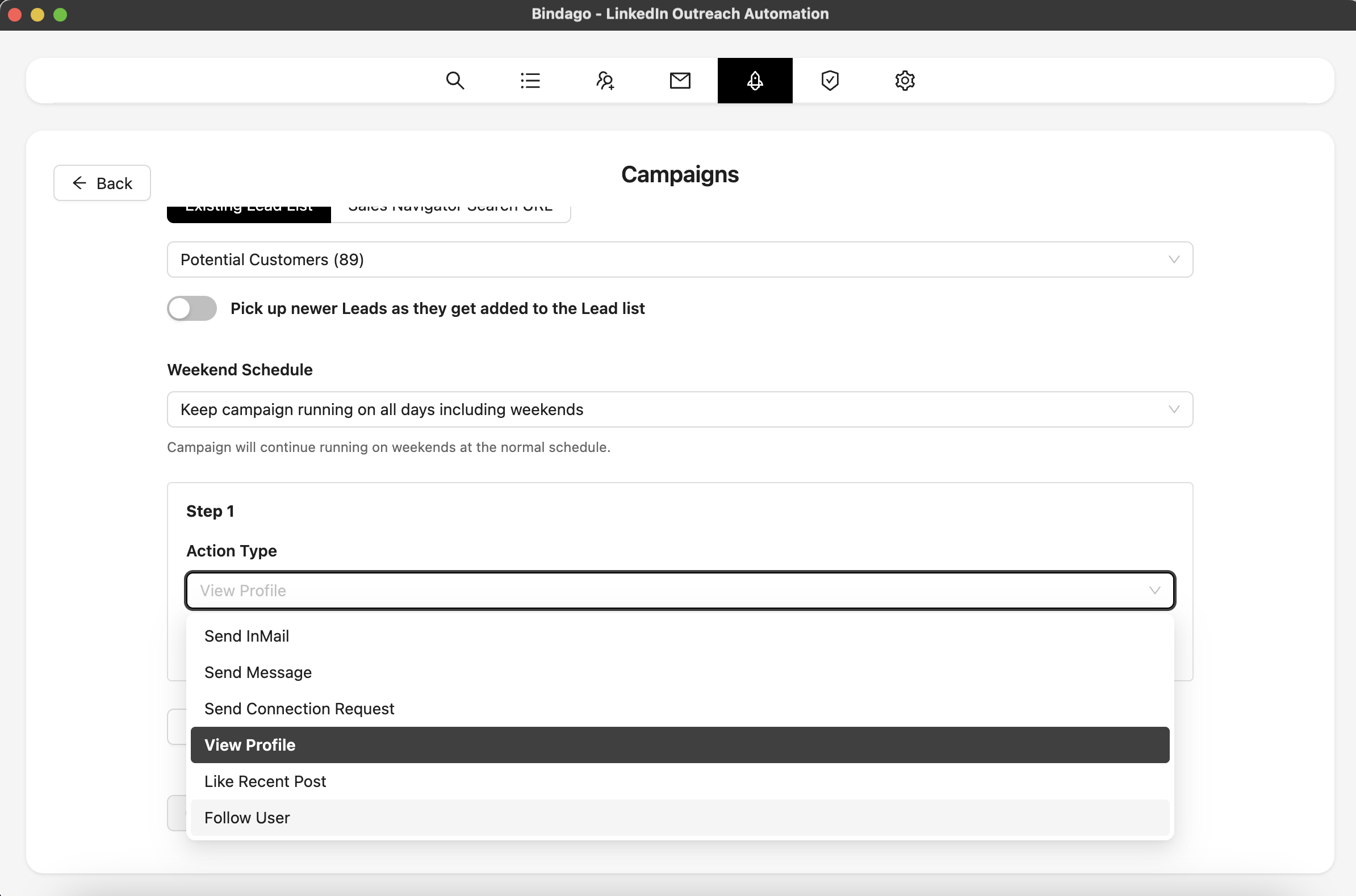
By using Bindago to automate the repetitive tasks of outreach and engagement, you can focus your time on the high-value work of analyzing your prospects' priorities and having strategic, relevant conversations. And because it's a desktop app, your LinkedIn credentials remain securely on your computer.
Conclusion
The most successful Account Executives are not just sellers; they are detectives. They use LinkedIn to look for clues, understand the context, and piece together a clear picture of their buyer's priorities before they ever make a pitch.
By moving beyond the surface-level information on a profile and analyzing a prospect's digital body language, you can craft a message that is not only heard but welcomed. Combine this intelligent approach with a powerful automation tool, and you have a scalable system for building pipeline and closing more deals.
Ready to start uncovering your buyers' priorities and having more meaningful sales conversations? Download Bindago today and start your 10-day free trial.