The Psychology of LinkedIn Outreach for Account Executives
As an Account Executive, you're an expert in sales, but are you an expert in psychology? The most successful AEs on LinkedIn understand that effective outreach isn't about volume or a perfect pitch; it's about leveraging fundamental principles of human psychology to build trust and rapport long before a sales conversation ever begins.
Sending a cold, generic pitch is like asking for a major commitment on a first date—it's destined to fail. To break through the noise, you need to stop thinking like a salesperson and start thinking like a psychologist. This guide will break down the key psychological principles that will transform your LinkedIn outreach from a source of frustration into a predictable pipeline of warm, qualified leads.
1. The Principle of Reciprocity: Give Before You Get
The Psychology: The principle of reciprocity is one of the most powerful forces in human interaction. When someone gives us something of value, we feel a deep-seated psychological urge to give something back in return.
In Practice: Before you ever ask for a prospect's time (a connection, a meeting), you must first give them value.
- Share Insights: Leave thoughtful comments on their posts that add to the conversation.
- Provide Resources: Send them a link to a relevant article or case study without asking for anything in return.
- Engage Generously: Like their content and congratulate them on their successes.
When you consistently provide value, you are making "deposits" in the trust bank. When it's time to ask for a connection or a meeting, the prospect is psychologically primed to reciprocate.
2. The Mere-Exposure Effect: Be Familiar Before You're Formal
The Psychology: The mere-exposure effect is a psychological phenomenon where people tend to develop a preference for things merely because they are familiar with them. A name they've seen before feels safer and more trustworthy than a name they haven't.
In Practice: You need to get on your prospect's radar before you ever enter their inbox. This is the "warm-up" sequence.
- View Their Profile: This is a subtle, non-intrusive first touch. They get a notification with your name and face.
- Like a Recent Post: A day or two later, like one of their posts. This is another low-stakes touchpoint that reinforces your presence.
- Send the Connection Request: Now, when your connection request arrives, your name is already familiar. It's no longer a cold outreach from a complete stranger; it's a request from someone who is part of their professional orbit.
3. The Power of Social Proof: If Others Trust You, I Can Too
The Psychology: When people are uncertain, they look to the actions of others to determine their own. Social proof is a powerful shortcut to building credibility.
In Practice: Your LinkedIn profile and outreach should be dripping with social proof.
- Mutual Connections: This is the most powerful form of social proof on LinkedIn. If you share a connection, especially a respected one, it provides an instant layer of trust. Always mention it in your connection request.
- Recommendations: A glowing recommendation on your profile is a powerful testimonial.
- Niche-Specific Content: Creating content that demonstrates your deep understanding of their industry acts as proof of your expertise.
4. Systematizing Psychology: How to Apply These Principles at Scale
Understanding these principles is one thing; applying them consistently to hundreds of prospects is another. Manually tracking profile views, post likes, and multi-step follow-ups is not a scalable strategy. To do this effectively, you need a system.
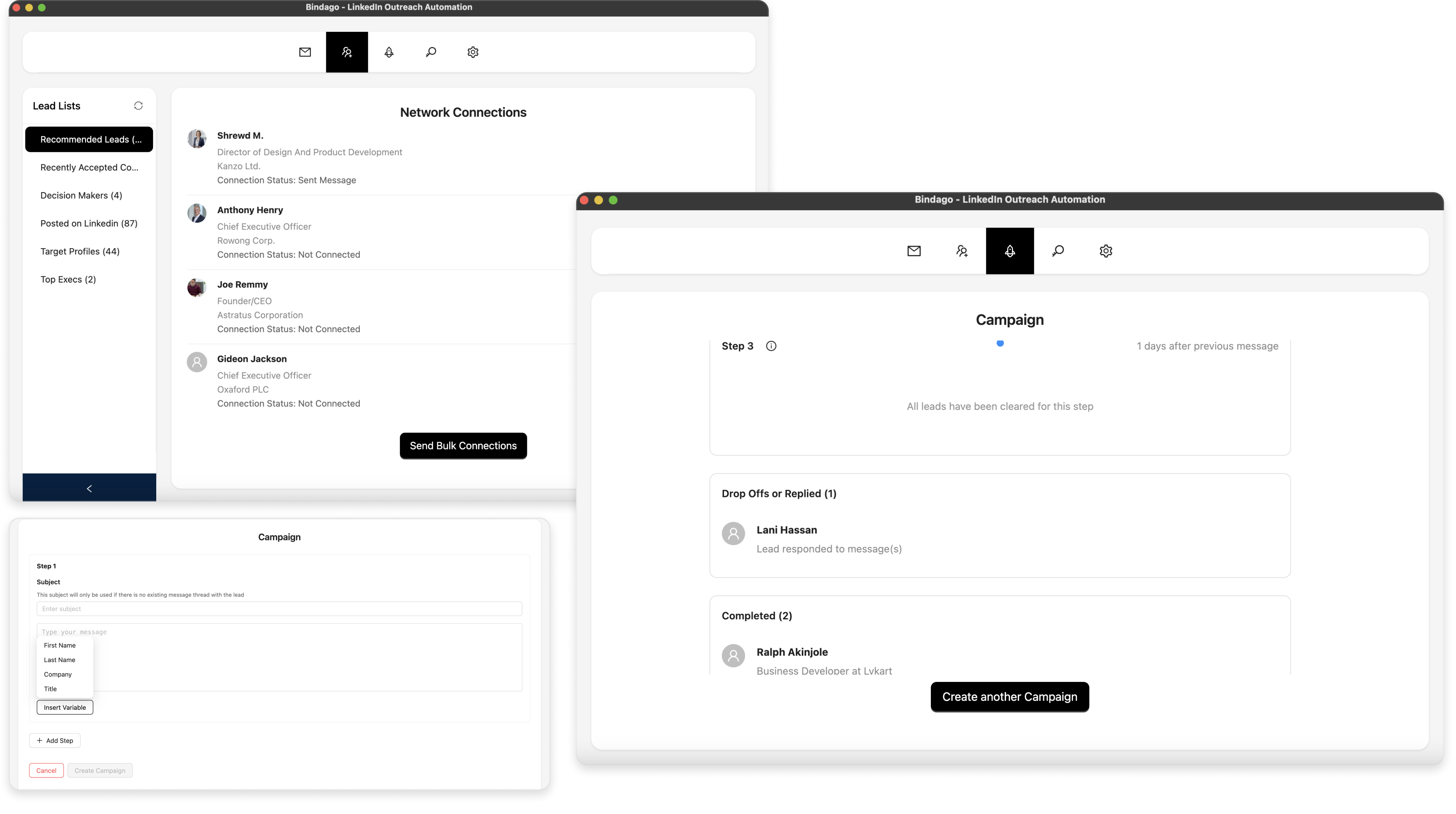
This is where a secure and powerful automation tool like Bindago becomes your secret weapon. Bindago is a desktop application that allows you to build campaigns that automate these psychological touchpoints, turning theory into a predictable pipeline.
Here’s how you can use Bindago to build a psychologically-driven outreach campaign:
- Build Your High-Intent List: Use Sales Navigator to create a hyper-targeted list of your ideal prospects.
- Create a "Psychological Warm-Up" Campaign: With Bindago's Campaigns feature, you can create a multi-step sequence that puts these principles into action.
- Step 1 (Mere-Exposure): Automatically View the Profile of every prospect on your list.
- Step 2 (Reciprocity & Familiarity): A day later, automatically Like a Recent Post.
- Step 3 (Social Proof & Personalization): Two days after that, automatically send a personalized Connection Request that references a shared interest or mutual connection.
- Step 4 (Nurturing): For those who connect, automatically send a sequence of value-driven follow-up messages.
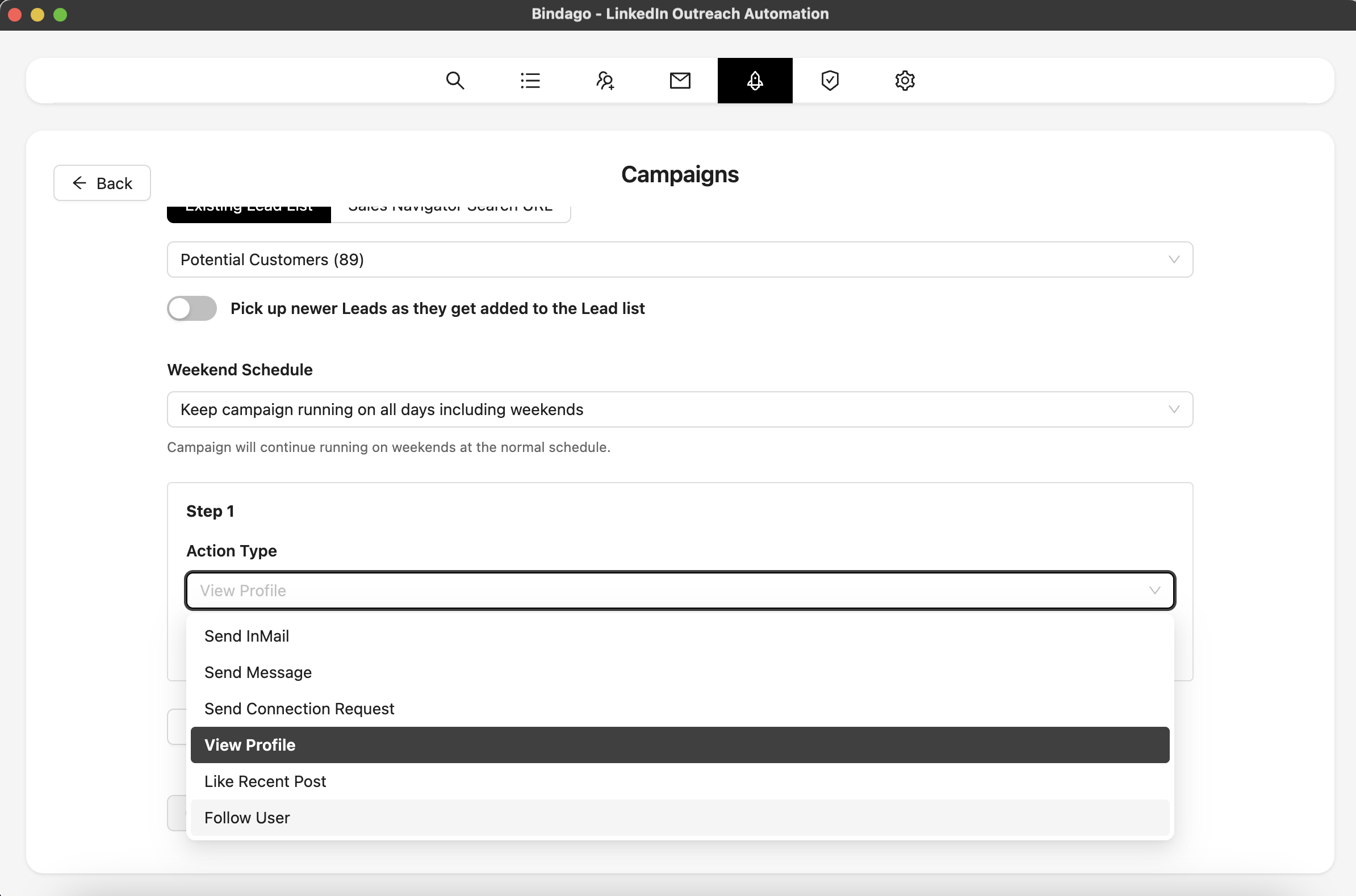
By using Bindago to systematize your outreach, you can ensure that every prospect is warmed up with psychologically-proven touchpoints before you ever ask for a meeting. The automation stops the moment a prospect replies, allowing you to step in and have a real, human conversation. And because it's a desktop app, your LinkedIn credentials remain securely on your computer.
Conclusion: Sell Smarter, Not Harder
The most effective account executives on LinkedIn are not just salespeople; they are practical psychologists. They understand that trust, familiarity, and value are the keys to unlocking meaningful conversations.
By building your outreach strategy around the core principles of reciprocity, mere-exposure, and social proof, you can move from being an unwelcome interruption to a welcome resource. And by leveraging a smart, secure automation tool like Bindago, you can apply these principles at a scale that will consistently fill your pipeline and help you crush your quota.
Ready to turn psychology into your most powerful sales tool? Download Bindago today and start your 10-day free trial.