How Account Executives Can Use LinkedIn to Find Hidden Decision Makers
In B2B sales, one of the most common reasons deals stall is because you're talking to the wrong person. You might have a great relationship with a contact who loves your solution, but if they don't have the real influence to get the deal signed, you're at a dead end. The job title on a LinkedIn profile can be misleading; the true "decision-maker" is often not the person with the most senior title, but a hidden influencer who holds the trust of the team.
Finding these hidden decision-makers is a critical skill for any Account Executive looking to shorten their sales cycle and increase their win rate. They are the gatekeepers to consensus and the champions who will advocate for your solution internally. This guide provides a clear, actionable framework for using LinkedIn to look beyond the org chart and identify the people who truly drive purchasing decisions.
1. Look for Influencers, Not Just Titles
The first mindset shift is to stop focusing solely on C-level executives or VPs. While they may hold the budget, they often delegate the evaluation process to trusted team members who are closer to the actual problem. These are your "hidden decision-makers" or key influencers.
- Who They Are: They might be a "Senior Project Manager," a "Team Lead," or a "Principal Engineer." They are the ones who will actually use your product and whose opinion the budget holder will rely on.
- Why They Matter: Gaining their buy-in is often more important than getting a meeting with the VP. If they become your internal champion, they will sell your solution for you.
2. Follow the Digital Breadcrumbs: Content and Engagement
The activity of prospects on LinkedIn is a trail of digital breadcrumbs leading you directly to their priorities and influence.
Analyze Their Content Engagement
The content a person engages with is a powerful signal of what they care about.
- The Signal: A prospect who consistently likes, and especially comments on, posts about a specific challenge (e.g., "improving team productivity," "data security") is likely involved in solving that problem.
- How to Find It:
- Monitor the comments on posts from key industry influencers.
- Track relevant hashtags related to the problems you solve.
- Pro Tip: Look at who is commenting on your competitors' content. These are prospects who are actively in the market.
Look at Who is Creating Content
A person who takes the time to write posts or articles about a specific topic is often a subject matter expert and a respected voice on their team. Their colleagues look to them for guidance, making them a key influencer.
3. Use LinkedIn Search to Map the Team Structure
Use LinkedIn's search tools to build a map of the internal team and identify potential influencers who don't have obvious decision-maker titles.
- Use Boolean Search: Go beyond job titles. Use Boolean search to find people based on keywords in their profile. For example, if you sell a project management tool, a search for
("Project Manager" OR "Program Manager") AND "Agile Certified"can help you find experienced practitioners who influence tool selection. - Analyze the "People" Tab on Company Pages: This feature gives you a high-level overview of a company's departmental structure. Look for clusters of employees in the relevant department to understand the team's hierarchy.
4. The Power of "Second-Degree" Sleuthing
Once you have a point of contact within an account, use their network to find other key players.
- Actionable Tip: Look at the connections of your initial contact. Who on their team are they connected to? Who do they interact with frequently? This can reveal the informal power structures within the company that don't show up on an org chart. An engineer who is connected to the CTO and frequently engages with their posts likely has the CTO's ear.
5. Engaging Multiple Stakeholders at Scale
Once you've identified a list of potential hidden decision-makers and influencers within a target account, the next step is to engage them. The goal is "multi-threading"—building relationships with several stakeholders simultaneously to build consensus.
However, manually engaging with 5-10 people at every single one of your target accounts is not a scalable strategy. This is where automation becomes your secret weapon.
Systematize Your Multi-Threading with Bindago
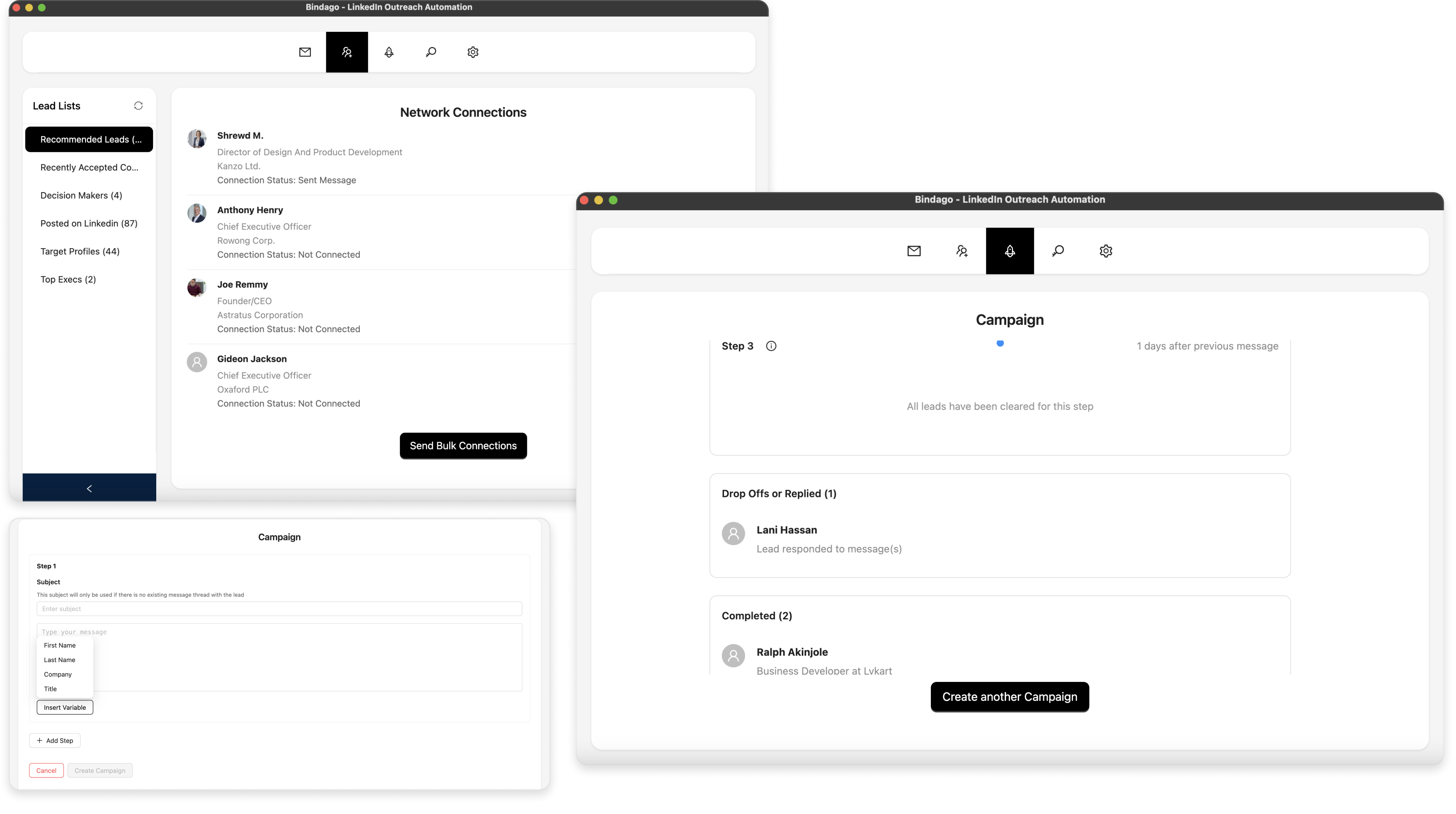
A secure and powerful automation tool like Bindago can execute your multi-threaded engagement strategy on autopilot. As a desktop application, Bindago allows you to manage your outreach safely, keeping your credentials secure on your machine.
Here’s how you can use Bindago to engage your list of hidden decision-makers:
- Create Your Stakeholder List: Build a list of the 5-10 key influencers and potential decision-makers you've identified for each target account.
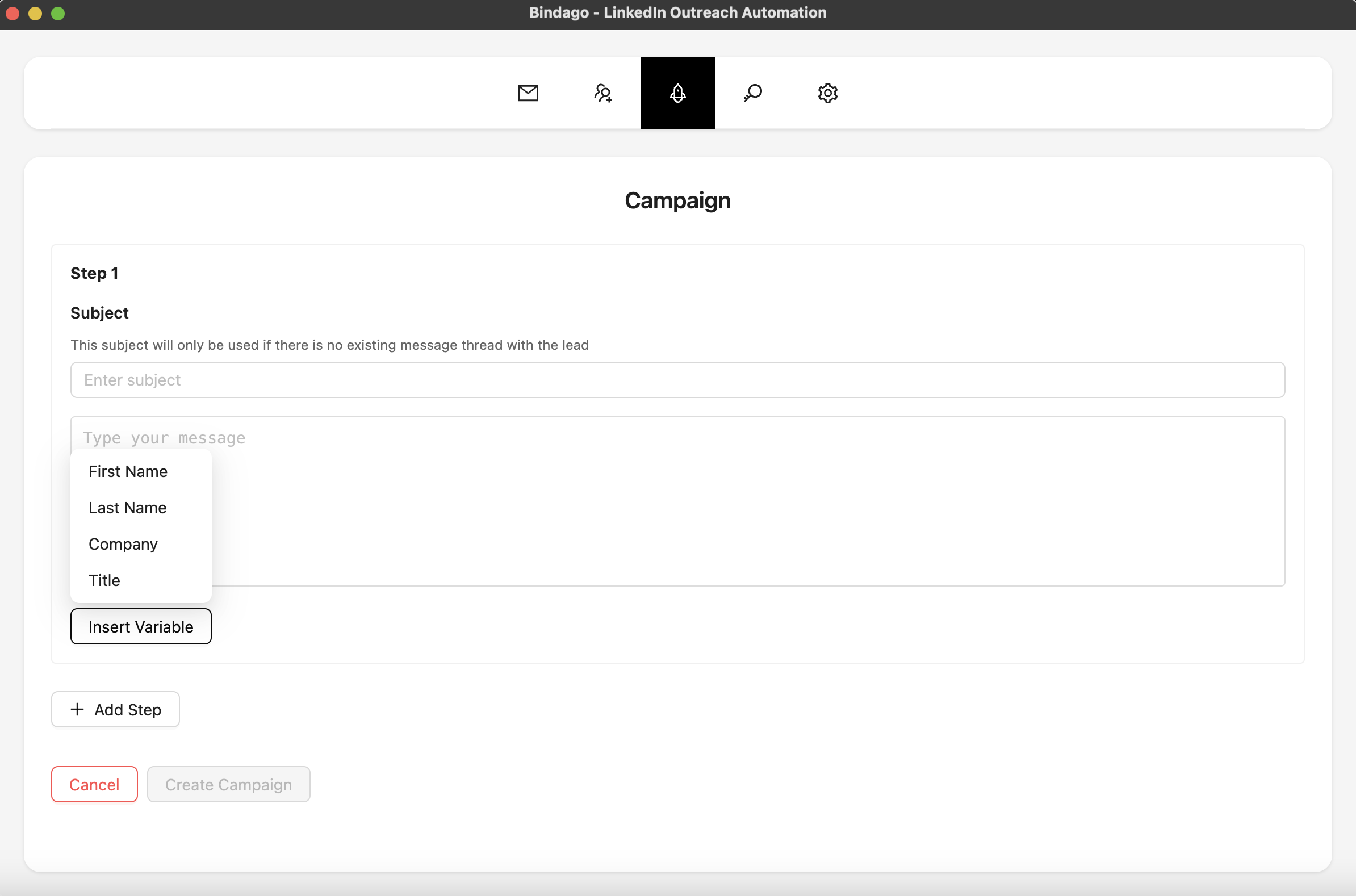
- Launch a "Warm-Up" Campaign: With Bindago's Campaigns feature, you can create a multi-step sequence to warm up this entire list simultaneously.
- Step 1: Automatically View the Profile of every stakeholder on your list.
- Step 2 (2 days later): Automatically Like a Recent Post from each person.
- Step 3 (2 days after that): Automatically send a personalized Connection Request that references their company or a shared interest.
By using Bindago to systematize this "surround sound" approach, you ensure that you are a familiar, welcome presence to the entire buying committee long before you ever ask for a meeting. It frees you from the tedious manual work of engagement, allowing you to focus on the high-value conversations that your system generates.
Conclusion: Look for Influence, Not Just Titles
Finding hidden decision-makers on LinkedIn is a skill that separates good Account Executives from great ones. It requires a shift in focus from job titles to influence. By analyzing content engagement, mapping team structures, and using your network to understand informal hierarchies, you can identify the people who truly drive deals forward.
Combine this intelligence-gathering with a smart, automated engagement strategy, and you have a scalable system for building consensus, shortening your sales cycles, and closing more deals.
Ready to uncover hidden decision-makers and accelerate your deals? Download Bindago today and start your 10-day free trial.