How Account Executives Can Use LinkedIn to Accelerate Referrals and Introductions
In the world of B2B sales, a warm introduction is worth a thousand cold calls. While account executives spend countless hours on cold outreach, the most efficient path to a closed deal is often through a referral. A referral from a trusted source bypasses the initial skepticism, builds immediate credibility, and can cut the sales cycle in half.
LinkedIn is the ultimate platform for engineering these warm introductions. It provides a transparent map of your professional network, allowing you to see exactly who can connect you with your ideal prospects. This guide provides a clear, actionable framework for AEs to systematically leverage their LinkedIn network to accelerate referrals and build a predictable pipeline of high-intent leads.
1. The Mindset Shift: From Cold Outreach to Warm Pathways
The first step is a fundamental mindset shift. Stop thinking of LinkedIn as just a list of cold prospects to pitch. Instead, view it as a web of relationships. Your goal is not to knock on a stranger's door, but to find a trusted friend who can walk you in.
Why are referrals so powerful?
- Borrowed Trust: When a mutual connection introduces you, they are lending you their credibility. The prospect's trust in them is transferred to you.
- Higher Response Rates: An email from a stranger is easily ignored. A message that starts with "Jane Doe suggested I reach out..." is almost always opened.
- Faster Sales Cycles: You skip the initial trust-building phase and get straight to a strategic conversation about solving their problems.
2. Identify Your "Power Connectors"
A "power connector" is a first-degree connection who has a strong relationship with your target prospect. Your first task is to identify these key individuals.
- Map Your Target Accounts: In LinkedIn Sales Navigator, create a list of your target accounts and identify the key decision-makers you want to reach.
- Find the Mutual Connection: For each target prospect, look at your mutual connections. But don't just look at the number; evaluate the quality of the connection.
- Did they work together at the same company for several years? (Strong signal)
- Did they go to the same university? (Good signal)
- Are they just connected on LinkedIn with no other shared history? (Weak signal)
- Prioritize a Shortlist: For each target account, create a shortlist of 1-3 of your best "power connectors" who can provide a high-quality introduction.
3. The Art of Asking: The Double Opt-In Introduction
This is where most people fail. A bad referral request creates awkwardness and work for your connection. A great one is effortless and professional. The gold standard is the "double opt-in" introduction.
Step 1: Ask for Permission First
Never assume your connection is willing or able to make the introduction. First, send them a private message to ask for their permission.
- Template to ask your connector:
"Hi [Connector's Name], hope you're well. I'm hoping you might be able to help with a quick intro. I'm looking to connect with [Prospect's Name] at [Company] to discuss [Topic].
Would you be open to making a brief introduction if you have a strong relationship with them? No worries at all if not. If you are, I can send over a short, forwardable blurb to make it super easy."
Step 2: Provide a Forwardable Blurb
If they say yes, do the work for them. Write a short, forwardable message that they can simply copy and paste to the prospect.
- Template for the forwardable blurb:
"That's fantastic, thank you! To make it easy, here's a blurb you can use:
'Hi [Prospect's Name], I wanted to introduce you to [Your Name]. They are an expert in [Your Field] and have been helping other companies in your industry to [Achieve Result]. I thought a connection might be valuable given your work in [Their Department]. I'll let you two take it from here!'"
This approach is respectful of everyone's time and makes the process seamless.
4. Systematize Your Referral Engine with Automation
Manually identifying prospects, mapping connections, and nurturing these relationships is not a scalable strategy. To turn referral generation into a predictable system, you need to leverage smart automation to handle the repetitive tasks, freeing you up to focus on the high-value conversations.
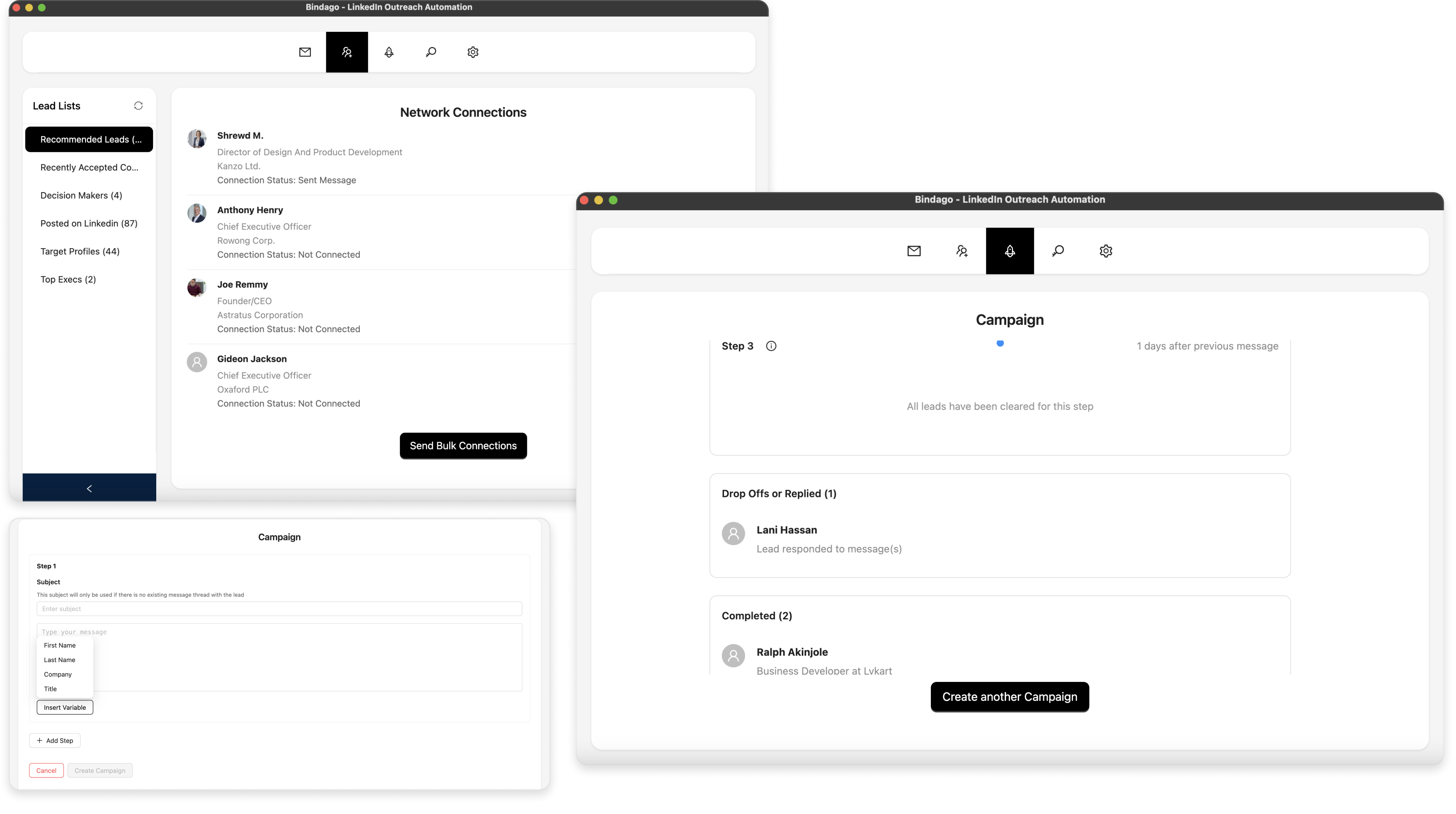
This is where a secure and powerful tool like Bindago becomes your engine for growth. As a desktop application, Bindago allows you to automate your LinkedIn outreach safely and efficiently.
Here’s how you can use Bindago to build your referral engine:
- Nurture Your Power Connectors: Before you even need a referral, you should be staying top-of-mind with your key "power connectors." You can create a campaign in Bindago that automatically engages with their content by liking their posts or viewing their profile, keeping you on their radar in a natural, non-intrusive way.
- Warm-Up the Target Prospect: While you're asking for the introduction, you can have another Bindago campaign that "warms up" the end prospect. A simple sequence that views their profile and likes one of their posts makes your name familiar, so when the introduction is made, you're not a complete stranger.
- Automate Your Outreach: Once you get the introduction, you can use Bindago's Campaigns feature to ensure a timely and professional follow-up.
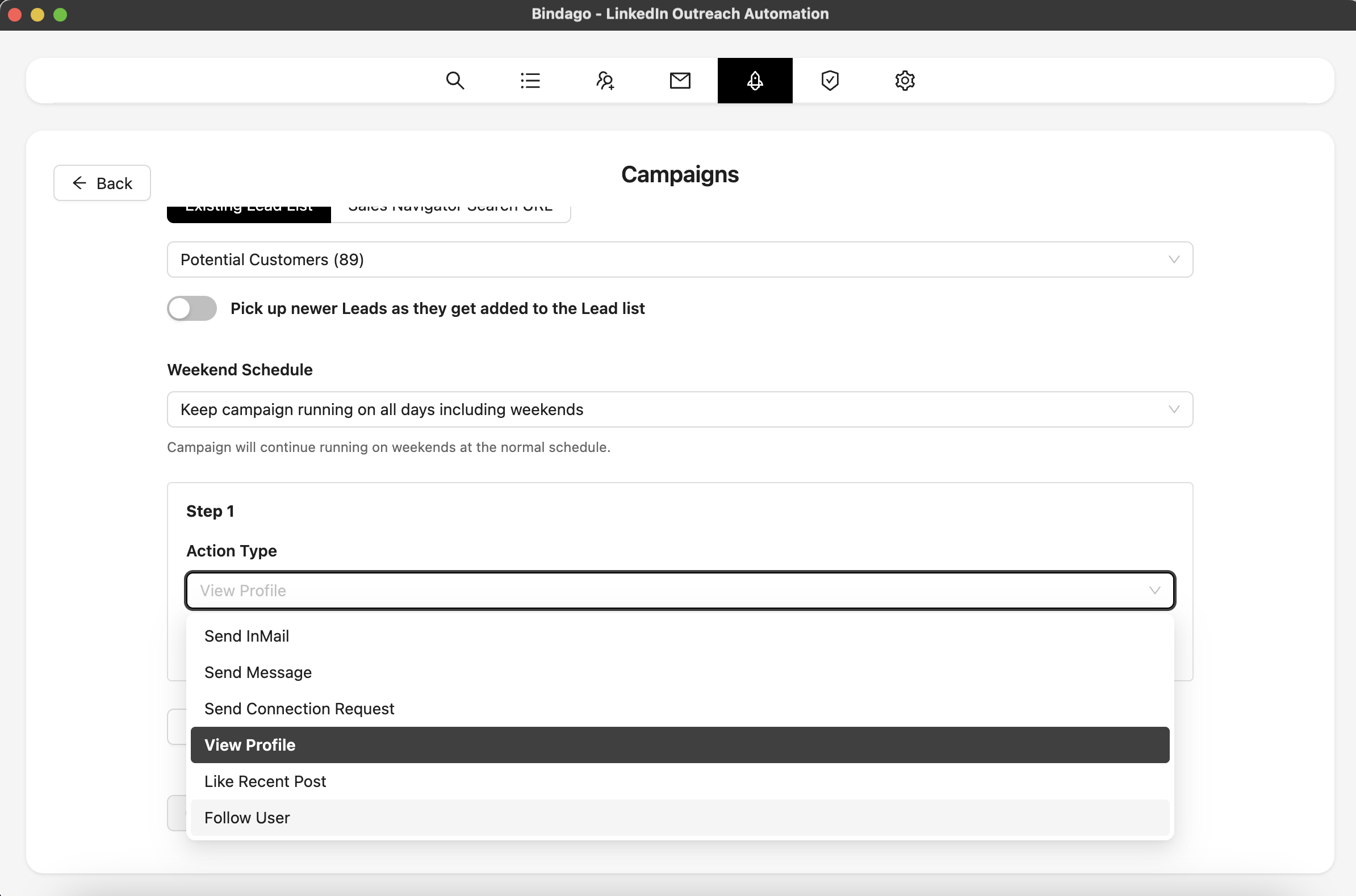
By using Bindago to automate these touchpoints, you can ensure you are systematically building and leveraging your network at a scale that is impossible to do manually. And because it's a desktop app, your LinkedIn credentials remain securely on your computer.
Conclusion: Your Network is Your Pipeline
For Account Executives, a referral strategy on LinkedIn is not a "nice to have"; it's a core component of a modern, predictable sales process. By moving from a cold outreach model to a warm referral system, you can build trust faster, start more meaningful conversations, and ultimately, close more deals.
The framework is simple:
- Identify your key prospects and the connectors who can introduce you.
- Nurture your relationships with your connectors by providing value.
- Ask for the introduction in a way that is professional and easy.
- Systematize the process with automation to do it at scale.
Master this, and you'll turn your LinkedIn network into your most reliable source of high-quality opportunities.
Ready to build your referral engine? Download Bindago today and start your 10-day free trial.