How to Leverage Mutual Connections for Warm Intros
In the world of B2B sales and networking, a warm introduction is the most powerful asset you can have. While a cold email has a 1-3% response rate, an introduction from a trusted mutual connection can have a response rate of over 40%. It’s the difference between knocking on a locked door and being personally invited inside.
A warm intro instantly transfers trust from the mutual connection to you, making the prospect far more likely to engage. However, many professionals fail at this because they don't know how to ask for an introduction effectively. This guide provides a clear, actionable framework for leveraging your LinkedIn network to get warm intros to your ideal prospects, without being pushy or awkward.
1. The Foundation: Identify the Path to Your Prospect
Before you can ask for an introduction, you need to map the path. Your goal is to find the strongest, most relevant connection between you and your target prospect.
- Use LinkedIn's "Mutual Connections" Feature: When you view a 2nd-degree connection's profile, LinkedIn will show you the connections you have in common. This is your starting point.
- Evaluate the Strength of the Connection: Don't just pick any mutual connection. Ask yourself:
- How well do they likely know each other? Did they work together at the same company? Are they in the same industry?
- How well do you know the mutual connection? A request to a close former colleague is much stronger than one to a person you barely know.
- Prioritize Your Connectors: Create a short list of the 1-3 best potential introducers for each prospect.
2. The Golden Rule: Make it Incredibly Easy for Your Connector
This is the most important step, and it's where most people fail. Your contact is busy. Asking them to do the hard work of explaining who you are and why they should talk to you is a recipe for getting ignored.
Your job is to do 100% of the work. You need to provide your contact with a simple, forwardable message that they can copy and paste to the prospect with minimal effort.
- The Wrong Way to Ask: "Hey [Connector], I see you're connected to [Prospect]. Would you mind introducing us?" (This creates work for them).
- The Right Way to Ask: "Hey [Connector], hope you're well. I'm hoping you might be able to help with a quick intro. I'm looking to connect with [Prospect] at [Company] to discuss [Topic]. To make it easy, I've written a short, forwardable blurb below that you can pass along if you're comfortable. Thanks either way!"
This approach is respectful of their time and dramatically increases the likelihood that they will help you.
3. The Forwardable Blurb: Your Message-in-a-Bottle
This is the short message you write for your connector to forward to the prospect. It should be concise, clear, and focused on the value to the prospect.
Template for the Forwardable Blurb:
Hi [Prospect's Name],
I hope you're well.
I wanted to introduce you to [Your Name], a [Your Title/Role] who specializes in [Your Area of Expertise].
They've been helping other companies in the [Prospect's Industry] space to [Achieve Specific Outcome], and I thought a connection between you two might be valuable.
[Your Name], meet [Prospect's Name]. I'll let you two take it from here.
Best, [Connector's Name]
When you send this to your connector, you are giving them a ready-made tool that requires almost no effort on their part. They can simply forward it, and the introduction is made.
4. Systematizing Your Warm Intro Strategy
Manually tracking prospects, potential connectors, and your outreach requests is not a scalable strategy. To turn this into a predictable system for generating warm leads, you need to be organized and efficient.
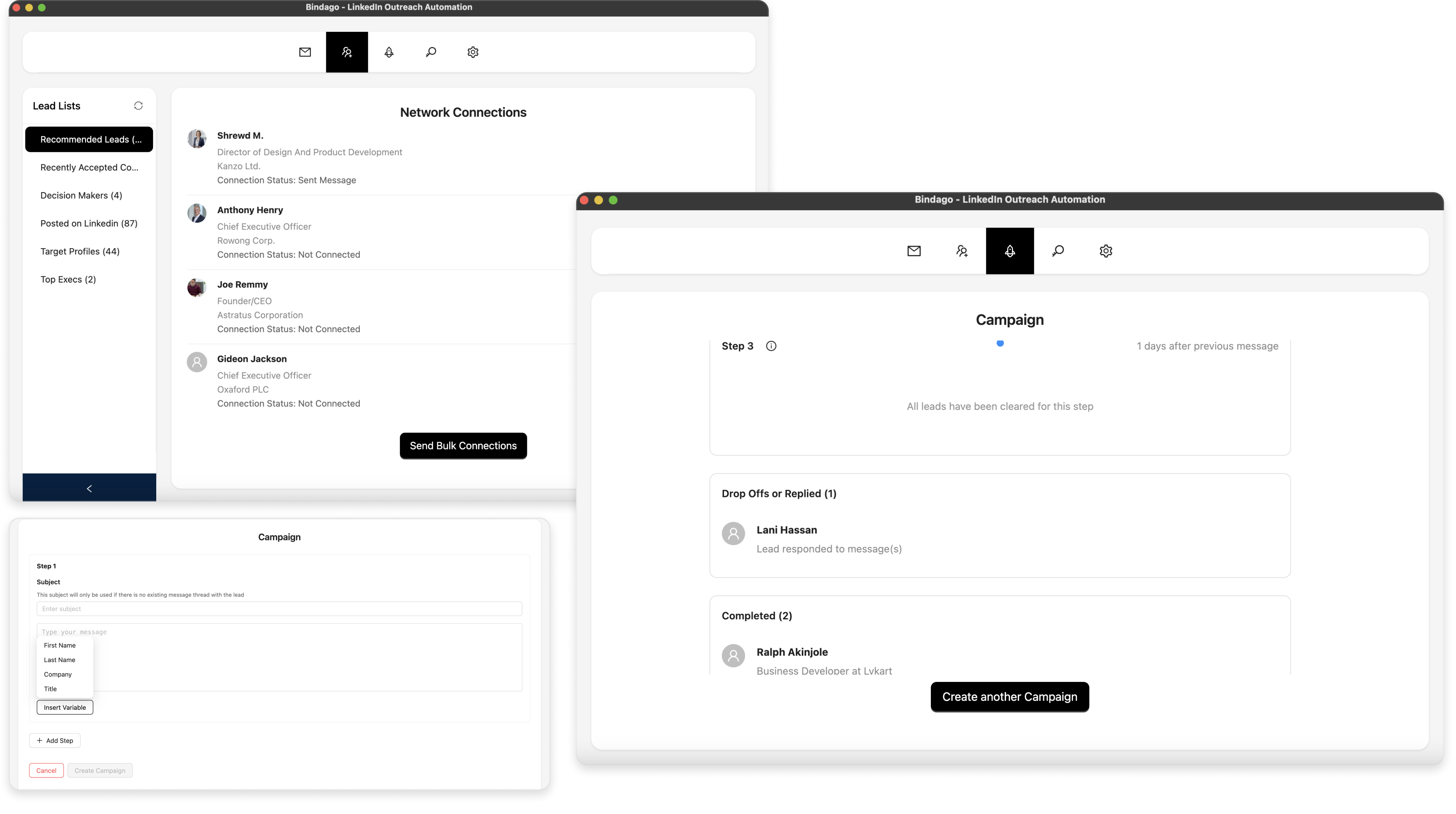
This is where a powerful and secure automation tool like Bindago can help you manage the process.
Here’s how you can use Bindago to scale your warm intro strategy:
-
Build and Manage Your Lists: Use LinkedIn Sales Navigator to identify your target prospects. As you find them, you can also identify the best mutual connections. Use Bindago to export these lists to a CSV file. This allows you to create a structured spreadsheet where you can map each prospect to their best potential introducer.
-
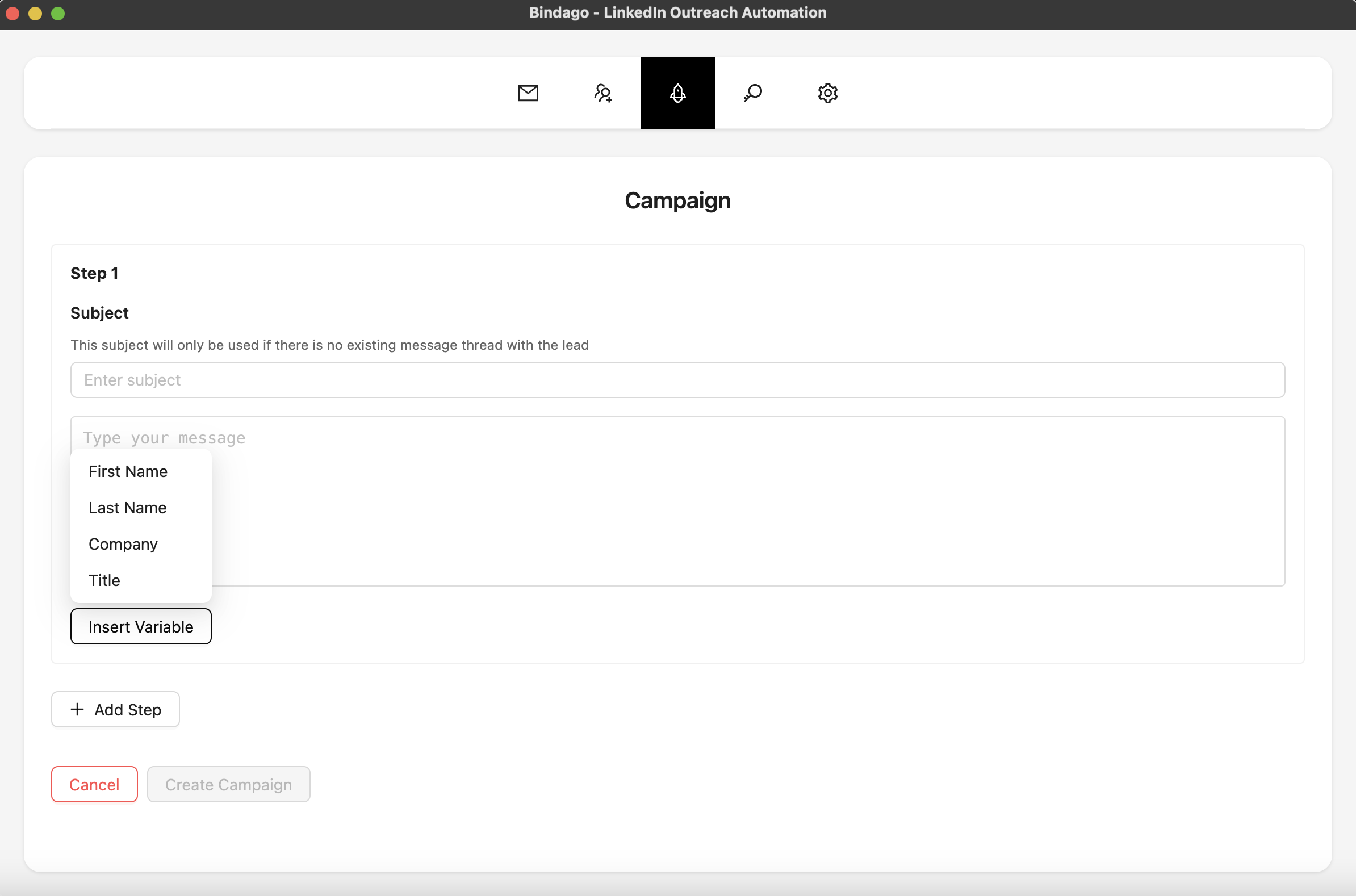
Warm Up Your Connectors: Before you ask for an introduction, it's a good idea to warm up your mutual connection, especially if you haven't spoken in a while. You can use Bindago's Campaigns feature to create a simple, automated sequence that:
- Views their profile.
- A day later, likes one of their recent posts.
-
Automate Your Initial Outreach: Once your connector is "warm," you can use a Bindago campaign to send your personalized request for the introduction, complete with the forwardable blurb.
By using Bindago to systematize the organizational and warm-up phases, you can focus your time on the high-value task of having conversations with the warm leads your network generates. And because Bindago is a desktop application, your LinkedIn credentials and data remain securely on your computer.
Conclusion: Your Network is Your Most Powerful Sales Tool
Cold outreach is a numbers game with low odds. Warm introductions are a strategy game with a high probability of success. By moving from a "can you help me?" approach to a "here's how you can easily help me" approach, you show respect for your network and dramatically increase your chances of getting the introductions that matter.
The framework is simple:
- Identify the right path to your prospect.
- Make it easy for your connector by doing all the work.
- Provide a clear, concise, and value-driven reason for the introduction.
- Systematize your process to do it at scale.
Master this, and you'll unlock a steady stream of warm, high-intent leads that are ready to talk to you.
Ready to turn your network into a lead generation machine? Download Bindago today and start your 10-day free trial.