How to Build Trust Before Selling on LinkedIn
In the world of B2B sales, LinkedIn is the ultimate networking event. But too many salespeople treat it like a cold-calling list, jumping straight into a sales pitch in their very first message. This approach almost never works. Why? Because it skips the most crucial element of any business relationship: trust.
Prospects on LinkedIn don’t want to be sold to; they want to connect with credible experts who can provide value. Before you can ever hope to sell your product or service, you must first sell yourself as a trustworthy and knowledgeable professional.
This guide will walk you through the essential strategies to build trust with your prospects on LinkedIn, turning cold shoulders into warm conversations and, eventually, closed deals.
1. Your Profile is Your First Handshake
Before anyone reads your message, they will look at your profile. Your profile is your digital storefront, and it needs to be optimized to build instant credibility.
Optimize Your Headline
Your headline is more than just your job title. It should clearly state who you help and what you help them achieve.
- Instead of: "Sales Manager at Acme Inc."
- Try: "Helping B2B SaaS Companies Build Predictable Sales Pipelines | Sales Strategy & Leadership"
Write a Prospect-Centric "About" Section
Your "About" section is not a resume. It’s a sales page for your personal brand. Structure it using the Problem-Agitate-Solve framework:
- Problem: "Many B2B founders struggle to generate a consistent flow of qualified leads."
- Agitate: "This leads to unpredictable revenue and a constant feeling of stress."
- Solve: "I help founders implement a proven outreach system to create a predictable pipeline of warm leads."
2. Give Before You Get: The Content Strategy
The fastest way to build trust is to demonstrate your expertise by giving away valuable information for free. A consistent content strategy positions you as a thought leader, not just a salesperson.
- Share Your Knowledge: Write short posts that teach your audience something new. Explain a complex topic, share an industry insight, or offer a solution to a common problem.
- Engage with Others' Content: Don't just post your own content. Leave thoughtful, insightful comments on posts from other leaders in your industry. A good comment can be as powerful as a good post.
- Show, Don't Just Tell: Share case studies or success stories (with permission) that demonstrate how you've helped others.
3. The "Warm-Up" Sequence: Engage Before You Connect
Never send a connection request to a completely cold prospect. You need to warm them up first. This means getting on their radar in a non-intrusive way before you ever ask for anything.
A proven warm-up sequence involves a series of subtle touchpoints:
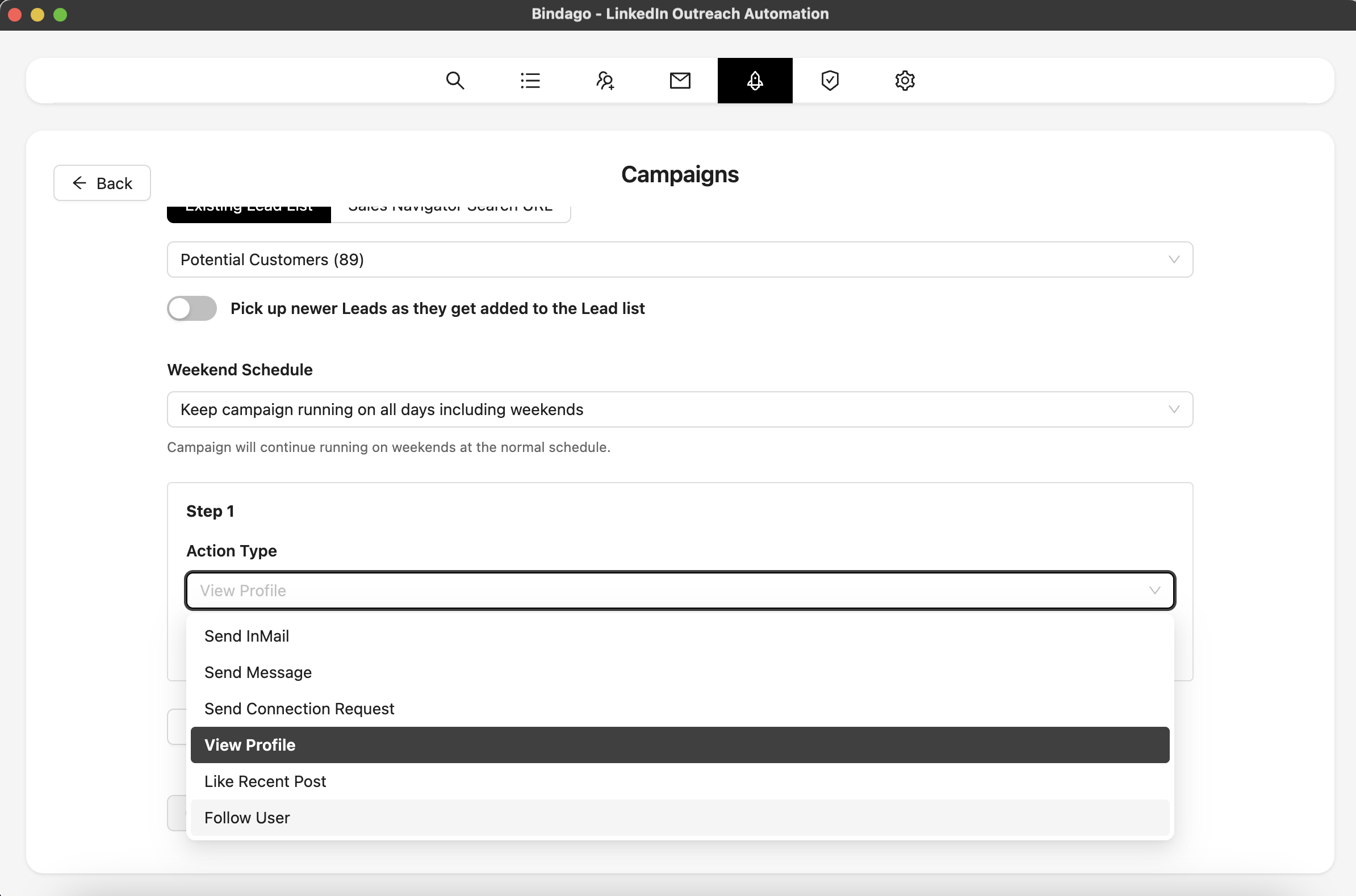
- View Their Profile (Day 0): This is the digital equivalent of making eye contact across the room. They get a notification that you viewed their profile, which plants the first seed of familiarity.
- Like a Recent Post (Day 2): This shows you're paying attention to what they're saying. It's a small gesture that reinforces your presence.
- Leave an Insightful Comment (Day 3): This is the most powerful step. A thoughtful comment that adds to the conversation positions you as a peer, not a pest.
- Send a Personalized Connection Request (Day 4): Now that they've seen your name a few times, your connection request feels familiar and is far more likely to be accepted.
Automating the Warm-Up
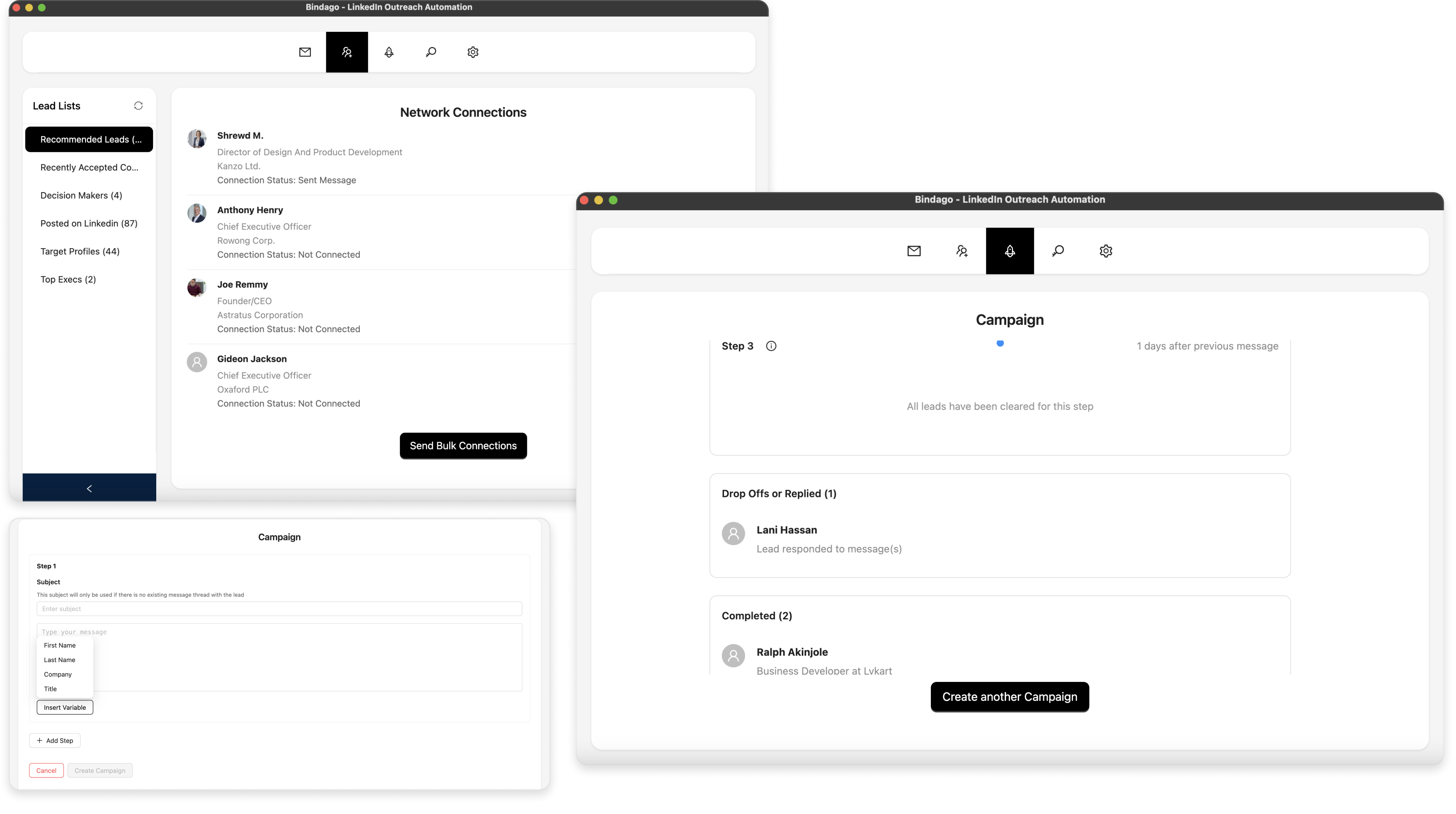
Manually executing this sequence for hundreds of prospects is impossible. This is where a smart automation tool becomes essential. With a tool like Bindago, you can automate this entire warm-up sequence.
Bindago's Campaigns feature allows you to build a multi-step workflow that automatically views profiles, likes posts, and then sends a personalized connection request, all with natural, human-like delays to keep your account safe. This allows you to warm up hundreds of leads on autopilot, so you can focus on having conversations with the prospects who engage back.
4. The Connection Request: It's Not a Pitch
The goal of the connection request is simply to get the prospect to accept. It is not the time to pitch your product. Your message should be short, personalized, and give a clear reason for connecting.
Template:
"Hi {{firstName}}, I saw your comment on the recent post about [Topic]. I've been exploring that challenge with other leaders in the [Industry] space. Would be great to connect and share insights."
5. The Follow-Up: Nurture with Value
Once a prospect connects with you, the nurturing process begins. Don't immediately pivot to a sales pitch. Your first follow-up message should continue to provide value.
- Share a relevant resource: Send them a link to an article, a case study, or a tool you think they would find helpful.
- Ask a thoughtful question: "I'm curious, how is your team approaching the challenge of [Problem]?"
You can also automate this follow-up sequence using Bindago. You can create a series of value-driven messages that are sent automatically over several days or weeks. The automation is smart enough to stop the sequence as soon as the prospect replies, allowing you to step in and have a real, human conversation.
Conclusion: Trust is the New Currency
In modern B2B sales, trust is the currency that earns you the right to have a conversation. By shifting your focus from "selling" to "helping" and by systematically building credibility through your profile, your content, and your engagement, you can create a predictable pipeline of prospects who are not just willing, but eager to talk to you.
Combine this trust-building framework with a powerful and secure automation tool like Bindago, and you have a scalable system for turning cold leads into warm relationships and, ultimately, loyal customers.
Ready to build trust and generate more leads on LinkedIn? Download Bindago today and start your 10-day free trial.