The Rebound Strategy: How Account Executives Can Re-Engage Old Prospects on LinkedIn
Every Account Executive knows the sting of a deal that goes cold. Prospects who were once enthusiastic fall silent, and follow-up attempts often feel like shouting into a void. It's a common challenge: your pipeline is full of "past opportunities" that never quite materialized, but sending another generic "just checking in" message feels desperate and rarely yields results.
What if there was a strategic, non-pushy way to breathe new life into these dormant relationships?
LinkedIn is not just a platform for new prospecting; it's a powerful tool for reviving old connections and re-engaging prospects who have gone quiet. This "rebound strategy" leverages the intelligence and dynamic nature of LinkedIn to reconnect with value, rebuild trust, and turn seemingly lost deals into new opportunities. This guide will provide Account Executives with a clear, actionable framework to master the art of re-engagement on LinkedIn.
Why Deals Go Cold & Why LinkedIn is Your Rebound Tool
Deals can stall for a multitude of reasons, many of which are beyond your immediate control: a shift in company priorities, a key champion leaving, budget freezes, or internal reorganizations. Traditional follow-ups often fail because they lack the fresh context needed to address these underlying changes.
LinkedIn, however, acts as a real-time intelligence hub. It provides a window into your prospect's professional world, offering critical insights into their current situation. This allows you to:
- Understand New Priorities: Their activity, posts, and comments reveal what's currently on their mind.
- Identify Key Changes: Spot new roles, company announcements, or team restructures.
- Provide Relevant Value: Tailor your re-engagement based on up-to-date information, making your outreach timely and relevant, not intrusive.
1. Intelligence Gathering: Become a Digital Detective
Before any outreach, put on your detective hat. Spend 5-10 minutes on LinkedIn to understand what has changed since your last interaction. This reconnaissance is crucial for crafting a relevant re-engagement message.
- Analyze Their Recent Activity: What have they been posting, liking, or commenting on? Their engagement signals their current professional focus and potential pain points. If they're interacting with content about a challenge your solution addresses, that’s your opening.
- Check for Job Changes or Promotions: Has your original contact moved to a new role, or even a new company? A new position often comes with new responsibilities, fresh budgets, and a mandate to make an impact. This is a prime re-engagement opportunity.
- Monitor Company News: Visit their company's LinkedIn page. Have they announced new funding, a product launch, a market expansion, or a significant hire? These are trigger events that can create new needs or resurface old ones.
- Identify New or Influential Stakeholders: If your original champion has left, or if the deal stalled due to lack of internal alignment, use LinkedIn to identify other key players in their department. Look for VPs, Directors, or Heads of relevant functions who might now hold influence.
2. The Rebound Playbook: Strategic, Non-Pushy Re-Engagement
Armed with fresh intelligence, you can choose the most appropriate and non-pushy method to re-engage. Forget "just checking in"—these strategies provide genuine value and context.
Strategy 1: The "Warm-Up" Fly-By (Subtle Re-Introduction)
Before sending any direct message, subtly re-introduce yourself.
- Action: A few days before you plan to reach out, view their LinkedIn profile and like one of their recent, relevant posts. This creates two non-intrusive notifications that make your name familiar again. It’s the digital equivalent of a friendly nod.
Strategy 2: The Value-Driven Comment (Public Engagement)
Instead of going straight to their DMs, engage publicly on a piece of their content.
- Action: Find a recent post they've authored or commented on, and leave a thoughtful, insightful comment that adds value to the discussion. This positions you as a peer and an expert, not merely a salesperson. This can also prompt them to check your profile.
Strategy 3: The Contextual "Thought of You" Message (Personalized DM)
Use the intelligence you gathered to send a highly relevant direct message.
- Action: Send a direct message that explicitly references a specific trigger event or a piece of content they engaged with.
- Template:
"Hi {{firstName}}, I noticed {{companyName}} recently announced [Company News, e.g., expansion into Europe]. It reminded me of our previous conversation about [Original Problem/Topic]. I came across this case study on how another company managed a similar expansion successfully, and thought it might be valuable. [Link to resource]"
Strategy 4: The "New Insight" Follow-Up (Fresh Value Proposition)
If your product or service has evolved, or new industry insights have emerged, use this as a reason to reconnect.
- Action: Share a new piece of content or a specific feature update that directly addresses a challenge you know they face.
- Template:
"Hi {{firstName}}, hope you're well. Since we last spoke about [Original Problem], our team has developed a new feature that directly addresses [Specific Pain Point] you mentioned. It helps companies like {{companyName}} achieve [Specific Outcome]. Would you be open to a quick 15-minute look at how it works?"
Strategy 5: The Multi-Threading Play (New Stakeholder Engagement)
If your original champion has gone silent or left the company, pivot to other key stakeholders.
- Action: Identify 2-3 other relevant individuals in the account using LinkedIn. Use a warm-up sequence (view profile, like post) and then send a personalized connection request referencing the original opportunity or a new, relevant angle.
- Template:
"Hi {{firstName}}, I see you're leading the [Department] team at {{companyName}}. I was previously in touch with [Original Champion] about solving [Problem X] and thought you might be the right person to discuss how this aligns with [Department Goal Y]. Would love to connect."
3. Systematizing Your Rebound Strategy with Secure Automation
Manually tracking dozens of stalled deals, conducting individual research, and executing multi-step re-engagement plays is a massive time sink. To efficiently revive your pipeline, you need a system that combines your strategic insights with smart, safe automation.
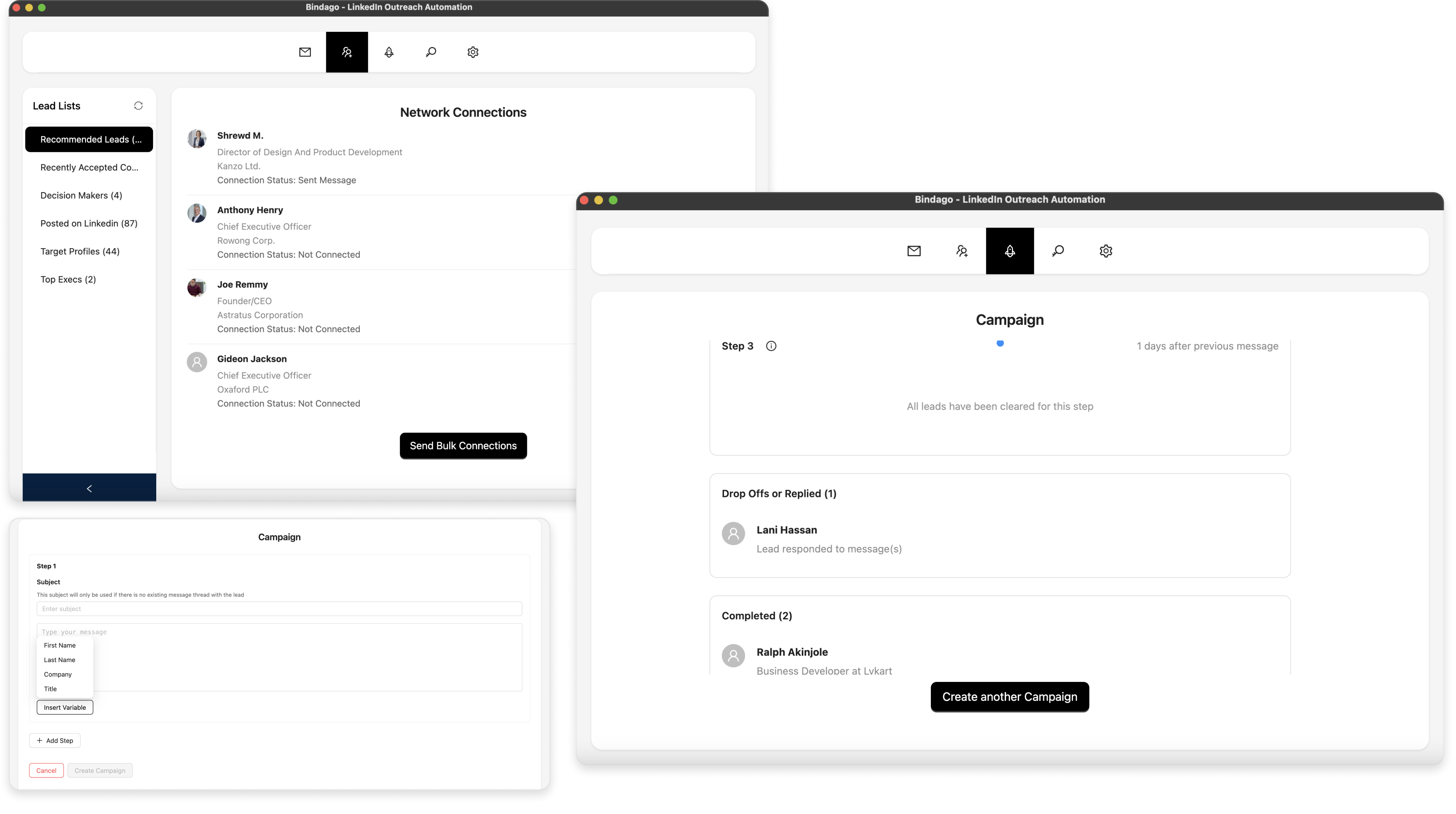
This is where a powerful tool like Bindago becomes indispensable for Account Executives. As a desktop application, Bindago allows you to automate your LinkedIn outreach safely and efficiently, all while keeping your credentials and client data securely on your local machine.
Here’s how Bindago can supercharge your rebound strategy:
- Create "Dormant Prospect" Lists: Export a list of your stalled deals or old prospects from your CRM or Sales Navigator into a CSV. Then, easily import these into Bindago to create dedicated lead lists.
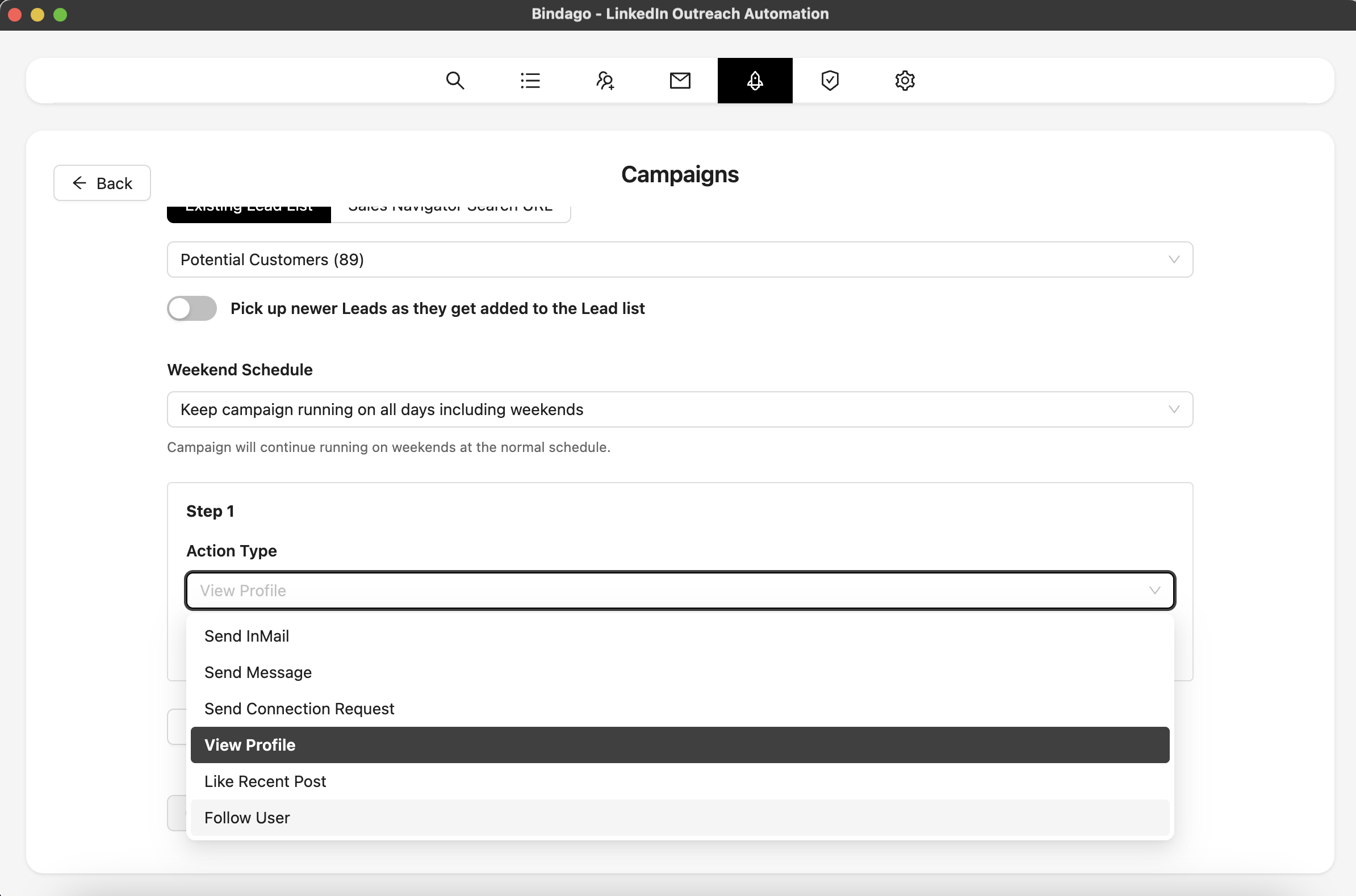
- Build Multi-Step Re-Engagement Campaigns: Use Bindago’s Campaigns feature to design automated sequences that mimic your rebound playbook. For example:
- Step 1 (Day 0): Automatically View Profile to initiate the "Warm-Up" Fly-By.
- Step 2 (Day 2): Automatically Like a Recent Post to reinforce familiarity and show interest in their current activities.
- Step 3 (Day 5): Automatically send a personalized Connection Request or a Contextual Message (like the "Thought of You" or "New Insight" templates) to your list.
- Step 4 (Day 10, if no response): A follow-up message with additional value.
By leveraging Bindago for these automated touchpoints, you ensure every dormant prospect receives a thoughtful, multi-touch re-engagement sequence. The beauty of this system is that the automation stops the moment a prospect replies, allowing you to step in and have a personalized, human conversation at the perfect moment. This frees you from tedious manual follow-ups, enabling you to focus on high-value interactions.
Conclusion: Turn Silence into Opportunity
A stalled deal is not a lost cause. It's an opportunity for a strategic rebound. By moving beyond generic follow-ups and leveraging LinkedIn as an intelligence and re-engagement tool, you can breathe new life into your dormant pipeline.
The rebound strategy is simple:
- Gather intelligence to understand current priorities and changes.
- Apply strategic, non-pushy re-engagement plays based on your findings.
- Systematize your efforts with smart, secure automation to execute at scale.
Embrace this framework, and you'll transform seemingly dead ends into a consistent source of new opportunities, building a more predictable and resilient sales pipeline.
Ready to turn your stalled deals into closed-won revenue? Explore Bindago today and start your 10-day free trial to implement your rebound strategy with confidence.