How to Personalize Follow-Ups at Scale on LinkedIn
In B2B sales, the data is undeniable: 80% of deals require at least five follow-ups. Yet, most sales professionals give up after just one or two attempts. Why? Because follow-ups are hard. They feel repetitive, and the fear of being perceived as "pushy" or "annoying" is real. The result is a graveyard of promising leads who simply went cold.
The problem isn't the follow-up itself; it's the way most people do it. Sending a generic "just checking in" message is ineffective and easily ignored. On the other hand, crafting a deeply personalized message for every single prospect is impossible to do at scale.
This guide provides a clear, actionable framework to solve this dilemma. You'll learn how to combine smart segmentation with powerful automation to send personalized follow-ups at scale, allowing you to build stronger relationships, get more replies, and close more deals.
1. The Mindset Shift: From "Following Up" to "Adding Value"
The most critical step is to change your mindset. A follow-up should not be about reminding a prospect you exist; it should be about providing new value. Before you send any message, ask yourself this question:
"What can I give in this message that is genuinely helpful to this person, even if they never buy from me?"
- Old Mindset: "Have you had a chance to read my last message?"
- New Mindset: "I saw this article about a challenge in your industry and thought of our conversation. Here's an insight that might be useful..."
When you consistently provide value, you transform from a salesperson into a trusted advisor. This is the foundation of modern, effective selling.
2. The Foundation of Scalable Personalization: Segmentation
You cannot write a personalized message for 500 different people. But you can write a personalized message for 5 groups of 100 people. Segmentation is the key to personalizing at scale.
Before you start any outreach, use LinkedIn Sales Navigator to divide your prospects into smaller, targeted groups based on shared characteristics. This allows you to craft messaging that feels relevant and specific to each group.
Effective Ways to Segment Your Prospects:
- By Industry: The challenges of a "Healthcare" company are different from a "Financial Services" firm.
- By Job Title/Seniority: The message you send to a "VP of Marketing" should be different from the one you send to a "Marketing Manager."
- By Company Size: A 20-person startup has different needs than a 5,000-person enterprise.
- By a Shared Interest or Group: "I see we're both members of the 'SaaS Growth' group..." is a great icebreaker.
- By a Trigger Event: Group prospects who have "Changed jobs in the last 90 days" or "Posted on LinkedIn in the past 30 days."
3. Crafting Your Segmented Follow-Up Templates
Once you have your segments, you can create a library of follow-up templates tailored to each one. A great follow-up message is a combination of a proven template and specific personalization.
Here are three value-driven templates you can adapt for your segments.
Template 1: The "Relevant Resource" Follow-Up
- Best for: Segmenting by industry or job title.
- Template:
"Hi {{firstName}}, thanks for connecting. I saw you're leading the marketing team at {{companyName}}. I've been working with other marketing leaders in the SaaS space, and a common challenge right now is [mention a specific, relevant pain point].
I recently came across this in-depth guide on the topic and thought you might find it useful. [Link to resource]."
Template 2: The "Insightful Question" Follow-Up
- Best for: Starting a conversation and showing expertise.
- Template:
"Hi {{firstName}}, hope you're having a great week. I'm curious, given your role at {{companyName}}, how is your team thinking about the impact of [Industry Trend] on your strategy for next quarter? We've seen some interesting approaches."
Template 3: The "Shared Experience" Follow-Up
- Best for: Segmenting by mutual connections, groups, or events.
- Template:
"Hi {{firstName}}, great to connect. I saw we're both members of the [LinkedIn Group Name] group. It's always good to connect with other professionals who are passionate about [Topic]. I'm curious to know what you thought of the recent discussion on [Specific Thread]."
4. Systematizing Your Personalized Follow-Ups with Automation
Having great templates and segments is one thing, but manually executing a multi-step follow-up sequence for hundreds of prospects is where the process breaks down. It's time-consuming, prone to human error, and simply not scalable.
To solve this, you need to use automation to execute your personalized strategy. This is where a secure and powerful tool like Bindago becomes your engine for growth.
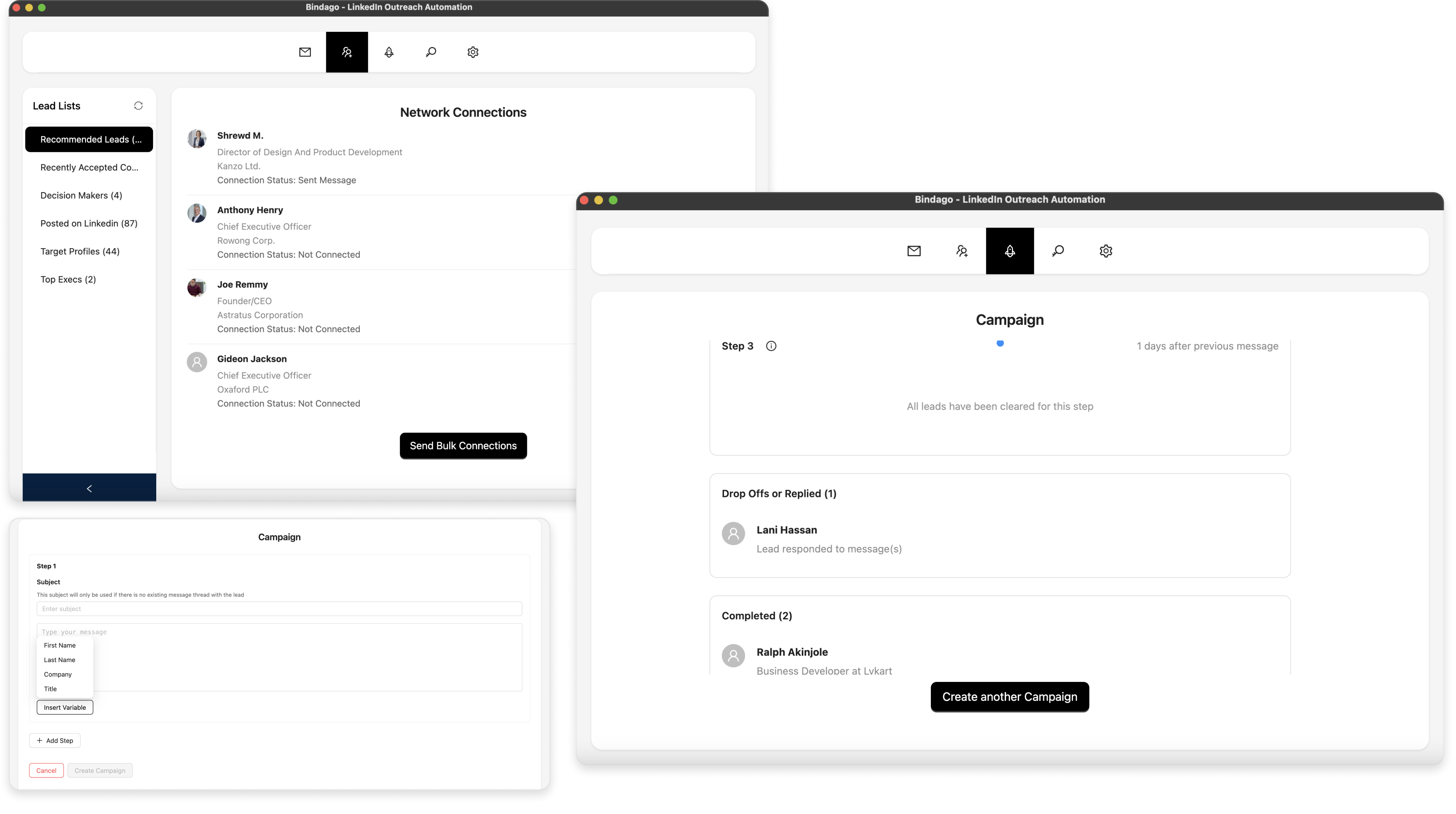
Bindago is a desktop application that helps you automate your LinkedIn outreach safely and efficiently. Unlike cloud-based tools that require you to share your sensitive LinkedIn credentials, Bindago runs locally on your computer, keeping your account secure.
Here’s how you can use Bindago to personalize follow-ups at scale:
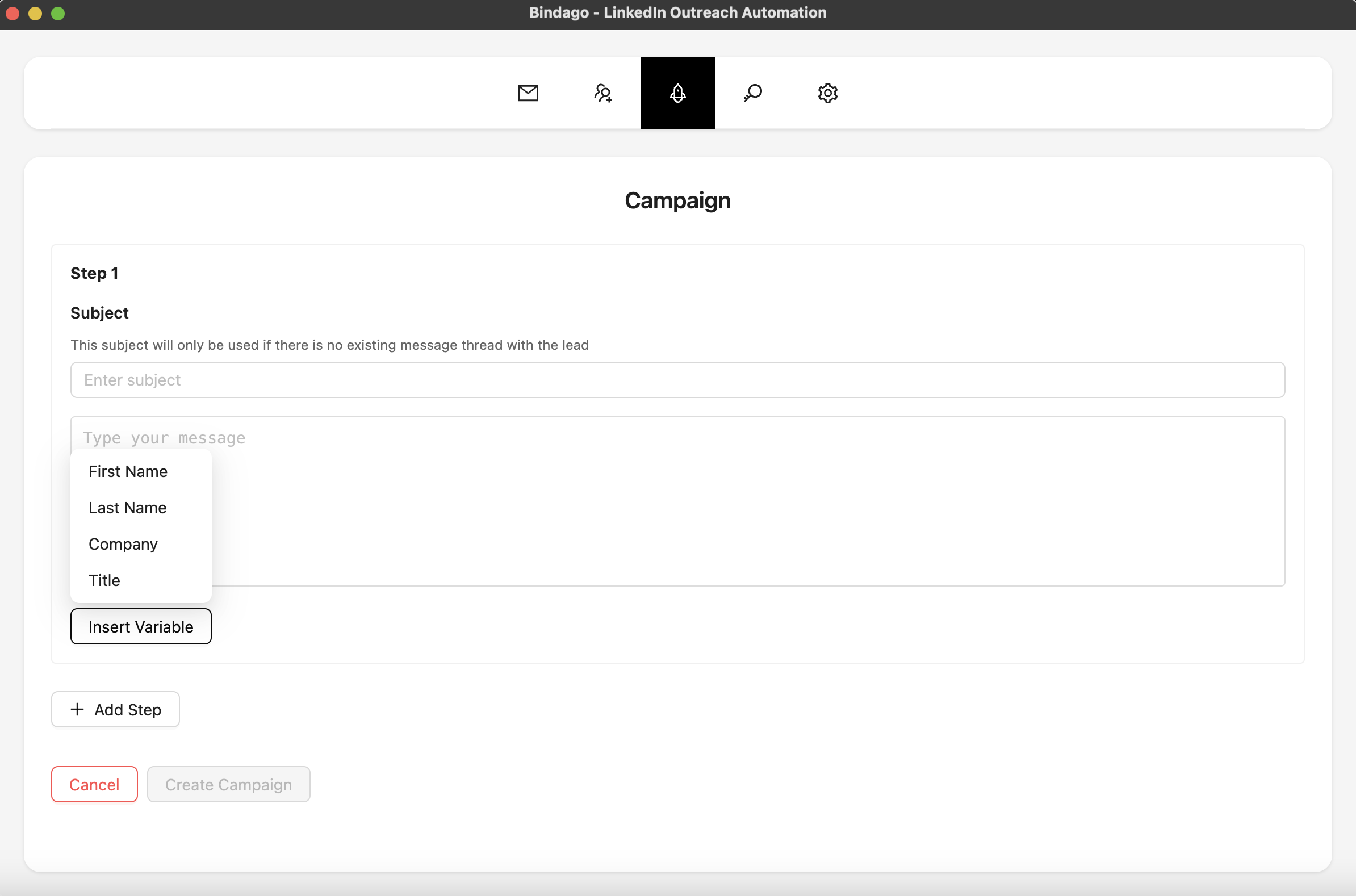
- Create Segment-Specific Campaigns: In Bindago's Campaigns feature, you can create a separate, multi-step outreach sequence for each of your prospect segments.
- Build Your Value-Driven Sequence: For each campaign, you can load one of your personalized templates. You can create a sequence of 3-4 messages that are automatically sent over several weeks.
- Personalize at Scale: Use Bindago's personalization variables (
{{firstName}},{{companyName}},{{title}}) to ensure each automated message feels one-to-one. - Let Automation Handle the Work: Bindago will automatically send each message at the interval you set. The automation is smart: the sequence for a prospect will stop automatically as soon as they reply, allowing you to step in and have a real, human conversation.
This hybrid approach gives you the best of both worlds: the efficiency of automation and the effectiveness of personalization.
Conclusion: Build a System for Success
The key to effective LinkedIn follow-ups is to stop choosing between personalization and scale. With the right strategy, you can have both.
The framework is simple:
- Segment your prospects into logical groups.
- Craft value-driven message templates for each segment.
- Use automation to execute your multi-step follow-up sequences.
By building a system for your follow-ups, you can ensure that no lead ever goes cold, save countless hours of manual work, and focus your time on what matters most: having meaningful conversations with prospects who are ready to engage.
Ready to turn your follow-ups into a lead-generating machine? Download Bindago today and start your 10-day free trial.