How Account Executives Can Use LinkedIn to Revive Stalled Deals
Every account executive knows the frustration of a stalled deal. You've had promising conversations, the prospect seemed enthusiastic, and then... silence. The follow-up emails go unanswered, the calls go to voicemail, and the deal slowly slips into the "closed-lost" abyss. Sending another "just checking in" email feels desperate and rarely works.
But what if there was a better way to breathe life back into these opportunities?
LinkedIn offers a powerful, yet often underutilized, toolkit for reviving stalled deals. It allows you to move beyond the formal confines of email and re-engage prospects in a contextual, value-driven way. This guide will provide you with actionable strategies to use LinkedIn to turn your stalled deals into closed-won revenue.
Why Deals Stall and Why LinkedIn is the Perfect Revival Tool
Deals stall for many reasons that are often out of your control:
- A Change in Priorities: A more urgent issue has captured your prospect's attention.
- Your Champion Leaves: The key person you were working with has left the company.
- Budget Freezes: The allocated budget has been cut or reallocated.
- Internal Reorganization: The team or department you were selling to is being restructured.
Trying to overcome these hurdles with a simple email is difficult because you lack context. This is where LinkedIn shines. It provides a real-time window into your prospect's professional world, giving you the context you need to re-engage intelligently.
1. Become an Intelligence Officer: Gather Context Before You Act
Before you reach out, you need to understand what has changed since you last spoke. Spend 10-15 minutes on LinkedIn gathering intelligence:
- Analyze Their Recent Activity: What have they been posting, liking, or commenting on? Their activity is a direct signal of their current priorities. If they're engaging with content about a new challenge, that's your new angle.
- Check for Job Changes: Is your champion still in the same role? Have they been promoted? Or have they left the company? This is the most critical piece of information to verify.
- Monitor Company News: Visit their company's LinkedIn page. Have they announced a new product, a funding round, or a new strategic direction? These are all potential trigger events for a renewed conversation.
- Identify New Stakeholders: If your champion has left, use LinkedIn to identify their replacement or other key players in the department. Look for titles like "VP," "Director," or "Head of" in the relevant function.
2. Five Non-Pushy Strategies to Re-Engage on LinkedIn
Once you have your context, you can choose the right strategy to re-engage. Here are five proven methods that don't involve a desperate "just checking in" message.
Strategy 1: The "Warm-Up" Fly-By
Before you send a single message, get back on their radar subtly.
- Action: A few days before you plan to reach out, view their profile and like one of their recent, relevant posts. This creates two non-intrusive notifications that make your name familiar again.
Strategy 2: The Value-Driven Comment
Instead of going straight to their DMs, engage with them publicly.
- Action: Find a recent post they've written and leave a thoughtful, insightful comment that adds to the conversation. Ask a question or share a related perspective. This positions you as a peer and an expert, not just a salesperson.
Strategy 3: The Contextual "Thought of You" Message
This is the classic re-engagement play, but supercharged with context from your research.
- Action: Send a direct message that references a specific trigger event.
- Template:
"Hi {{firstName}}, I saw that {{companyName}} just announced [Company News, e.g., its expansion into Europe]. It reminded me of our conversation about scaling your sales team. I thought you might find this case study on how we helped another company manage a similar expansion useful. [Link]"
Strategy 4: The "New Insight" Follow-Up
This approach provides new value and gives you a legitimate reason to re-engage.
- Action: Share a new piece of content or a new insight that has emerged since you last spoke.
- Template:
"Hi {{firstName}}, hope you're well. Since we last spoke about [Original Problem], we've actually developed a new feature that directly addresses the challenge of [Specific Pain Point] you mentioned. Would you be open to a quick 15-minute look at how it works?"
Strategy 5: The Multi-Threading Play
If your original champion has gone silent or left the company, it's time to multi-thread.
- Action: Identify 2-3 other relevant stakeholders in the account using LinkedIn. Use a warm-up sequence (view profile, like post) and then send them a personalized connection request.
- Template:
"Hi {{firstName}}, I see you're leading the [Department] team at {{companyName}}. I was previously in touch with [Original Champion] about solving [Problem]. I'd love to connect to see if this is still a priority for your team."
How to Systematize Your Deal Revival Efforts
Manually tracking every stalled deal and executing these multi-step re-engagement plays is not scalable. To do this effectively, you need a system. This is where a powerful and secure automation tool becomes essential.
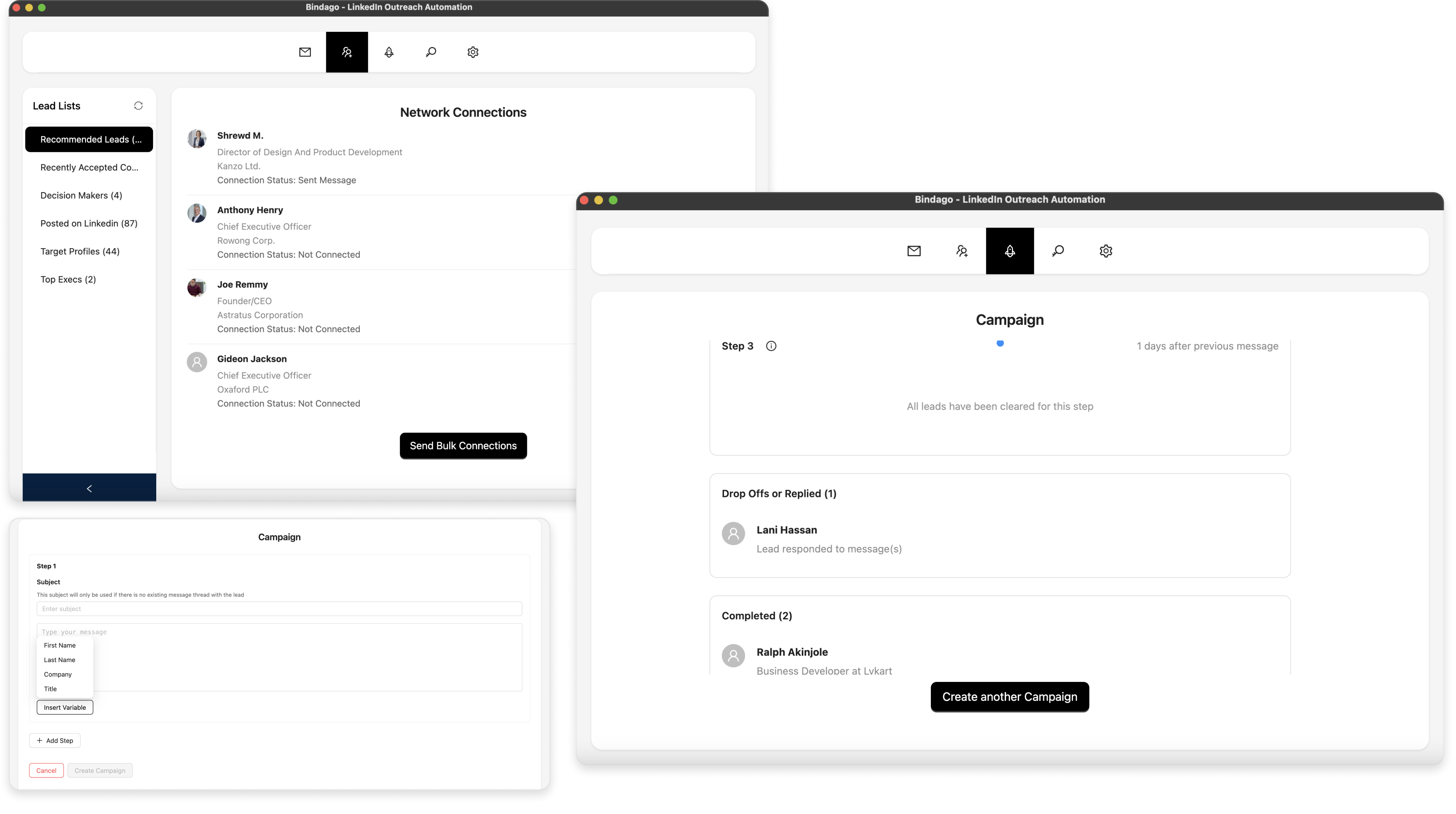
Bindago is a desktop application designed to help you automate your LinkedIn outreach safely and efficiently. With Bindago, you can create a "Stalled Deal Revival" campaign for every opportunity that goes cold.
Here’s how you can use Bindago to build a revival machine:
- Create a Stalled Deal List: Export a list of your stalled deals from your CRM and use Bindago to create a dedicated lead list.
- Build a Multi-Step Revival Campaign: Use Bindago's Campaigns feature to create an automated sequence.
- Step 1 (Day 0): Automatically View Profile.
- Step 2 (Day 2): Automatically Like a Recent Post.
- Step 3 (Day 5): Automatically send a personalized Follow-Up Message using one of the templates above.
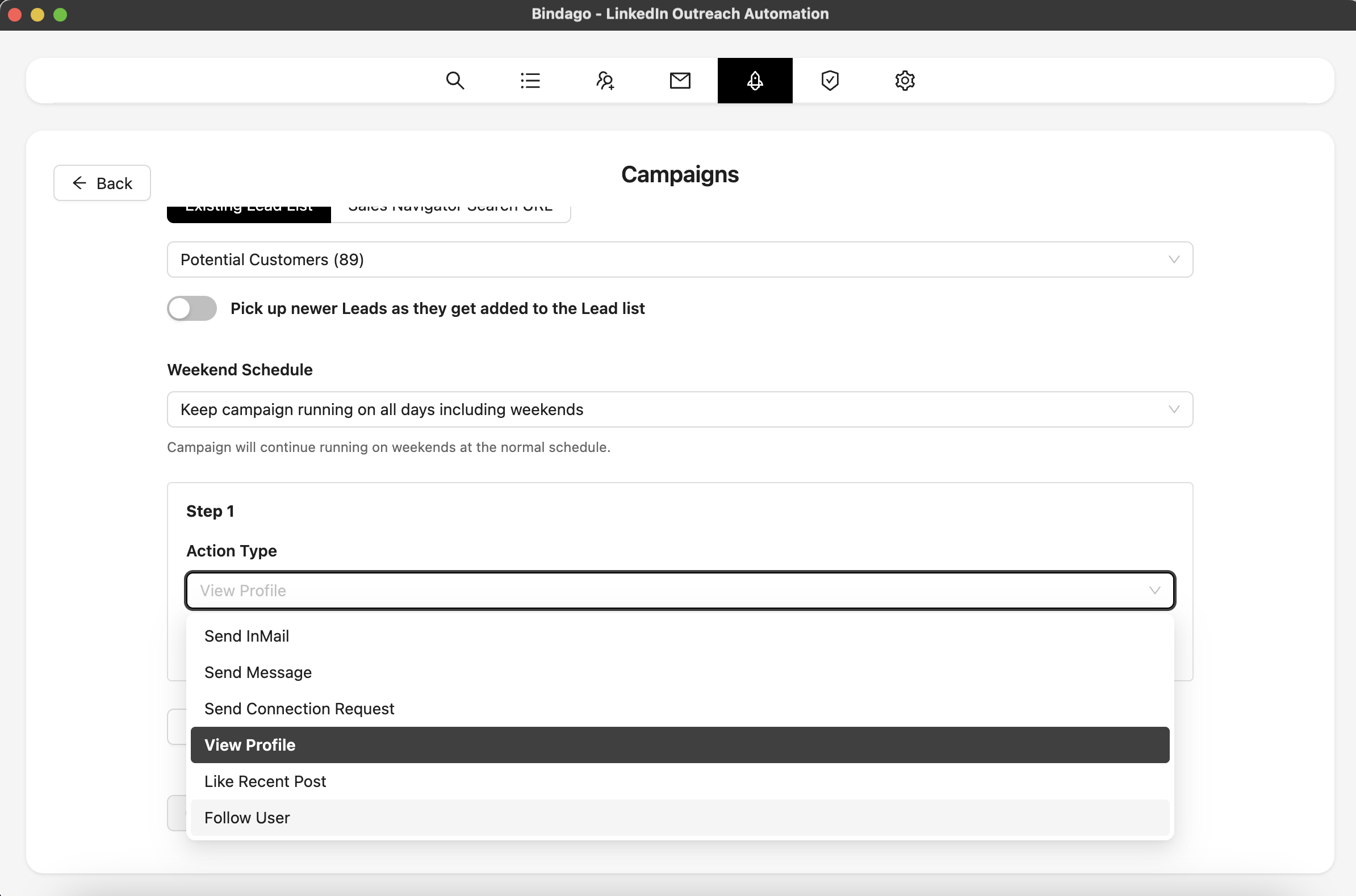
This system ensures that every stalled deal gets a thoughtful, multi-touch follow-up sequence, dramatically increasing your chances of re-engagement. The automation stops the moment a prospect replies, allowing you to step in and have a real conversation. And because Bindago is a desktop app, your LinkedIn credentials and client data remain securely on your computer.
Conclusion: Turn Silence into Opportunity
A stalled deal doesn't have to mean a lost deal. It's an opportunity to demonstrate your value, persistence, and creativity. By moving the conversation from the formal inbox to the dynamic environment of LinkedIn, you can find the context you need to re-engage in a way that is relevant and welcome.
Stop sending "just checking in" emails that get ignored. Start using LinkedIn to gather intelligence, add value, and systematically revive your pipeline. With a strategic approach and a powerful automation tool like Bindago, you can turn silence into your most promising source of closed-won deals.
Ready to revive your stalled deals and build a predictable pipeline? Download Bindago today and start your 10-day free trial.