How to Plan a Content Calendar That Keeps You Visible
In the professional world, consistency is the currency of trust. On platforms like LinkedIn, showing up sporadically with random posts is a surefire way to be ignored. The professionals who build powerful brands and attract a steady stream of opportunities are the ones who are consistently visible. But the pressure to create fresh, engaging content day after day leads to a common problem: the "content treadmill" and subsequent burnout.
The secret to consistency isn't more ideas or more willpower; it's a better system. A content calendar is the strategic tool that transforms your content efforts from a chaotic, stressful chore into a predictable, manageable process. This guide provides a clear framework for planning a content calendar that not only keeps you visible but also turns your content into a powerful engine for building authority and generating leads.
1. Why You Need a Content Calendar
A content calendar is more than just a schedule; it's a strategic plan. It helps you:
- Stay Consistent: By planning ahead, you eliminate the daily "what should I post?" anxiety, making it easy to show up consistently.
- Prevent Burnout: Batching your content creation frees you from the constant pressure of the content treadmill.
- Align with Goals: A calendar ensures your content is strategically aligned with your business objectives, whether that's building your personal brand, launching a product, or generating leads.
- Improve Content Quality: Planning ahead gives you the time to create more thoughtful, well-researched, and valuable content.
2. Step 1: Define Your Content Pillars
Before you can plan what to post, you need to know what to talk about. Your content pillars are the 3-5 core topics that you will own. They should be at the intersection of three things:
- Your Expertise: What do you know better than anyone else?
- Your Audience's Pain Points: What are the burning problems your ideal customers are trying to solve?
- Your Business Goals: What topics will naturally lead to conversations about your products or services?
For example, a sales coach's content pillars might be:
#SalesLeadership#Prospecting#Negotiation
Defining these pillars keeps your content focused and reinforces your authority in your chosen niche.
3. Step 2: Build a Content Generation Matrix
Now that you have your pillars, you need a system for generating ideas within them. The "Content Generation Matrix" is a simple framework that combines your pillars with different content formats.
- Educate: Teach your audience how to solve a problem (e.g., "How to write a follow-up email that gets replies").
- Share Experience: Tell a story about a win, a loss, or a lesson learned (e.g., "The biggest mistake I made in my first year of sales...").
- Share Your Perspective: Offer your unique take on an industry trend or common belief (e.g., "Why cold calling isn't dead, but your script is").
- Engage: Ask a question or run a poll to spark a conversation (e.g., "What's the one sales tool you can't live without?").
By rotating through these formats for each of your content pillars, you can generate dozens of post ideas with minimal effort.
4. Step 3: The Monthly Batching Workflow
This is the practical process of putting your plan into action.
- Week 1: Plan and Create. Dedicate a 2-3 hour block at the beginning of the month to do all your creative work. Brainstorm your post ideas using the matrix above and write 8-12 posts for the entire month. Get them out of your head and into a document.
- Week 2 & 3: Schedule and Engage. Use a scheduling tool (or just your calendar) to decide when each post will go live. Your main focus during these weeks should be on engaging with others—commenting on posts from prospects, clients, and industry leaders.
- Week 4: Analyze and Refine. Review your LinkedIn analytics. Which posts got the most comments? Which topics resonated most? Use these insights to inform your content plan for the next month.
5. From Calendar to Conversations: Systematizing Your Follow-Up
A successful content calendar will do more than just keep you visible; it will generate engagement. The likes and comments on your posts are not vanity metrics; they are buying signals. These are warm leads who have raised their hand to show interest in the problems you solve.
The final step is to build a system to turn this engagement into real business conversations. Manually tracking every interaction and sending a personalized follow-up is not a scalable strategy.
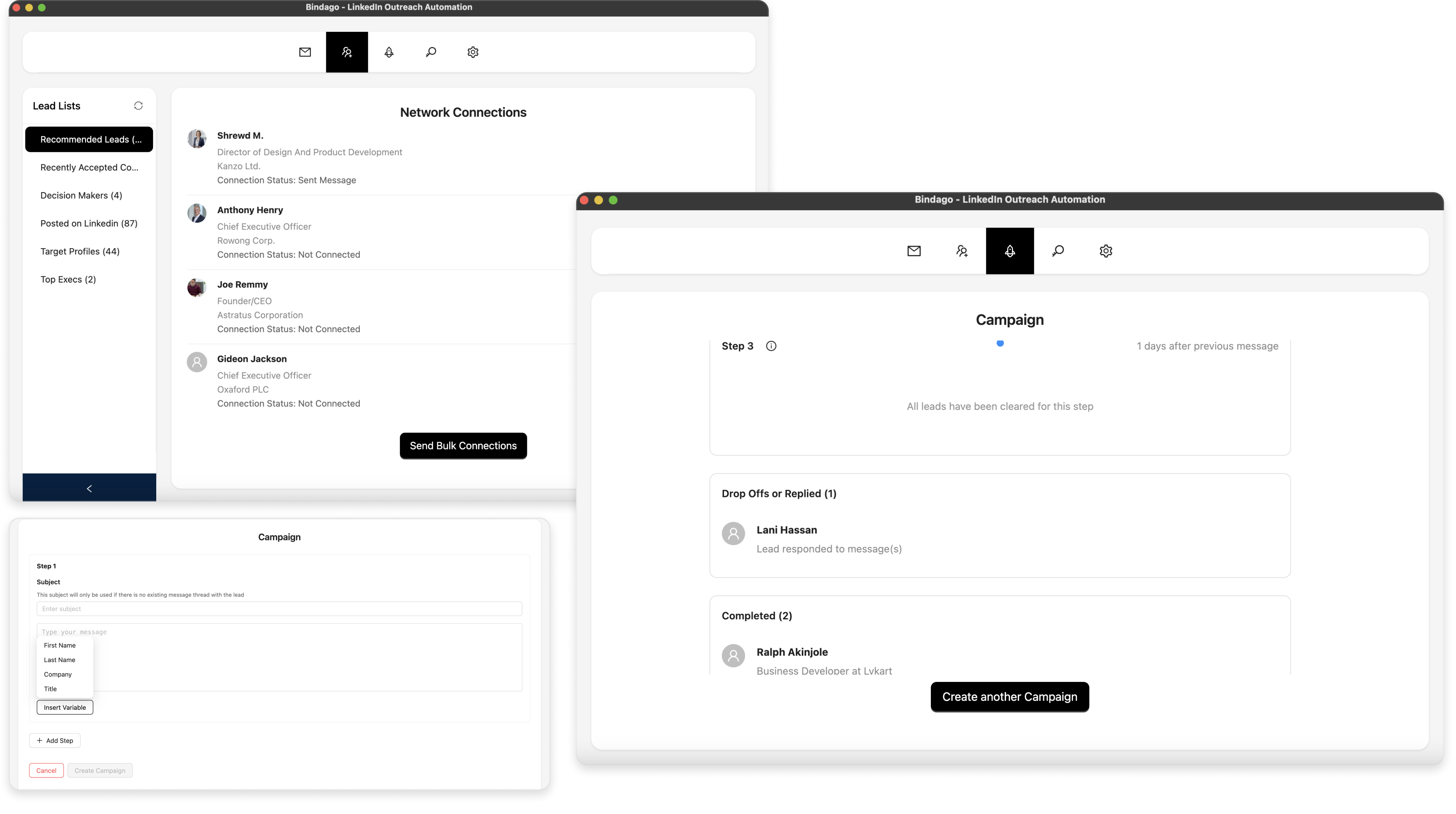
This is where a secure automation tool like Bindago becomes a critical part of your content strategy. While you focus on creating and planning your valuable content, Bindago can work in the background to convert that engagement into a predictable pipeline.
Here’s how to build your system:
- Identify Engaged Prospects: After you publish a post, you have a list of prospects who have liked or commented on it.
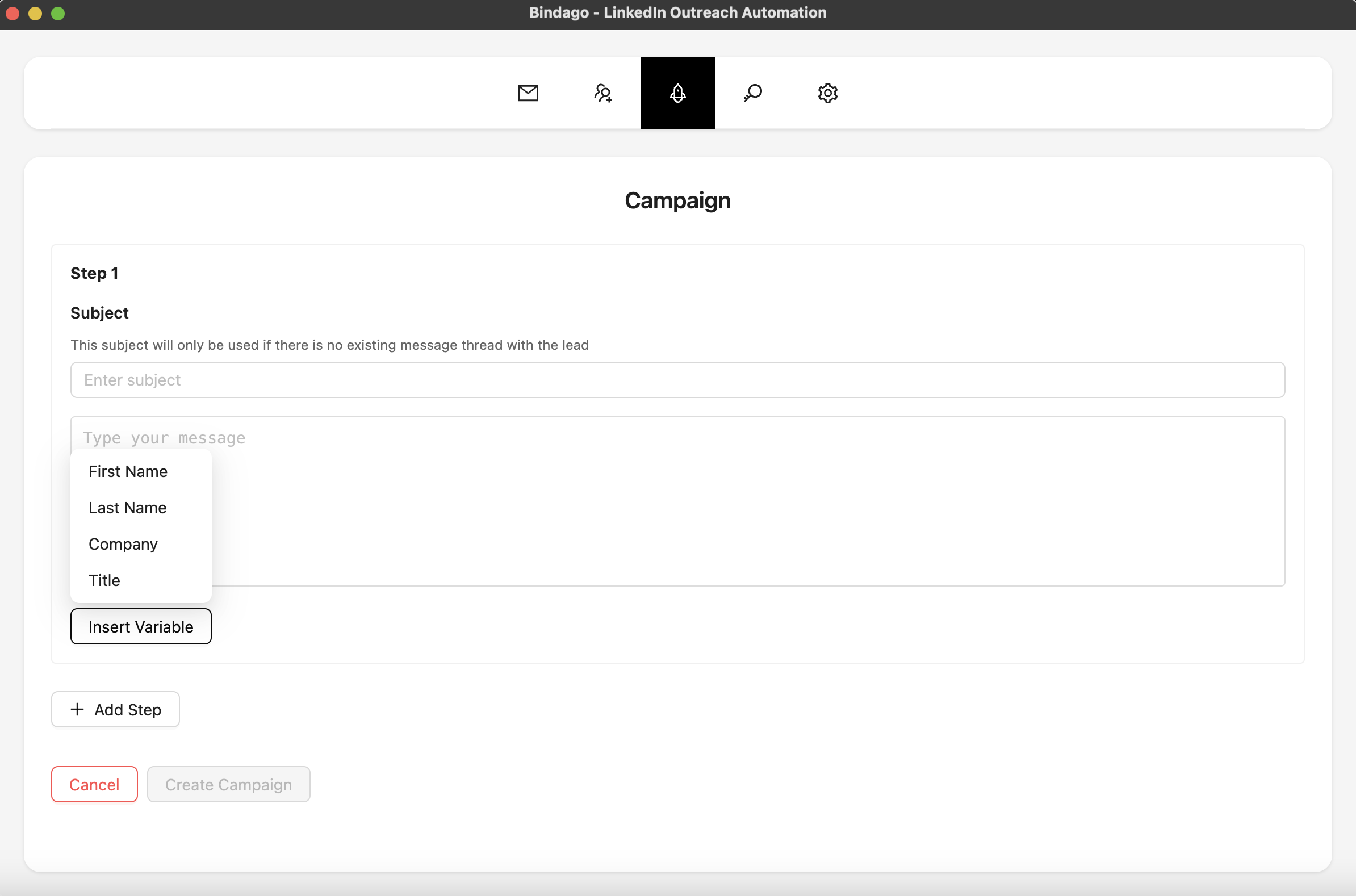
- Launch a Contextual Outreach Campaign: Use Bindago's Campaigns feature to create a multi-step sequence that feels just as authentic as your content.
- Step 1: Send a Contextual Connection Request.
- Template: "Hi {{firstName}}, thanks for engaging with my post on [Topic]. Since you're clearly interested in this area, I thought it would be great to connect."
- Step 2 (3 days after connecting): Send a Value-Driven Follow-Up.
- Template: "Thanks for connecting! As you're interested in [Topic], I thought you might find this in-depth guide I wrote on the subject useful. [Link to a high-value resource]."
- Step 1: Send a Contextual Connection Request.
By using Bindago to automate this process, you create a seamless bridge from valuable content to genuine business conversations, allowing you to focus on creating while your system converts.
Conclusion: Your System for Sustainable Growth
A content calendar is the key to unlocking consistent growth on LinkedIn without the burnout. It provides the structure needed to build authority, nurture your network, and generate a steady stream of inbound opportunities.
The framework is simple:
- Define your content pillars.
- Generate ideas with a simple matrix.
- Batch your content creation monthly.
- Systematize your follow-up to turn engagement into conversations.
Implement this system, and you'll transform your LinkedIn presence from a source of stress into your most powerful tool for professional growth.
Ready to build a content engine that drives real results? Download Bindago today and start your 10-day free trial.