How to Turn One Idea Into 10 LinkedIn Content Pieces
The pressure to consistently create fresh, engaging content on LinkedIn is immense. Many professionals post a great idea, see a spike in engagement, and then are left wondering, "What do I post next?" This content creation treadmill leads to burnout and inconsistency.
But what if you could take one single, powerful idea and transform it into a week's worth—or even a month's worth—of high-quality content?
This is the power of content repurposing. It’s the strategy that top creators use to maximize their reach, save dozens of hours, and build authority without constantly having to reinvent the wheel. This guide will show you how to take one core idea and turn it into 10 distinct pieces of LinkedIn content.
The Core Idea: Your Content Pillar
First, you need a strong "content pillar." This is a core topic where you have deep expertise and that directly addresses a significant pain point for your Ideal Customer Profile (ICP).
A great content pillar has three qualities:
- It's Relevant: It speaks to a real problem your audience faces.
- You're an Expert: You have credible experience or knowledge on the topic.
- It's Evergreen: The idea has a long shelf life and won't be irrelevant next week.
Example Core Idea: "The key to effective sales prospecting is to warm up cold leads before you ever send a pitch."
Now, let's see how we can turn this one idea into 10 different content pieces.
1. The "Why" Post (Text-Only)
This is a short, punchy text post that introduces the core idea and explains why it's important. It’s designed to be a scroll-stopper.
- Format: Text-only, 5-7 short lines.
- Hook: Start with a bold, contrarian statement.
- Example:
Pitching cold leads on LinkedIn is dead.
Why? Because it skips the most important step: trust.
Before you ask for a meeting, you have to earn their attention.
The best salespeople aren't pitchers; they're professional "warm-up" artists.
Stop selling. Start warming.
2. The "How-To" Guide (Carousel/PDF)
This format breaks down your core idea into a practical, step-by-step guide. Carousels are highly engaging because they encourage users to swipe through.
- Format: A 5-10 slide carousel post (saved as a PDF).
- Content:
- Slide 1: Title - "How to Warm Up Cold Leads on LinkedIn (A 3-Step Guide)"
- Slide 2: The Problem - "Why cold pitching fails."
- Slide 3: Step 1 - "View Their Profile (The Digital Handshake)"
- Slide 4: Step 2 - "Engage with Their Content (Like or Comment)"
- Slide 5: Step 3 - "Send a Contextual Connection Request"
- Slide 6: A concluding thought and a call to action.
3. The Common Mistakes Post (Text-Only)
Frame your idea from a different angle by highlighting the common errors people make. This format resonates because people are often more motivated by avoiding mistakes than by achieving success.
- Format: Text-only, using bullet points.
- Example:
I see salespeople making these 3 mistakes all the time when warming up leads:
- Being Creepy: Don't say "I saw you viewed my profile." It's awkward.
- Generic Engagement: A "like" is good, but a thoughtful comment is 10x better.
- Pitching in the Connection Request: The goal is to connect, not to sell.
Avoid these, and you're already ahead of 90% of your competition.
4. The Myth vs. Fact Post (Carousel or Text)
Debunk common misconceptions related to your core idea. This positions you as an expert who can separate signal from noise.
- Format: A two-column text post or a simple carousel.
- Example:
Let's bust some myths about warming up leads:
Myth: It takes too much time. Fact: With the right system, you can warm up hundreds of leads on autopilot.
Myth: It's not as effective as a direct pitch. Fact: Warm leads have a 50%+ higher response rate than cold leads.
5. The Case Study / Story (Text-Only)
Stories are the most powerful way to make your point memorable. Share a real-world example of your core idea in action.
- Format: A short, narrative text post.
- Example:
I recently worked with an AE who was struggling with a 10% connection acceptance rate.
We stopped his cold outreach and implemented a simple 3-day warm-up sequence.
The result? His acceptance rate jumped to 45% in two weeks.
- Lesson: Don't underestimate the power of familiarity.
6. The "Ask Me Anything" (AMA) or Question Post
Turn your idea into a question to spark engagement and conversation. This also gives you valuable insight into what your audience is thinking.
- Format: A simple text post with a clear question.
- Example:
What's your go-to strategy for warming up a cold lead before you reach out?
A) View their profile B) Like their content C) Leave a comment D) Something else?
Curious to hear what's working for you.
7. The Quote Graphic
Pull one powerful, memorable sentence from your original idea and turn it into a simple, shareable graphic.
- Format: A simple image with text.
- Example: A clean background with the text: "Stop selling. Start warming."
8. The Short Video Tip
Record a 60-90 second video where you explain one key aspect of your core idea. Video is a powerful way to build a personal connection with your audience.
- Format: A short, vertical video with captions.
- Example: A quick video where you say, "Here's my #1 tip for warming up a cold lead: before you connect, leave a thoughtful comment on one of their posts. It changes the entire dynamic."
9. The "Deep Dive" LinkedIn Article
Expand your original idea into a long-form LinkedIn Article. This is where you can go into much more detail, include data, and link to external resources.
- Format: A full LinkedIn Article.
- Example: A 1,000-word article titled "The Complete Guide to Warming Up Cold Leads on LinkedIn," where you elaborate on each of the steps from your carousel post.
10. The "Tools/Resources" List
Provide a list of tools or resources that can help your audience implement your idea. This is a high-value, generous post.
- Format: A text post with a bulleted list.
- Example:
To warm up leads at scale, you need the right tools. Here are a few I recommend:
- LinkedIn Sales Navigator: For building hyper-targeted lists.
- A good CRM: To track your interactions.
- An automation tool: To systematize your warm-up sequence.
Systematizing Your Engagement
Creating all this content will naturally lead to more engagement—more likes, comments, and profile views. The final step is to turn that engagement into real conversations. Manually tracking and reaching out to every person who interacts with your content is not scalable.
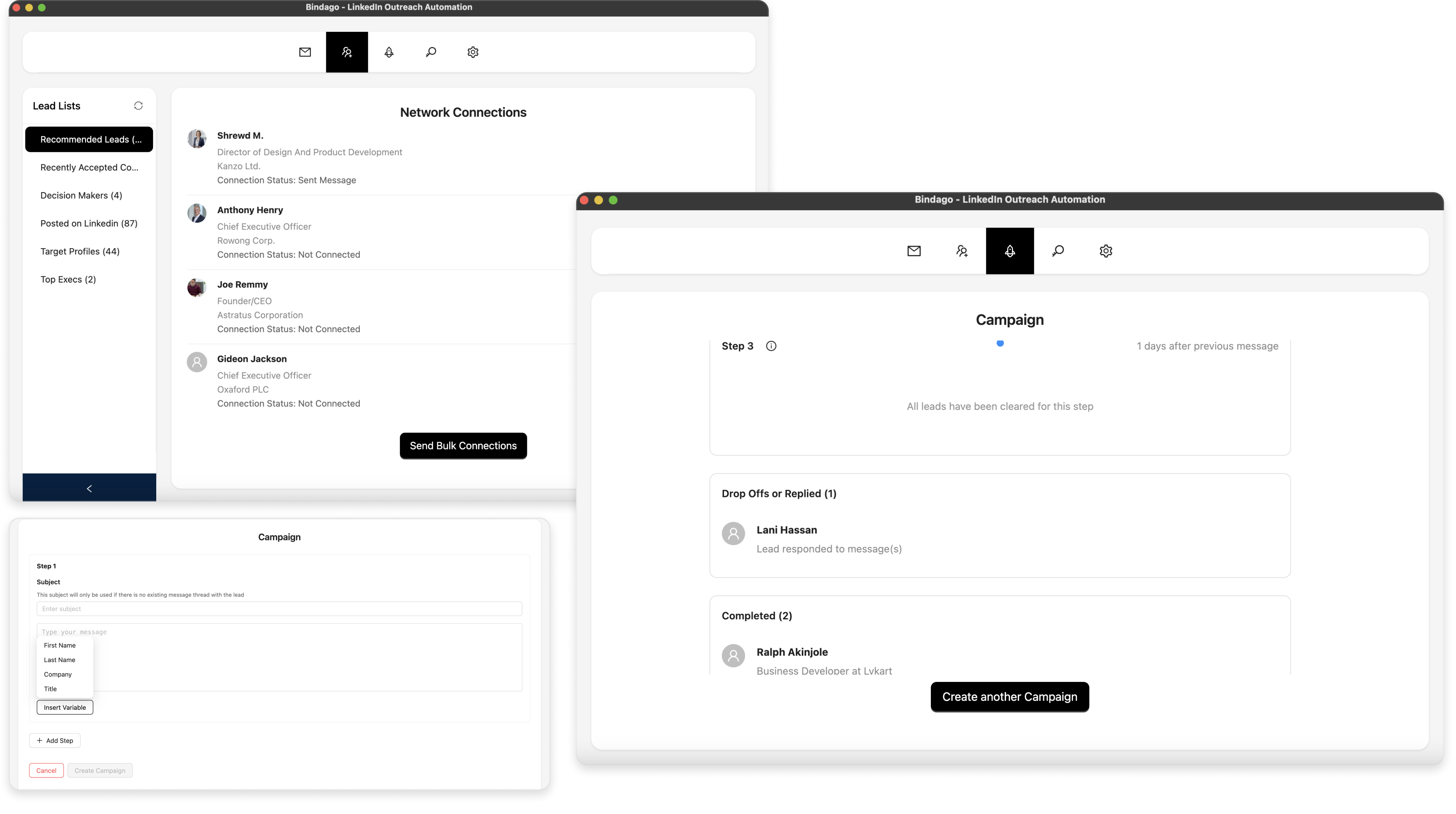
This is where a tool like Bindago becomes essential. Bindago is a desktop application that helps you automate your LinkedIn outreach safely and efficiently.
With Bindago, you can create a campaign to:
- Engage with people who liked your posts: Send a personalized connection request to everyone who engaged with your content.
- Automate your warm-up sequence: Put the warm-up strategy you've been writing about into practice by creating a multi-step campaign that automatically views profiles, likes posts, and sends connection requests.
By using Bindago to handle the outreach, you can focus on creating great content while the system turns your engaged audience into a pipeline of warm leads.
Conclusion
Stop struggling to come up with new content ideas every day. Instead, find one powerful idea and go deep. By repurposing your core message into multiple formats, you can build authority, save time, and create a much richer and more engaging content experience for your audience.
Pick one core idea this week and try turning it into three or four of the formats above. You'll be amazed at how much content you can create, and how much more impactful your LinkedIn presence will become.