How to Create a Monthly LinkedIn Marketing Strategy
For many businesses and professionals, LinkedIn marketing is a series of sporadic, reactive tasks—a post here, a connection request there. This approach leads to inconsistent results and a constant feeling of "what should I do next?" The difference between struggling on LinkedIn and achieving predictable growth lies in having a documented, repeatable monthly marketing strategy.
A monthly strategy turns chaotic activity into a well-oiled machine. It provides structure, ensures consistency, and allows you to measure what's working so you can double down on your success. This guide provides a clear, week-by-week framework for creating and executing a LinkedIn marketing strategy that builds your brand, engages your audience, and generates a steady stream of opportunities.
Why a Monthly Strategy is a Game-Changer
Before diving into the "how," it's important to understand the "why." A structured monthly plan:
- Builds Momentum: Consistent activity creates a flywheel effect. Your audience grows, engagement increases, and your authority compounds over time.
- Prevents Burnout: By planning ahead and batching your work, you avoid the daily stress of figuring out what to post or who to connect with.
- Enables Measurement: A systematic approach allows you to track key metrics, understand what resonates with your audience, and make data-driven decisions to improve your ROI.
- Ensures a Holistic Approach: It forces you to balance all key activities—content creation, prospecting, engagement, and nurturing—instead of focusing on just one.
The 4-Week Framework for Your Monthly LinkedIn Strategy
Here is a simple yet powerful framework that breaks down your monthly LinkedIn activities into manageable weekly sprints.
Week 1: Strategy, Planning, and Content Creation
This week is about setting the foundation for the entire month.
- 1. Define Your Goals: What is the primary goal for this month? Is it to generate 10 new sales conversations? Increase followers by 5%? Drive traffic to a new whitepaper? A clear goal will guide all your activities.
- 2. Refine Your Ideal Customer Profile (ICP): Who are you trying to reach? Review your ICP and identify any new trends or pain points you should be addressing.
- 3. Brainstorm Content Pillars: Based on your ICP's challenges, brainstorm 2-3 core topics (content pillars) you will focus on for the month.
- 4. Batch-Create Your Content: Don't create content on the fly. Dedicate a few hours to write 4-8 high-value posts for the entire month. This could be a mix of text posts, carousels, or video scripts. This is the single most effective way to ensure consistency.
Week 2: Audience Growth and Proactive Engagement
With your content ready, this week is focused on expanding your audience and warming up prospects.
- 1. Targeted Prospecting: Use LinkedIn Sales Navigator to build hyper-targeted lists of prospects who fit your ICP. Focus on high-intent signals like "Changed jobs in last 90 days" or "Posted on LinkedIn in past 30 days."
- 2. Strategic Engagement: Dedicate 15 minutes each day to leaving thoughtful, insightful comments on posts from key prospects and industry influencers. This builds visibility and positions you as an expert.
- 3. The "Warm-Up" Sequence: Before sending connection requests, "warm up" your prospects. This involves subtle touchpoints like viewing their profile and liking a recent post. This makes your eventual connection request feel familiar, not cold.
Week 3: Publish, Nurture, and Convert
This is where you activate your audience and start turning engagement into conversations.
- 1. Schedule and Publish Your Content: Use a scheduling tool or manually post your pre-written content 2-3 times this week.
- 2. Engage with Your Engagers: This is critical. When people comment on your posts, reply to every single comment to foster a community and spark conversations. The people who engage with your content are your warmest leads.
- 3. Nurture New Connections: For prospects who have connected with you, send a value-driven follow-up message. Do not pitch. Share a relevant resource or ask a thoughtful question.
Week 4: Analyze, Optimize, and Plan for Next Month
The final week is for reviewing your performance and planning for the next cycle.
- 1. Review Your Analytics: Go to your LinkedIn profile and look at your content analytics. Which posts had the highest engagement (especially comments)? What topics resonated most?
- 2. Assess Your Outreach Performance: What was your connection acceptance rate? How many conversations did you start? How many meetings did you book?
- 3. Plan for Next Month: Use these insights to refine your ICP, brainstorm new content ideas, and adjust your outreach strategy for the upcoming month.
Systematize Your Monthly Strategy with Automation
Executing this entire framework consistently across hundreds of prospects is nearly impossible to do manually. It's time-consuming and prone to human error. To build a true marketing engine, you need to automate the repetitive tasks.
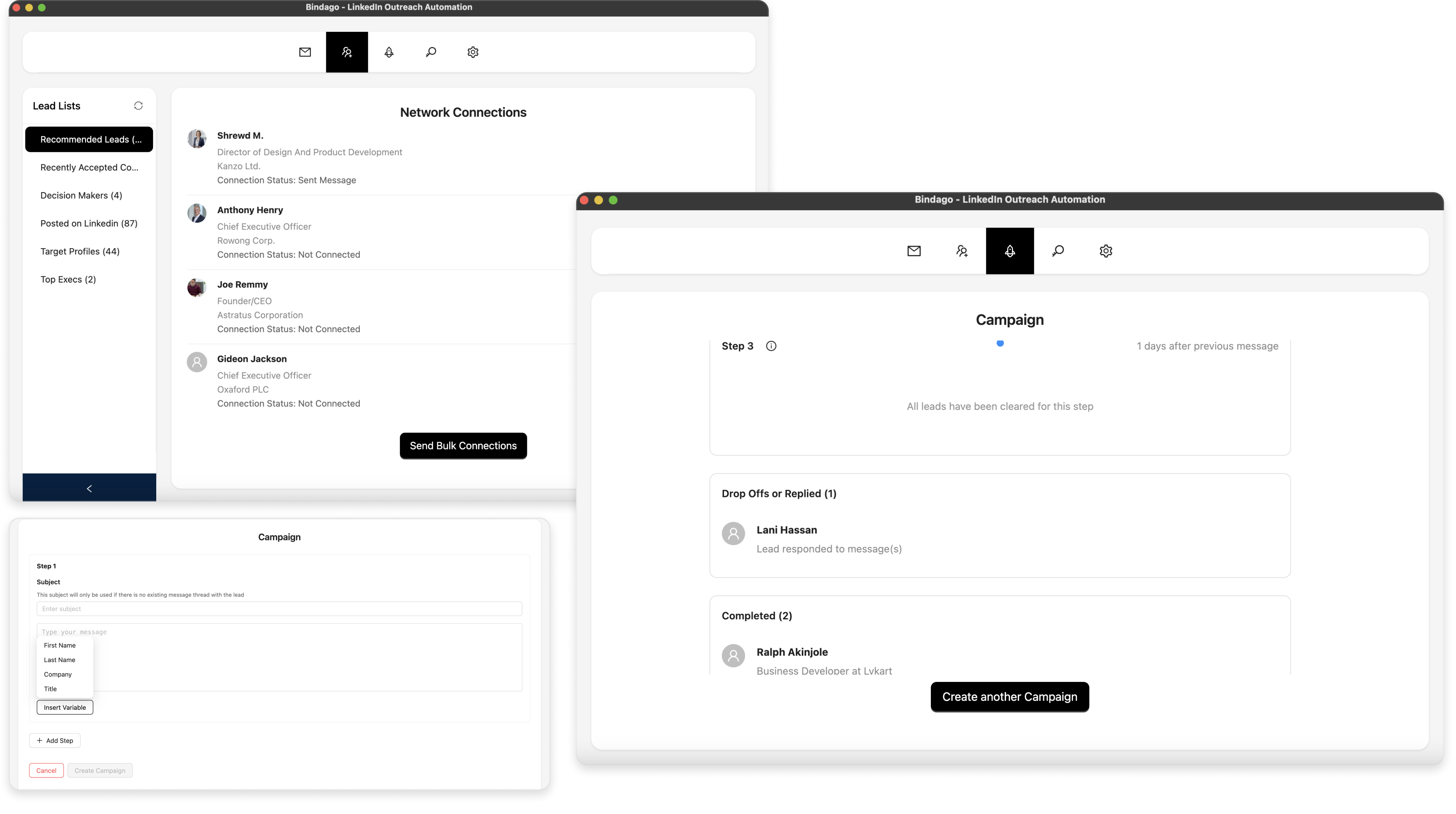
This is where a powerful and secure automation tool like Bindago becomes your secret weapon. Bindago is a desktop application designed to help you execute your LinkedIn strategy safely and efficiently.
Here’s how Bindago can power your monthly strategy:
-
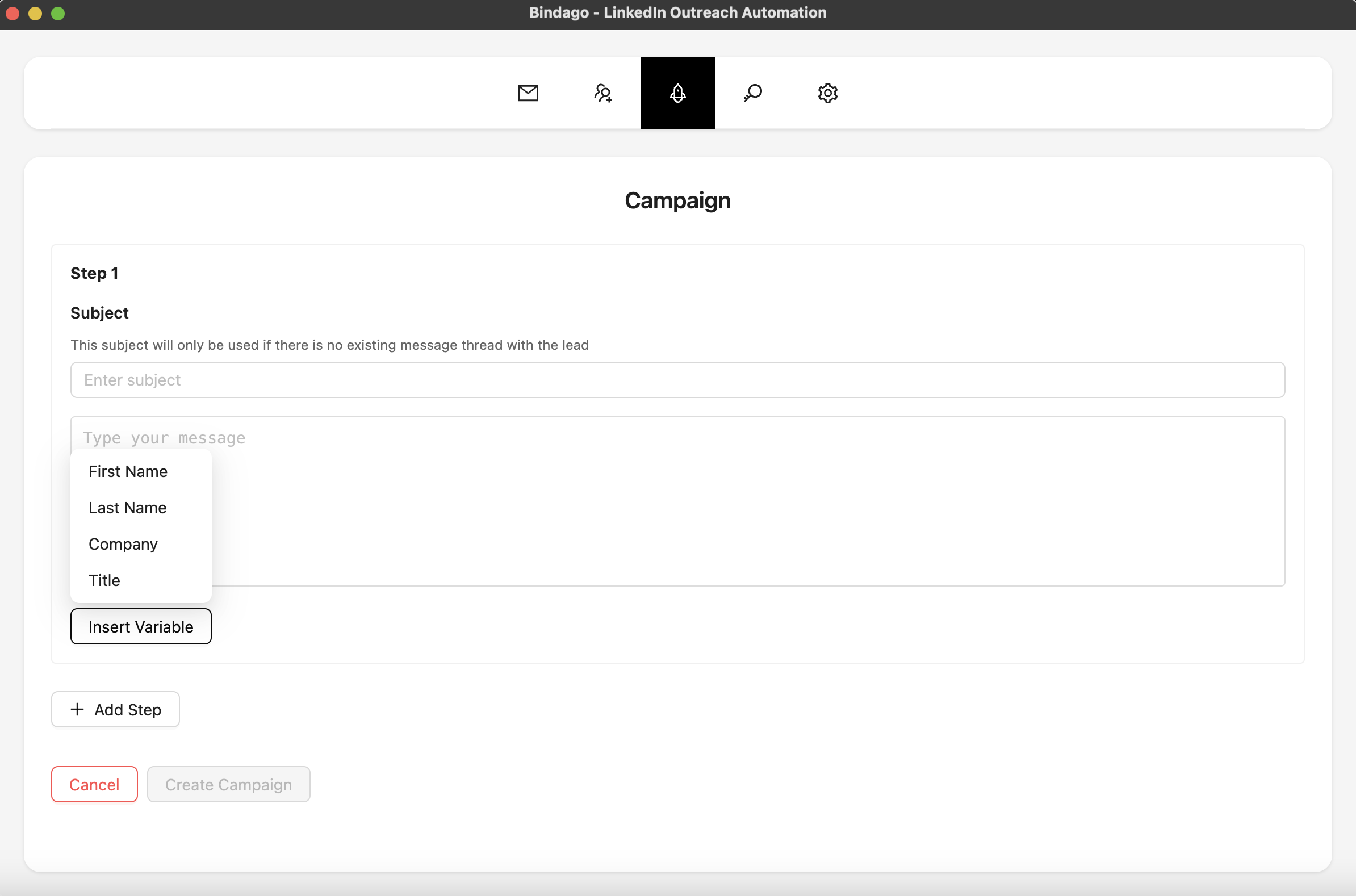
Automate Your Week 2 Activities: Take the prospect lists you built in Week 1 and launch a multi-step campaign in Bindago. You can create a sequence that automatically performs the "warm-up" (viewing profiles, liking posts) and then sends your personalized connection requests. This ensures your network is constantly growing with qualified leads.
-
Systematize Your Week 3 Nurturing: For people who engage with your content, you can create a targeted campaign to send a contextual connection request and a sequence of value-driven follow-up messages. This turns your content engagement into a predictable source of warm conversations.
By using Bindago to automate the time-consuming parts of your weekly sprints, you can focus on the high-value activities: creating great content and having strategic conversations with the warm leads your system generates. And because it's a desktop app, your LinkedIn credentials and data remain securely on your computer.
Conclusion: From Random Acts to Predictable Growth
A monthly LinkedIn marketing strategy is what separates amateurs from professionals. It provides the structure and consistency needed to build a powerful brand, nurture relationships at scale, and generate a predictable pipeline of opportunities.
The framework is simple:
- Week 1: Plan and Create.
- Week 2: Grow and Engage.
- Week 3: Publish and Nurture.
- Week 4: Analyze and Optimize.
Implement this cycle, support it with smart automation, and you'll transform your LinkedIn presence from a source of frustration into your most powerful channel for business growth.
Ready to build your predictable LinkedIn marketing engine? Download Bindago today and start your 10-day free trial.