How to Create LinkedIn Posts That Convert Leads
In the world of B2B sales and marketing, LinkedIn is the ultimate arena for building authority and generating leads. But too many professionals treat it like a megaphone, broadcasting company news and product features into a void of indifference. The result? Minimal engagement and zero leads.
If you want to turn your LinkedIn presence into a predictable lead generation engine, you need to stop broadcasting and start publishing. A high-converting LinkedIn post doesn’t just get likes; it starts conversations, builds trust, and compels your ideal customers to take the next step.
This guide provides a clear, actionable framework for creating LinkedIn posts that don’t just get seen—they get results.
1. The Mindset Shift: From "What I Do" to "What I Solve"
The single most important shift you can make is to stop writing about yourself and start writing about your prospects' problems. No one cares about your product's features; they care about their own challenges.
- Instead of: "Our new software has an AI-powered dashboard."
- Try: "Marketing leaders are tired of struggling to prove ROI. What if you could connect every piece of content directly to revenue?"
Every post should be written through the lens of your ideal customer. What are their biggest fears? What are their most ambitious goals? What common frustrations do they share? When your content speaks directly to their world, you earn their attention and their trust.
2. The Anatomy of a High-Converting Post
A successful LinkedIn post follows a simple but powerful structure designed to capture attention and drive action.
The Hook (The First Two Lines)
On LinkedIn, only the first couple of lines are visible before a user has to click "See more." Your opening must be compelling enough to stop the scroll.
- Start with a bold statement: "Cold calling is dead. Here's what replaced it."
- Ask a provocative question: "What if you could close your biggest deal of the year with a single LinkedIn post?"
- Address a pain point directly: "Tired of leads that go nowhere? You're probably making one of these three mistakes."
The Body (The Value)
This is the core of your post. It's where you deliver on the promise of your hook. The key is to be generous with your knowledge.
- Provide a framework: "Here are the 3 steps to building a predictable pipeline..."
- Share a specific insight: "The most successful sales reps I know do this one thing every morning..."
- Tell a story: Use the Problem-Agitate-Solve model to share a customer success story (anonymized if necessary).
The Call to Action (The Ask)
Don't leave your reader hanging. Tell them exactly what you want them to do next.
- Encourage engagement: "What's your take? Share your thoughts in the comments."
- Drive a conversation: "If you're facing this challenge, send me a DM with the word 'Pipeline' and I'll share a resource."
- Generate a lead: "Agree? Disagree? Let me know in the comments below."
3. Five Actionable Post Ideas That Convert
Here are five proven post formats you can adapt for your own industry and niche.
1. The "How-To" Guide
Solve a specific, tangible problem for your audience. Break it down into simple, actionable steps.
- Example: "How to write a follow-up email that actually gets a reply (A 3-step template)."
2. The Contrarian Take
Challenge a widely held belief in your industry. A strong, well-argued opinion is memorable and sparks debate.
- Example: "Everyone says you need to post on LinkedIn every day. They're wrong. Here's why consistency beats frequency."
3. The Customer Story
Share a story about how you helped a customer overcome a challenge. This provides powerful social proof.
- Example: "I recently worked with a B2B SaaS founder who was struggling with lead flow. Here's the simple change we made that doubled their qualified demos in 30 days."
4. The "Behind-the-Scenes" Post
Share a lesson from a personal experience—a win, a loss, or a challenge. Vulnerability builds trust.
- Example: "I lost a six-figure deal last month. Here's the painful lesson I learned about discovery calls."
5. The Engaging Question
Ask a question that gets your audience talking and sharing their own experiences.
- Example: "What's the single best piece of sales advice you've ever received?"
4. From Engagement to Opportunity: Turning Likes and Comments into Leads
A successful post will generate engagement—likes, comments, and shares. These are not vanity metrics; they are buying signals. A person who engages with your post about a specific problem is signaling that the topic is relevant to them.
But how do you turn that engagement into a conversation? Manually reaching out to every person who liked your post is time-consuming and difficult to track. This is where you need a system to convert interest into opportunity.
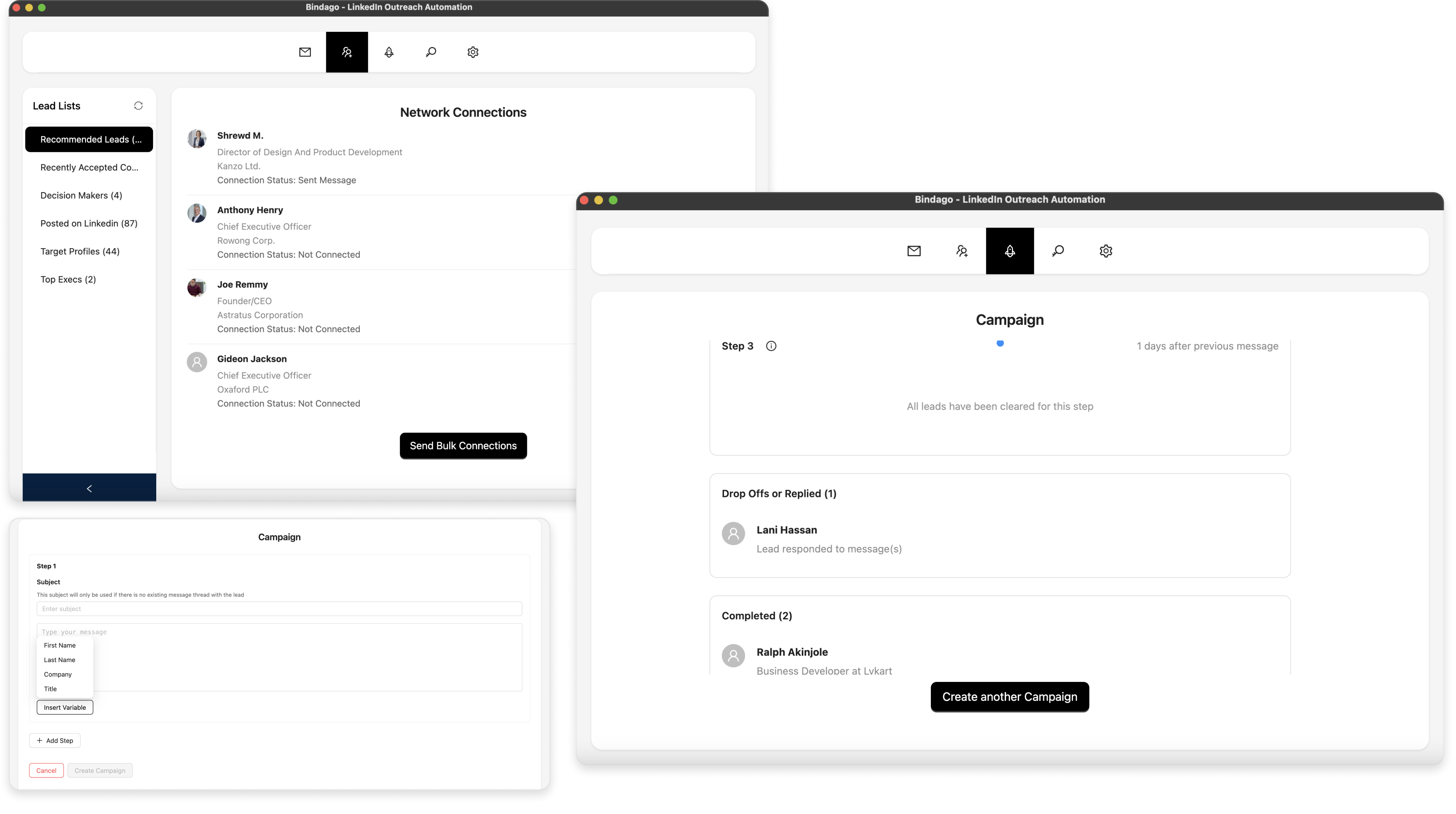
This is where a tool like Bindago becomes your unfair advantage. Bindago is a desktop application that helps you automate your LinkedIn outreach safely and efficiently.
Here’s how you can use Bindago to turn post engagement into leads:
- Identify Engaged Prospects: After your post has been live for a day or two, look at the list of people who have liked or commented on it. These are your warm leads.
- Launch a Targeted Outreach Campaign: You can create a list of these engaged prospects and use Bindago's Campaigns feature to launch a multi-step outreach sequence.
- Step 1: Send a personalized connection request that references the post.
- Template: "Hi {{firstName}}, thanks for engaging with my post on [Topic]. Since you're clearly interested in this area, I thought it would be great to connect."
- Step 2 (3 days after connecting): Send a value-driven follow-up message.
- Template: "Thanks for connecting! As you're interested in [Topic], I thought you might find this in-depth guide on the subject useful. [Link to resource]"
- Step 1: Send a personalized connection request that references the post.
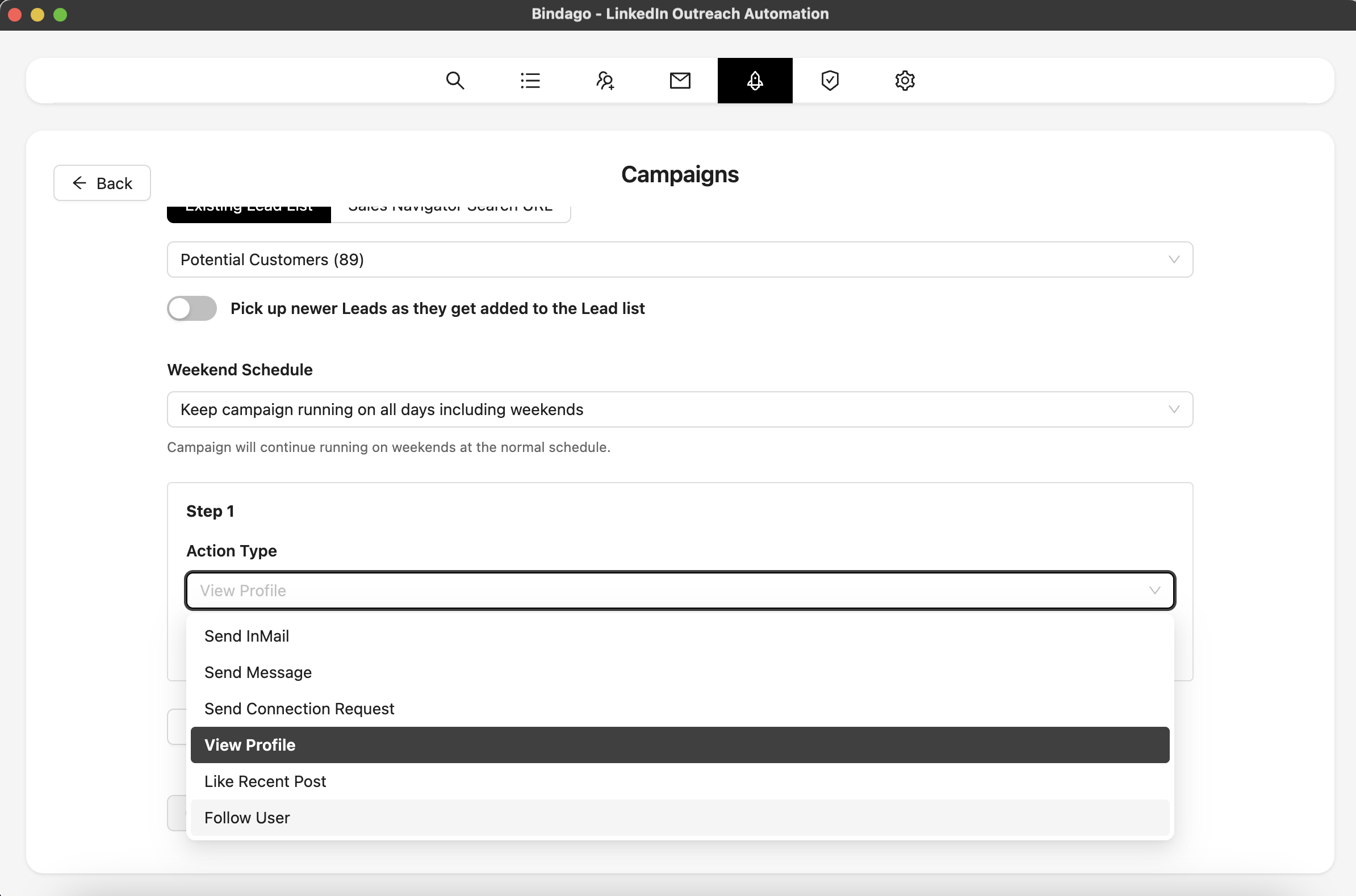
By using Bindago to automate this process, you can systematically turn every high-performing post into a pipeline of warm, qualified conversations. It allows you to focus on creating great content while the system handles the initial outreach. And because it's a desktop app, your LinkedIn credentials remain securely on your computer.
Conclusion
Creating LinkedIn posts that convert leads is not about viral hacks; it's about consistently providing value and solving problems for a clearly defined audience. By shifting your mindset from "selling" to "helping" and by following a structured approach to your content, you can build a powerful personal brand that attracts your ideal customers.
Combine this content strategy with a systematic approach to outreach, and you have a predictable machine for turning LinkedIn engagement into real business opportunities.
Ready to turn your LinkedIn posts into a lead generation engine? Download Bindago today and start your 10-day free trial.