How Account Executives Can Leverage LinkedIn to Shorten Sales Cycles
For any Account Executive, the length of the sales cycle is a critical metric. A shorter cycle means faster revenue, a more predictable pipeline, and a higher commission check. While many factors contribute to the length of a deal, one of the most powerful levers you have to accelerate the process is LinkedIn. When used strategically, LinkedIn can help you build trust, identify high-intent prospects, and navigate complex buying committees—all of which lead to faster deals.
This guide provides a clear, actionable framework for AEs to leverage LinkedIn not just as a prospecting tool, but as a sales cycle accelerator.
1. Optimize Your Profile: Your 24/7 Sales Assistant
Before you even think about outreach, your LinkedIn profile must be optimized to work for you. It's not a resume; it's a sales asset that should build credibility and pre-qualify prospects around the clock.
- Craft a Prospect-Centric Headline: Go beyond your job title. State who you help and the outcome you provide.
- Instead of: "Account Executive at Acme Corp"
- Try: "Helping B2B SaaS Companies Reduce Customer Churn | Customer Success & Retention Strategies"
- Write an "About" Section That Solves a Problem: Use the Problem-Agitate-Solve framework to show you understand your prospect's world. This builds instant rapport and positions you as an expert.
2. Identify High-Intent Prospects: Focus on "When," Not Just "Who"
A shorter sales cycle starts with talking to the right people at the right time. Your Ideal Customer Profile (ICP) tells you who to target, but LinkedIn's buying signals tell you when.
- Use Sales Navigator's High-Intent Filters:
- "Changed jobs in last 90 days": New leaders are 70% more likely to buy new products for their team. They have a budget and a mandate to make an impact.
- "Posted on LinkedIn in past 30 days": This filter finds active users who are more likely to see and respond to your outreach.
- Monitor Content Engagement: A prospect who likes or comments on a post about a problem your solution solves is a high-intent lead. They are actively researching and engaging with the topic.
3. The "Warm-Up" Sequence: Build Familiarity Before the First Message
A cold pitch to a stranger has a low probability of success. A message from a familiar face has a much higher chance of starting a conversation. The "warm-up" sequence is a series of subtle touchpoints designed to build this familiarity.
A proven sequence is:
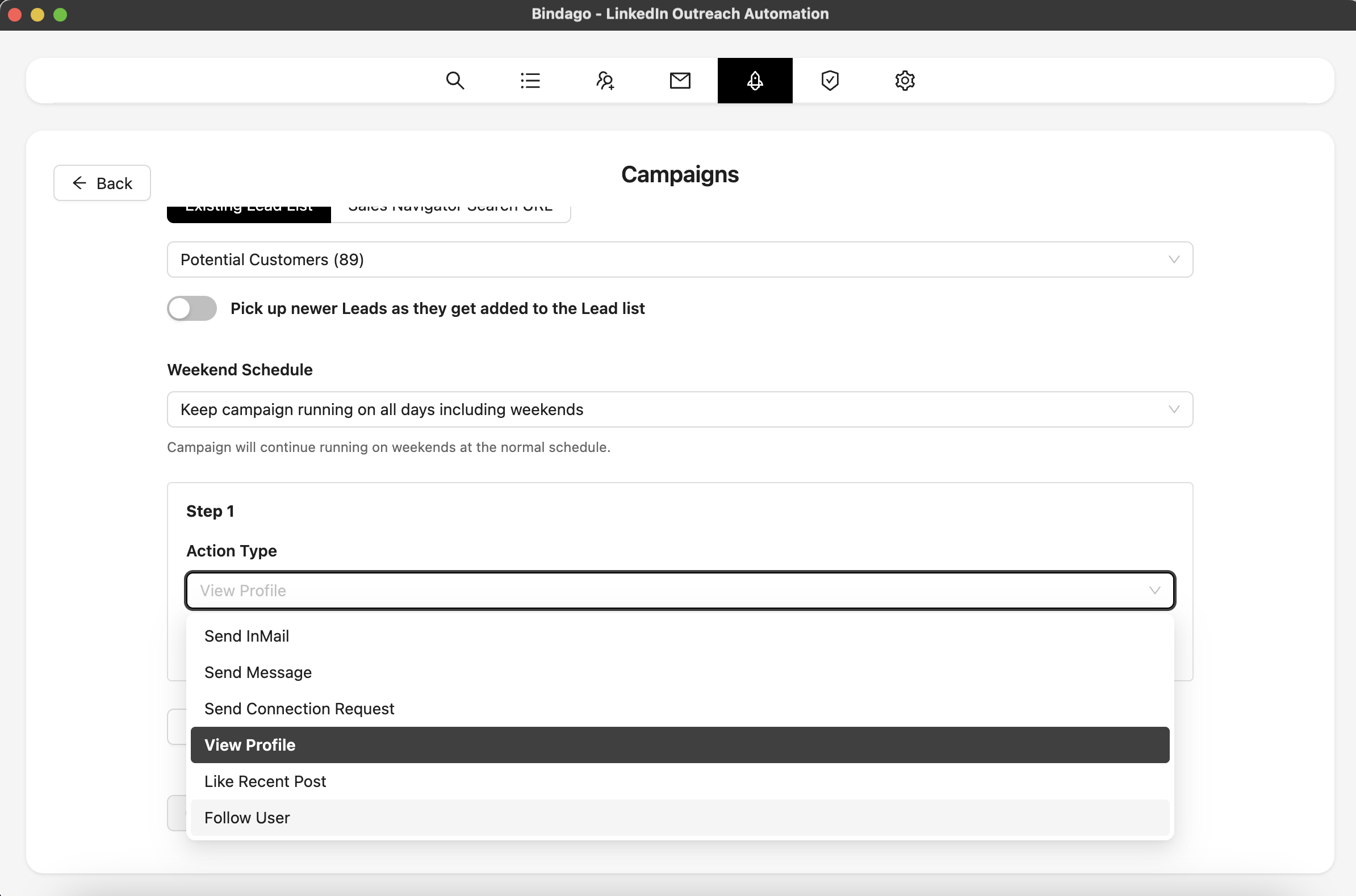
- View Their Profile (Day 0): A simple, non-intrusive notification that puts your name on their radar.
- Like a Recent Post (Day 2): Shows you're paying attention to their work.
- Send a Contextual Connection Request (Day 4): Your request now feels familiar and relevant.
Systematizing Your Warm-Up
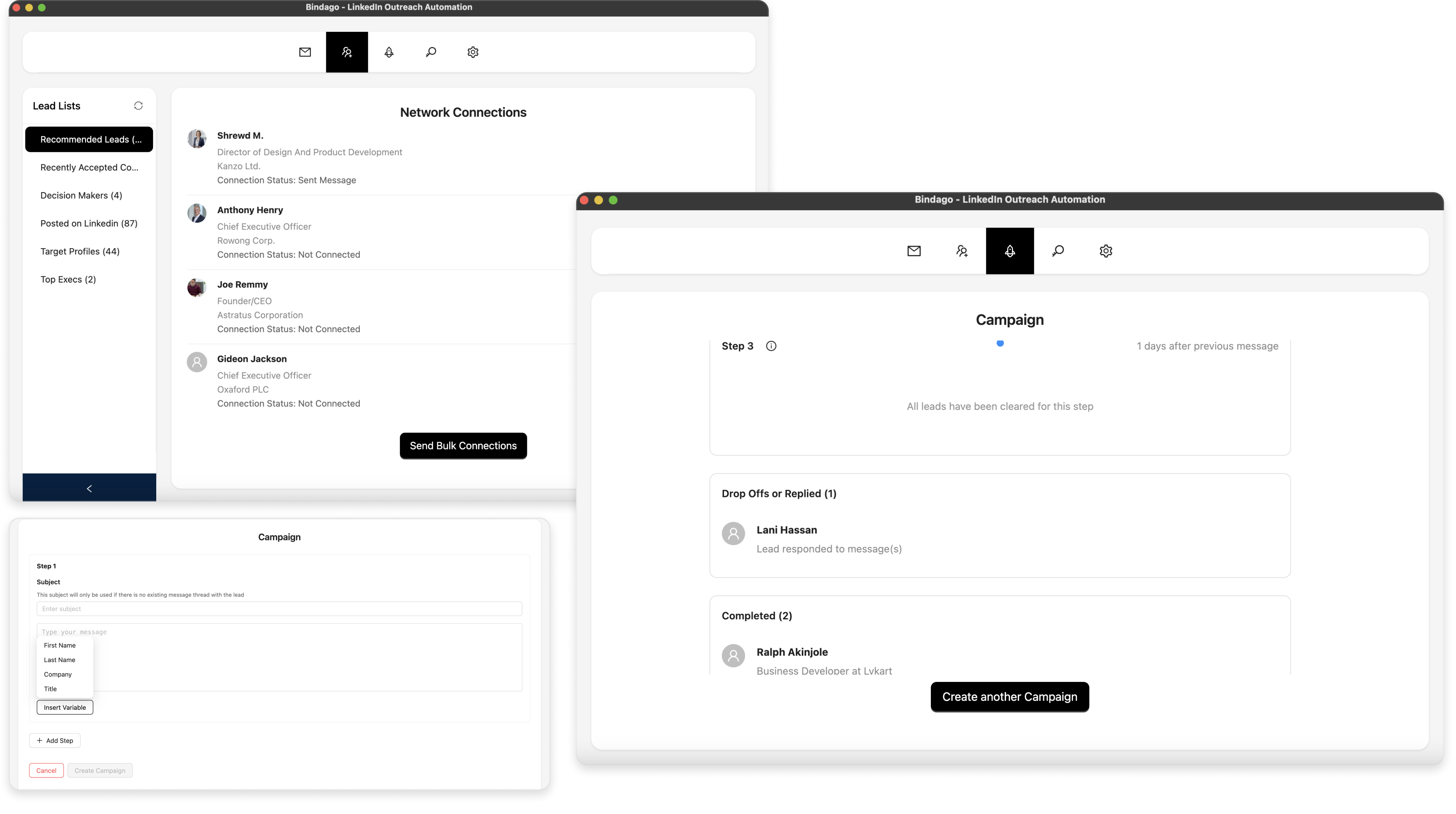
Manually executing this sequence across hundreds of prospects is not scalable. A tool like Bindago can automate this entire process. With its Campaigns feature, you can build a multi-step sequence that automatically views profiles, likes posts, and then sends a personalized connection request. This allows you to warm up your entire territory on autopilot, so you can focus on the prospects who engage back.
4. Multi-Threading: Navigate the Buying Committee from Day One
Deals often stall because they are "single-threaded"—you're only talking to one person. A shorter sales cycle requires building consensus across the entire buying committee.
- Map the Account: Use LinkedIn Sales Navigator to identify 5-7 key stakeholders in your target account, including potential champions, decision-makers, and blockers.
- Engage Multiple Stakeholders Simultaneously: When you launch your outreach, don't just target one person. Engage with multiple stakeholders at the same time. When they talk internally, you'll be a known entity to the entire group.
With a tool like Bindago, you can launch a single campaign that targets multiple people within the same account, ensuring your message is seen by the entire buying committee and accelerating the path to internal consensus.
5. Provide Value, Don't Pitch: The Nurturing Process
Once you're connected, the goal is to build trust, not to pitch. A nurturing sequence focused on providing value will keep you top-of-mind and position you as an expert.
- Share Relevant Resources: Send your new connections a link to a helpful article, a case study relevant to their industry, or a valuable industry report.
- Ask Insightful Questions: A great way to start a conversation is to ask a thoughtful question related to their role or a recent post they made.
You can automate this nurturing process with a multi-step message sequence in Bindago, ensuring every new connection receives a series of value-driven touchpoints. The automation stops the moment they reply, allowing you to step in and have a strategic conversation.
Conclusion: From Cold Outreach to Warm Conversations
Shortening your sales cycle on LinkedIn is not about being pushy; it's about being smart. It's about focusing on high-intent prospects, building familiarity before you ask for anything, and providing consistent value.
The framework is simple:
- Optimize your profile to build instant credibility.
- Prioritize prospects who are showing buying signals.
- Warm up your leads with automated engagement sequences.
- Engage the entire buying committee, not just a single contact.
- Nurture new connections with value, not pitches.
By combining these strategies with a powerful and secure automation tool like Bindago, you can build a predictable system that not only fills your pipeline but also accelerates your deals to a close.
Ready to shorten your sales cycle and close more deals? Download Bindago today and start your 10-day free trial.