How to Create a LinkedIn Sales Funnel That Actually Works
Most sales professionals use LinkedIn for outreach, but many do it without a system. They send random connection requests, pitch prospects in the first message, and wonder why they get inconsistent results. This "spray and pray" approach is unpredictable and inefficient.
A LinkedIn sales funnel, on the other hand, is a systematic process for turning cold prospects into warm leads and, eventually, happy customers. It’s about moving beyond random acts of outreach and building a predictable machine for generating revenue. This guide will provide you with a clear, step-by-step framework for creating a LinkedIn sales funnel that actually works.
What is a LinkedIn Sales Funnel?
A sales funnel is a visual representation of the journey a prospect takes from first becoming aware of you to making a purchase. A LinkedIn sales funnel applies this concept to the LinkedIn platform, using a series of strategic touchpoints to guide prospects through each stage.
The three main stages are:
- Top of Funnel (TOFU): Awareness & Connection. This is where you find your ideal prospects and make the initial connection.
- Middle of Funnel (MOFU): Nurturing & Relationship Building. This is where you build trust and establish yourself as an authority by providing value.
- Bottom of Funnel (BOFU): Conversion. This is where you transition from a value-driven conversation to a sales opportunity.
Stage 1: Top of Funnel (TOFU) - Building Awareness and Making Connections
The goal at this stage is to build a large, highly targeted audience of your ideal prospects.
1. Optimize Your Profile
Your LinkedIn profile is the front door to your funnel. Before you engage with anyone, it must be optimized to build trust and credibility. It should function as a sales page for your personal brand, not a resume.
- Headline: Clearly state who you help and what you help them achieve (e.g., "Helping B2B SaaS companies shorten their sales cycle").
- About Section: Use the Problem-Agitate-Solve framework to show you understand your prospect's world.
2. Identify Your Ideal Customer Profile (ICP)
You can't find the right people if you don't know who you're looking for. Use LinkedIn Sales Navigator to build hyper-targeted lists based on industry, company size, job title, seniority, and geography.
3. Warm-Up Your Prospects
Never send a cold connection request. Warm up your prospects first to build familiarity. A simple warm-up sequence involves:
- Day 1: View their profile.
- Day 2: Like a recent post.
- Day 4: Send a personalized, contextual connection request.
Automating the Top of Your Funnel
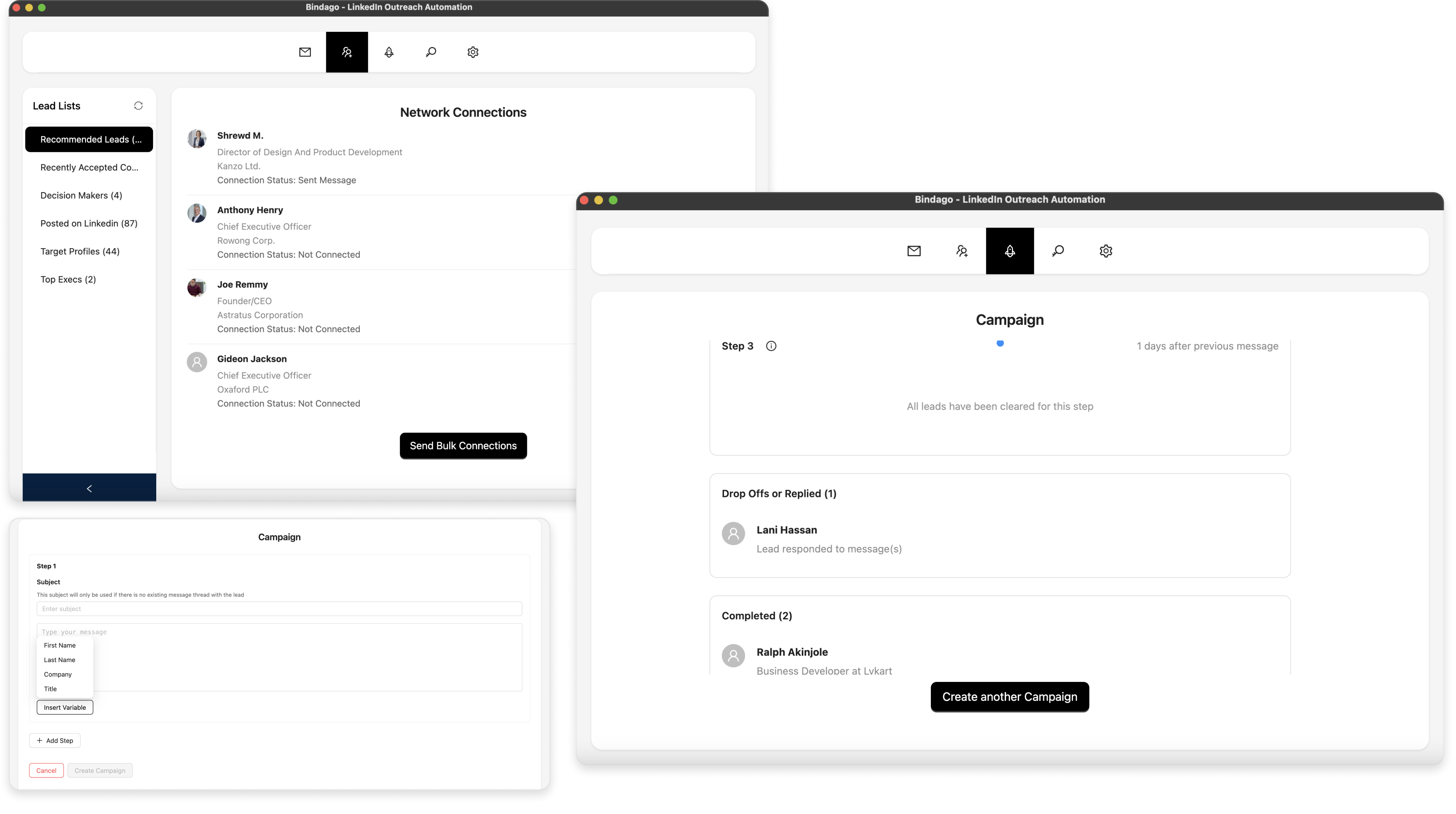
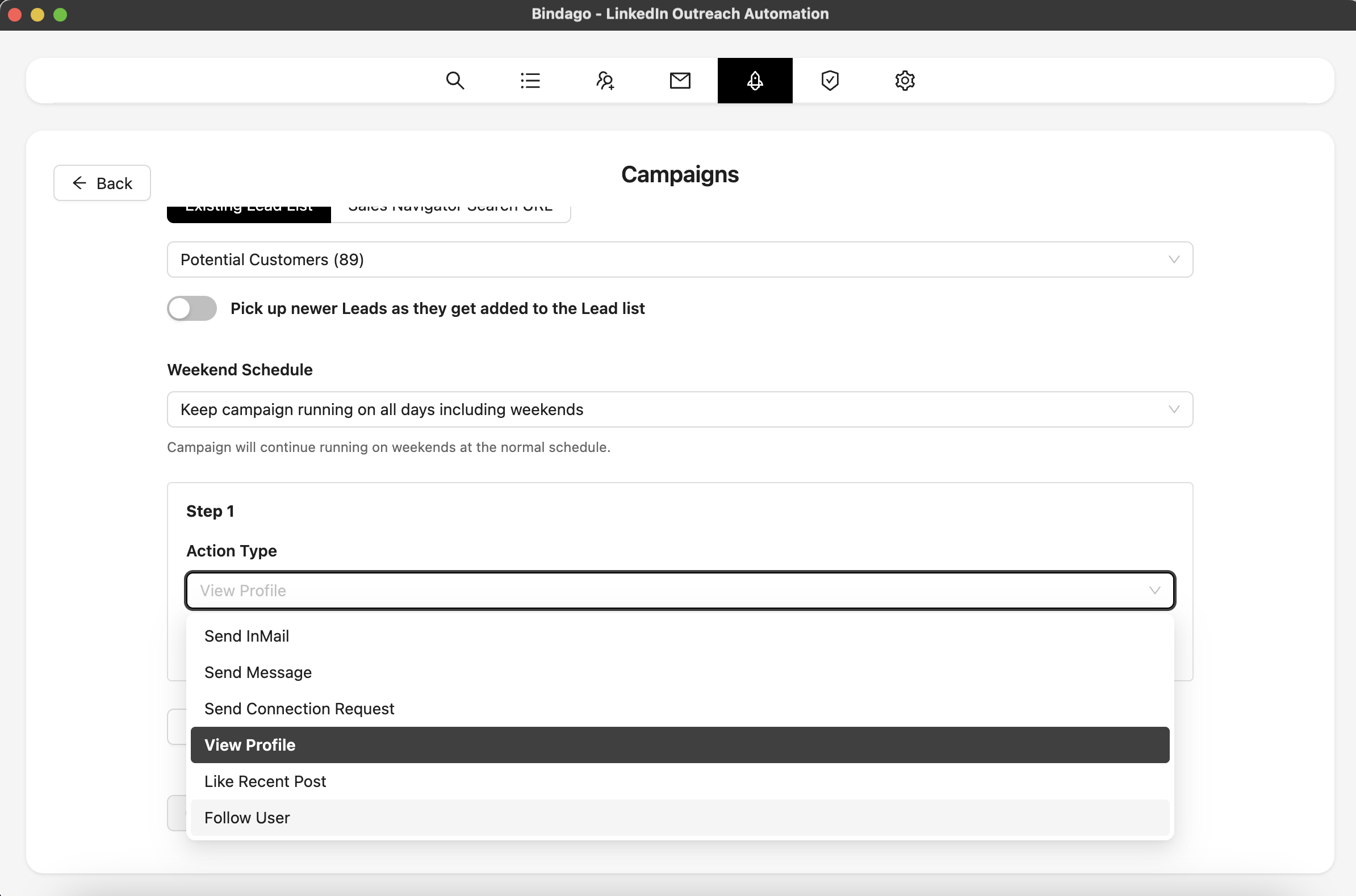
Manually warming up and connecting with hundreds of prospects is not scalable. This is where automation becomes essential. A tool like Bindago can automate this entire process. With its Campaigns feature, you can create a multi-step sequence that automatically views profiles, likes recent posts, and then sends a personalized connection request to your entire prospect list. This allows you to fill the top of your funnel on autopilot.
Stage 2: Middle of Funnel (MOFU) - Nurturing and Building Trust
Once a prospect connects with you, they enter the middle of your funnel. The goal here is not to pitch, but to build a relationship and establish yourself as a trusted advisor.
1. Provide Value Through Content
Consistently post content that helps your audience solve their problems. Share insights, answer common questions, and provide your perspective on industry trends. This demonstrates your expertise and keeps you top-of-mind.
2. Nurture with Value-Driven Message Sequences
Don't let new connections go cold. Use a multi-step message sequence to nurture the relationship over time.
- Message 1 (3 days after connecting): Share a high-value resource.
"Thanks for connecting, {{firstName}}! I saw you're in the [Industry] space. I recently wrote an in-depth guide on [Relevant Topic] and thought you might find it useful. [Link]"
- Message 2 (7 days later): Ask an insightful question.
"Hi {{firstName}}, I'm curious, how is your team at {{companyName}} thinking about [Industry Trend]? We've seen some interesting approaches."
Systematizing Your Nurturing
Manually tracking these follow-ups is impossible at scale. This is where you can again leverage automation. With Bindago, you can build these multi-step message sequences into your campaigns. The system will automatically send your value-driven messages at the intervals you set. The automation is smart enough to stop the sequence as soon as a prospect replies, allowing you to step in and have a real, human conversation.
Stage 3: Bottom of Funnel (BOFU) - Converting Conversations into Opportunities
The final stage is about transitioning the relationship into a sales opportunity. This should only happen after you've built trust and provided value.
1. Look for Buying Signals
Pay attention to your prospects' activity. Are they:
- Asking specific questions about your solution?
- Engaging frequently with your content?
- Expressing a clear pain point in your DMs or in their own posts?
- Viewing your company's pricing page?
These are "buying signals" that indicate the timing might be right to make an offer.
2. The Transition to a Call
When you spot a buying signal, you can make a low-pressure transition to a sales conversation.
- The Wrong Way (Pushy): "Are you free for a demo tomorrow?"
- The Right Way (Consultative):
"That's a great question. It might be easier to show you what I mean over a quick 15-minute call. Would you be open to that?"
The goal is to frame the call as the next logical step in your helpful conversation, not as a high-pressure sales pitch.
Conclusion: Build a System, Not a Series of Tasks
A LinkedIn sales funnel is what separates amateur prospectors from elite sales professionals. It turns a series of random, time-consuming tasks into a predictable, scalable system for generating revenue.
The framework is simple:
- Attract the right audience with an optimized profile and targeted list building.
- Nurture them with value-driven content and automated message sequences.
- Convert them when they show signs of interest.
By combining a strategic framework with a powerful and secure automation tool like Bindago, you can build a LinkedIn sales funnel that works for you 24/7, consistently filling your pipeline with warm, qualified leads who are ready to talk.
Ready to build your own predictable sales funnel? Download Bindago today and start your 10-day free trial.