The LinkedIn Messaging Framework for Account Executives
For Account Executives, LinkedIn is the most important platform for modern prospecting. However, most AEs approach it with the same old sales tactics: a generic connection request followed immediately by a self-serving pitch. This strategy fails because it skips the most critical element of any successful sale—trust.
To cut through the noise and build a predictable pipeline, you need a messaging framework. A framework moves you from random acts of outreach to a systematic process of building relationships and providing value. This guide provides a clear, actionable framework to help you craft LinkedIn messages that don't just get read, but get replies.
1. The Mindset Shift: From Pitching to Problem-Solving
Before you write a single message, you must shift your mindset. Your goal is not to "sell" your product; it's to help your prospect solve their problems. When you genuinely focus on helping, your entire approach changes. You listen more, you provide value freely, and you build rapport naturally. Sales become the outcome of a relationship built on trust, not the result of a pushy sales pitch.
- Old Mindset: "How can I pitch my solution to this person?"
- New Mindset: "What can I learn about this person's challenges, and how can I offer an insight or resource that would be genuinely helpful?"
2. Stage 1: The Warm-Up & Connection
Never start a conversation completely cold. The first stage of the framework is about building familiarity and establishing a relevant reason to connect.
Research and Personalization (The 2-Minute Drill)
Before reaching out, spend two minutes on your prospect's profile to find a point of personalization. Look for:
- Recent Posts or Comments: What are they talking about? What are their opinions?
- Shared Connections or Groups: A mutual connection is a powerful piece of social proof.
- Company News or Trigger Events: A recent funding round, product launch, or hiring spree is a great reason to engage.
The Connection Request That Gets Accepted
Your connection request has one job: to get the prospect to click "Accept." It must be short, personalized, and non-salesy.
"Hi {{firstName}}, I saw your recent post on [Topic]. Your point about [Specific Insight] was really interesting. I'm also focused on the [Industry] space and would love to connect and follow your work."
This template works because it's about them, not you. It shows you've done your research and respect their expertise.
3. Stage 2: The Nurturing & Value-Add
Once a prospect connects, they enter the nurturing stage. The goal here is not to pitch, but to build the relationship by providing value.
The "Give, Don't Ask" Principle
Your first few messages after connecting should provide value without asking for anything in return. This builds trust and positions you as a generous expert.
- Share a Relevant Resource: Send them a link to a high-value blog post, case study, or industry report.
- Offer a Unique Insight: Share a quick, valuable insight based on your experience working with similar companies.
A Value-Driven Follow-Up Sequence
A proven follow-up sequence might look like this:
-
Message 1 (3 days after connecting): The Value-Add
"Thanks for connecting, {{firstName}}! I saw on your profile you're focused on [Area of Responsibility]. I recently came across this in-depth guide on [Relevant Topic] and thought you might find it useful. [Link to resource]"
-
Message 2 (7 days later): The Insightful Question
"Hi {{firstName}}, I hope you're having a great week. I'm curious, given your role at {{companyName}}, how is your team approaching the challenge of [Relevant Industry Challenge] this quarter?"
4. Stage 3: The Transition to a Sales Conversation
After you've had a few value-driven exchanges, you have earned the right to transition the conversation toward a potential sales opportunity. The key is to look for "transition signals" from the prospect.
Identifying Buying Signals
- They ask specific questions about your solution.
- They express a clear pain point that you can solve.
- The conversation becomes too complex for text.
The Consultative "Ask"
When you spot a buying signal, you can make a low-pressure offer to take the conversation to a call.
"That's a great question. It might be easier to show you what I mean over a quick 15-minute call. Would you be open to that next week?"
This approach frames the call as a helpful next step in your conversation, not an aggressive sales pitch.
5. Systematizing Your Messaging Framework with Automation
Manually managing this multi-step framework for hundreds of prospects is impossible. It’s time-consuming, and leads will inevitably slip through the cracks. To execute this effectively at scale, you need to build a system with smart automation.
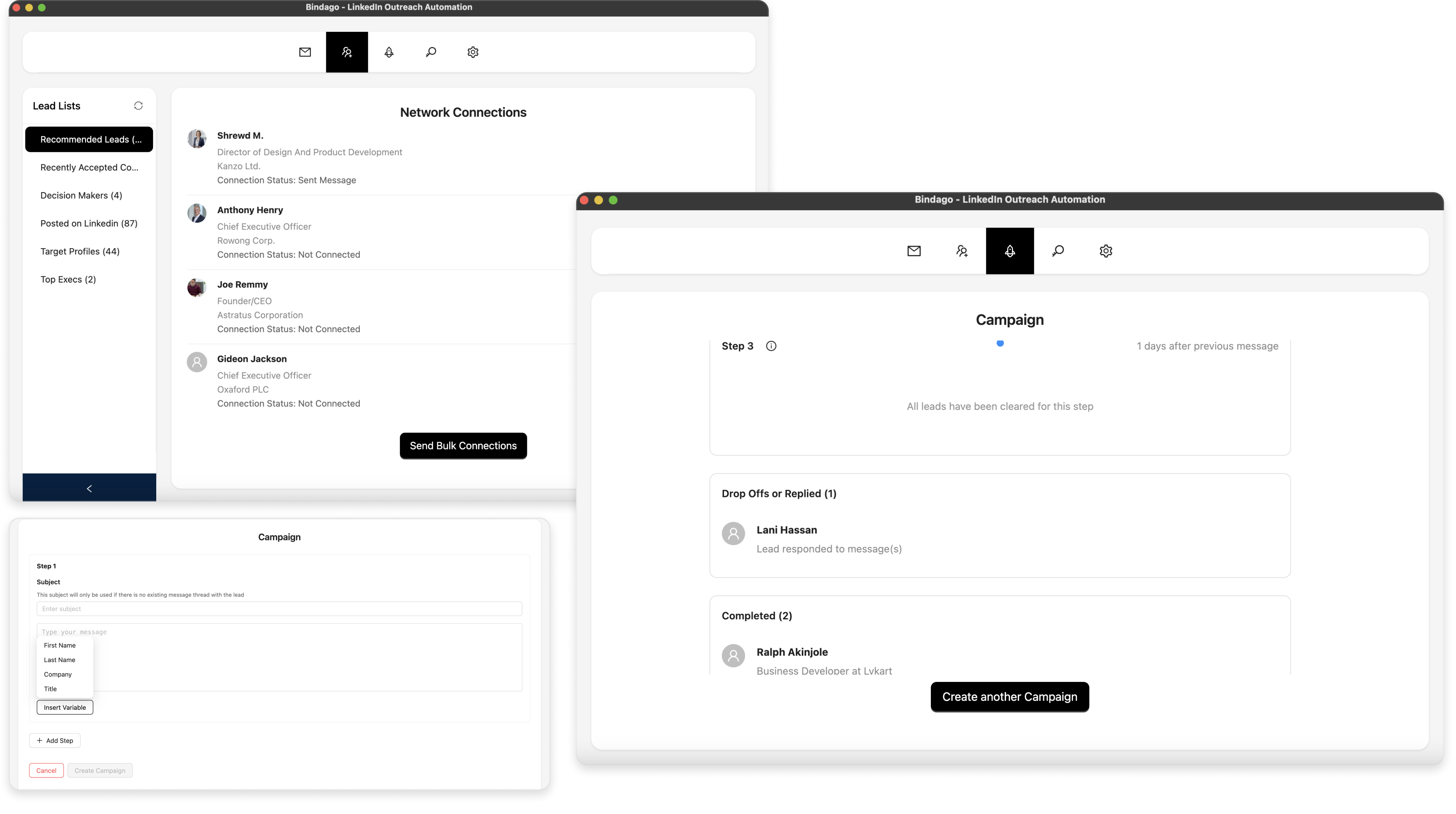
A tool like Bindago allows you to turn this messaging framework into a repeatable, automated campaign. As a desktop application, Bindago provides a secure and powerful way to manage your outreach.
Here’s how you can use Bindago to implement your framework:
-
Build a Multi-Step Campaign: Use Bindago's Campaigns feature to create a sequence that mirrors the framework.
- Step 1: Automatically View the Profile to warm up the lead.
- Step 2 (2 days later): Send your personalized Connection Request.
- Step 3 (3 days after connecting): Automatically send your "Value-Add" Follow-Up Message.
- Step 4 (7 days later): Automatically send your "Insightful Question" Follow-Up.
-
Personalize at Scale: Use Bindago's message templates and personalization variables (
{{firstName}},{{companyName}}) to ensure every message feels one-to-one, even when you're reaching out to hundreds of prospects. -
The Human Hand-Off: Bindago's automation is designed to stop the moment a prospect replies. This allows you to step in and have a real, human conversation at the perfect moment, ensuring you can apply your sales expertise when it matters most.
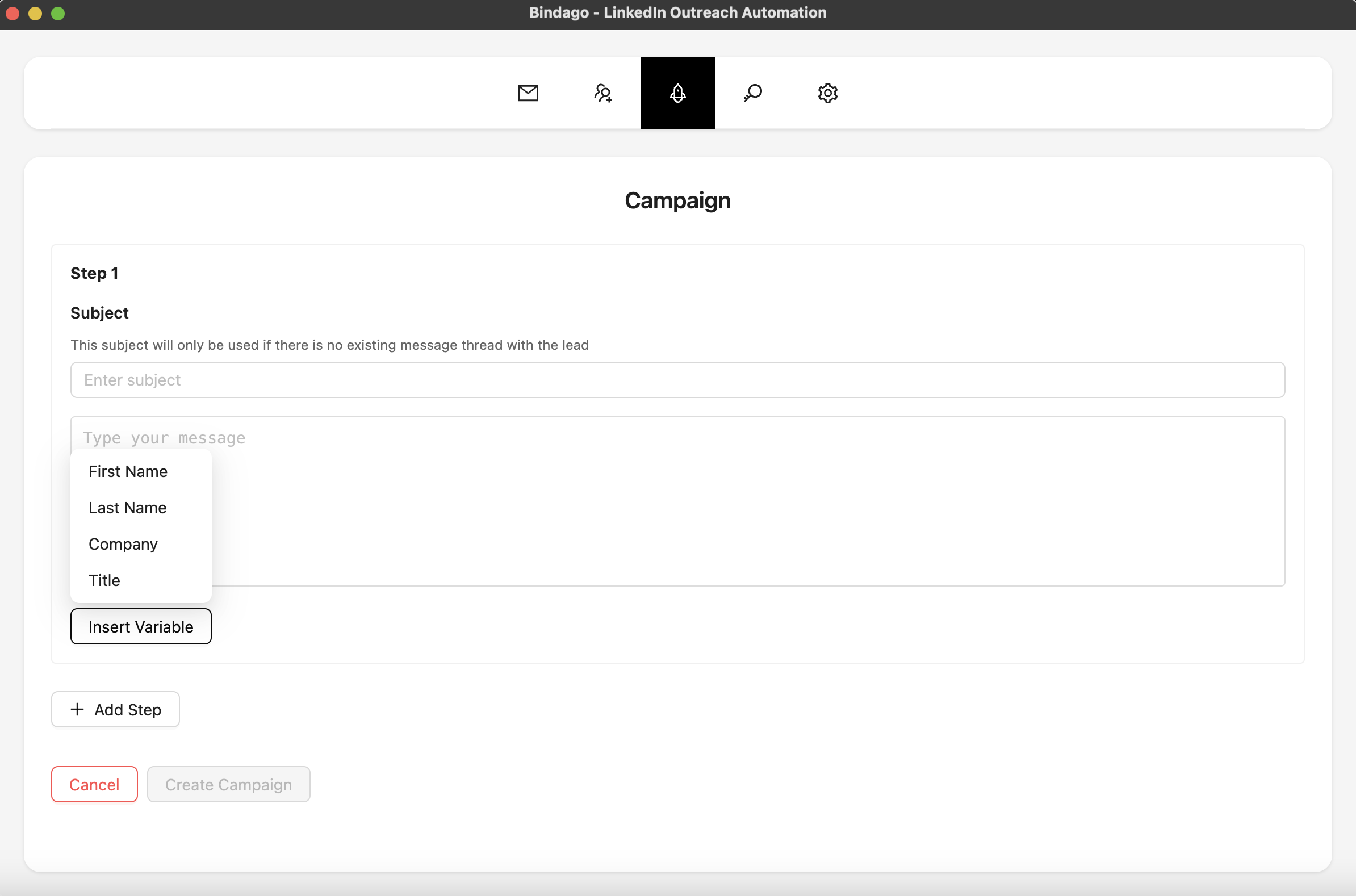
By using Bindago to automate the repetitive parts of your framework, you can focus on having high-value conversations with the warm, engaged leads your system generates.
Conclusion: From Random Messages to Predictable Pipeline
A messaging framework is what separates top-performing Account Executives from the rest. It provides a structured, repeatable process for building trust, providing value, and starting sales conversations in a way that feels authentic and effective.
Stop sending random pitches. Start building relationships with a systematic, value-driven approach. Combine this framework with a powerful and secure automation tool like Bindago, and you will have a predictable engine for turning LinkedIn into your most valuable source of pipeline.
Ready to build your messaging engine and close more deals? Download Bindago today and start your 10-day free trial.