LinkedIn Profile Examples Account Executives Should Model
For top-performing Account Executives, LinkedIn is far more than a digital resume; it's a dynamic sales asset that works tirelessly to attract, engage, and convert ideal prospects. In today's competitive B2B landscape, your LinkedIn profile is often the first impression a potential client has of you. A well-optimized profile doesn't just list your past accomplishments; it clearly communicates the value you provide, builds immediate credibility, and compels prospects to engage.
This guide provides a step-by-step framework, complete with actionable examples, for Account Executives to transform their LinkedIn profile from a passive historical record into a powerful, lead-generating machine. By modeling these profile best practices, you can establish yourself as a trusted advisor, warm up cold leads, and build a predictable pipeline of high-quality opportunities.
1. Your Prospect-Centric Headline: The Digital Billboard
Your LinkedIn headline is arguably the most valuable piece of real estate on your profile. It travels with you everywhere – in search results, connection requests, comments, and messages. This 220-character statement is your digital billboard, constantly communicating your value proposition to anyone who encounters your presence on the platform.
The most effective AE headlines move beyond a simple job title. They instantly answer the prospect's unspoken question: "What's in it for me?"
- Go Beyond Your Job Title: While including your role provides context, your headline's primary purpose should be to articulate the outcome you deliver.
- The "I Help X Achieve Y" Formula: This is a highly effective structure for a value-driven headline.
- X = Your Ideal Customer Profile (ICP). Be specific (e.g., "early-stage FinTech startups," "mid-market manufacturing companies").
- Y = The primary, desirable result you help them achieve. Focus on the outcome (e.g., "reduce churn," "streamline supply chains," "accelerate revenue growth").
- Incorporate Keywords: Use terms your ideal prospects might search for or that clearly define your niche.
Examples:
-
Instead of:
Account Executive at Salesforce -
Try:
Account Executive | Helping SaaS Leaders Build Predictable Revenue Engines & Scale Globally -
Instead of:
Sales Director at IBM -
Try:
Sales Director | Empowering Healthcare Providers to Enhance Patient Outcomes with AI-Driven Solutions -
Instead of:
Enterprise AE at Oracle -
Try:
Enterprise AE | Driving Digital Transformation for Fortune 500 Companies in the Retail Sector
2. Your Compelling "About" Section: The Sales Letter
If your headline is the billboard, your "About" section is your comprehensive sales letter. It's where prospects go after your headline grabs their attention, seeking deeper insight into who you are and how you can help. This section should build trust, demonstrate expertise, and guide the reader towards a clear next step.
Structure it to tell a story that resonates with your ideal customer, using the Problem-Agitate-Solve (PAS) framework.
- Problem: Begin by clearly articulating a common pain point your target prospects face. Show empathy and understanding of their world.
- Example:
Many B2B sales organizations struggle with inconsistent pipeline generation, leading to missed quotas and a constant scramble for new opportunities.
- Example:
- Agitate: Expand on the negative consequences of this problem. What are the frustrations, lost opportunities, or stresses it creates?
- Example:
This often results in high rep turnover, unpredictable revenue forecasts, and a significant drain on valuable resources spent on inefficient outbound efforts.
- Example:
- Solve: Introduce yourself and your solution. Explain how you help prospects overcome this specific problem, focusing on the outcomes and benefits, not just features.
- Example:
I partner with sales leaders to implement data-driven strategies and deploy scalable automation that transforms their outbound prospecting into a predictable engine for qualified meetings and revenue growth.
- Example:
- Include Social Proof: Back up your claims with quantifiable results or client testimonials (anonymized if necessary).
- Example:
Last quarter, I helped a FinTech client increase their outbound meeting booking rate by 40% and add $1.2M to their pipeline.
- Example:
- Clear Call to Action (CTA): End with a direct instruction for what you want them to do next. Don't leave them guessing.
- Example:
Ready to build a predictable pipeline? Send me a DM with "Pipeline" or book a brief, no-obligation strategy session here: [Your Calendly/Booking Link]
- Example:
3. Your Optimized Experience Section: Showcasing Impact
Your "Experience" section should not be a copy-paste of your job description. Instead, frame each role around the impact you've made, using quantifiable results and action verbs. This demonstrates your ability to deliver value, which is crucial for AEs.
- Focus on Results, Not Just Responsibilities: Every bullet point should highlight an achievement, not just a task.
- Use Quantifiable Metrics: Numbers speak louder than words. How much revenue did you generate? By what percentage did you increase efficiency? How many new accounts did you close?
- Action Verbs: Start each bullet point with a strong action verb (e.g.,
Achieved,Generated,Implemented,Reduced,Spearheaded).
Examples:
-
Instead of:
Responsible for managing a portfolio of enterprise accounts. -
Try:
Managed and grew a $5M portfolio of enterprise SaaS accounts, exceeding annual quota by 120% through strategic account planning and multi-threaded engagement. -
Instead of:
Developed and executed sales presentations. -
Try:
Developed and delivered high-impact sales presentations to C-suite executives, resulting in a 35% increase in conversion rates from demo to closed-won.
4. The Visuals: Headshot, Banner, and Featured Section
Visual elements significantly contribute to your profile's professionalism and brand messaging.
- Professional Headshot: Use a high-quality, friendly, and approachable headshot. Your face should fill about 60% of the frame. Avoid selfies or busy backgrounds.
- Value-Driven Banner: Your LinkedIn banner is an often-overlooked opportunity. Use it to reinforce your value proposition, showcase your company's mission, or display a relevant industry statistic. Avoid generic stock photos.
- Strategically Use the Featured Section: Pin content that directly supports your brand as a problem-solving AE. This could include:
- A link to a successful client case study.
- A post you wrote that generated significant engagement from your target audience.
- A testimonial from a happy customer (consider an image of the text if it's external).
- A relevant industry report or whitepaper that positions you as an expert.
5. Driving Traffic & Engaging with Your Optimized Profile
Optimizing your profile is a crucial first step, but it's largely passive. To truly make it a lead-generating machine, you need to actively drive qualified traffic to it and engage with those who show interest. This is where strategic outreach and automation become your force multipliers.
You can proactively get your optimized profile in front of your Ideal Customer Profile (ICP) and turn profile views into meaningful conversations.
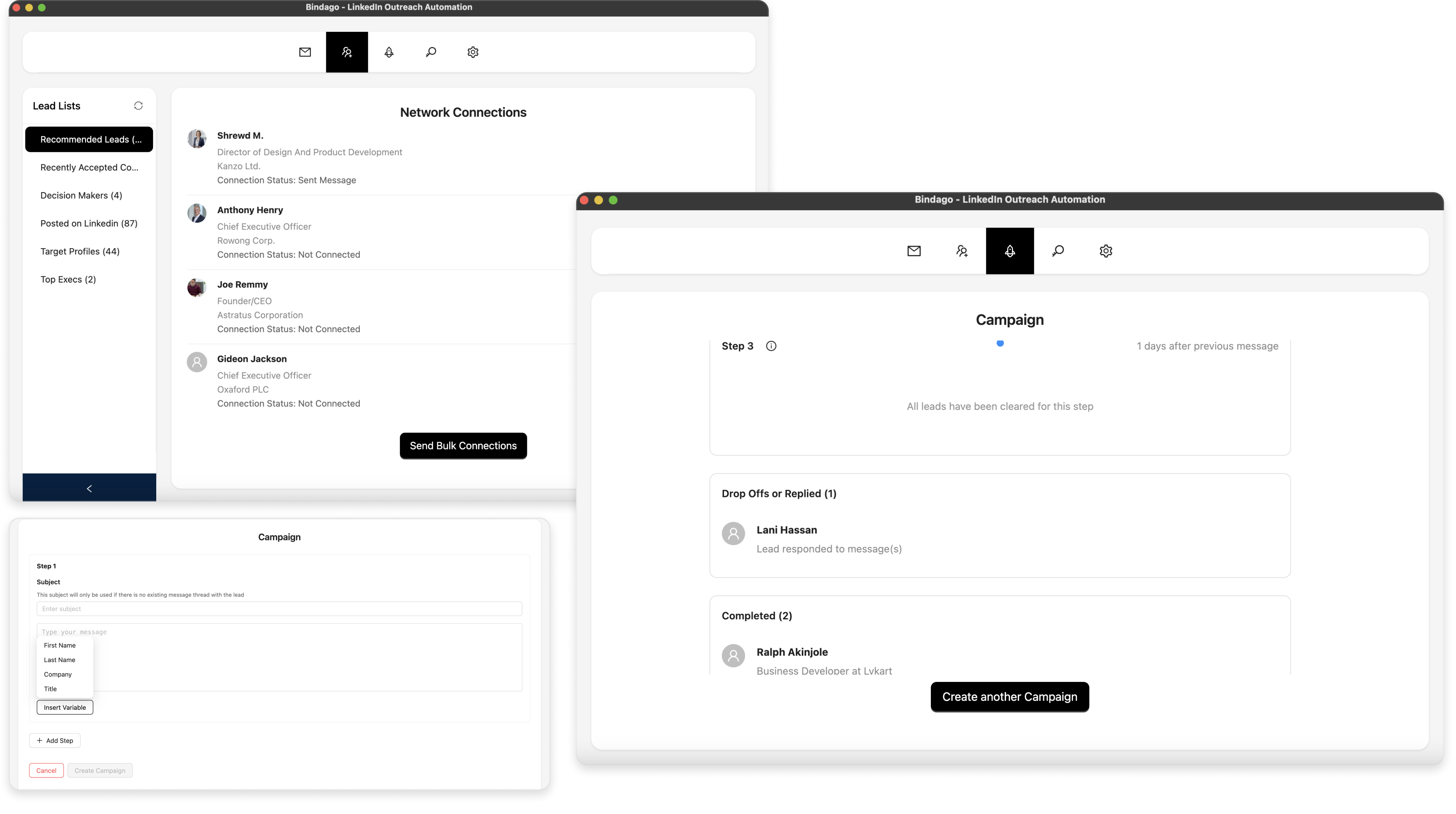
This is where a powerful and secure automation tool like Bindago can transform your LinkedIn strategy. As a desktop application, Bindago helps you automate your LinkedIn outreach safely and efficiently, ensuring your credentials remain secure on your own machine.
Here’s how Bindago empowers you to leverage your optimized profile:
-
Automate "Warm-Up" Sequences: Use Bindago's Campaigns feature to create multi-step sequences that subtly get on your prospects' radar. This might involve automatically:
- Viewing the profiles of your target prospects. This sends a notification, prompting many to view your profile in return.
- Liking a recent post from those prospects, reinforcing your presence. This gentle engagement makes your eventual connection request feel familiar and welcome, significantly increasing acceptance rates.
-
Turn Profile Views into Conversations: Prospects who view your profile after your subtle engagement are warm leads. Bindago allows you to systematically act on this interest. You can use a targeted campaign to send personalized connection requests and a sequence of value-driven follow-up messages to those who've shown interest. This strategy is further detailed in our guide on how to turn LinkedIn profile views into real conversations.
-
Scale Personalized Outreach: With your optimized profile acting as a compelling landing page, you can launch targeted outreach campaigns to segments of your ICP. Use Bindago to send personalized connection requests and automated follow-up messages that reference details from your profile or your prospects' specific needs, ensuring that your communication is always relevant and professional. Learn more about how to personalize LinkedIn outreach that actually gets replies.
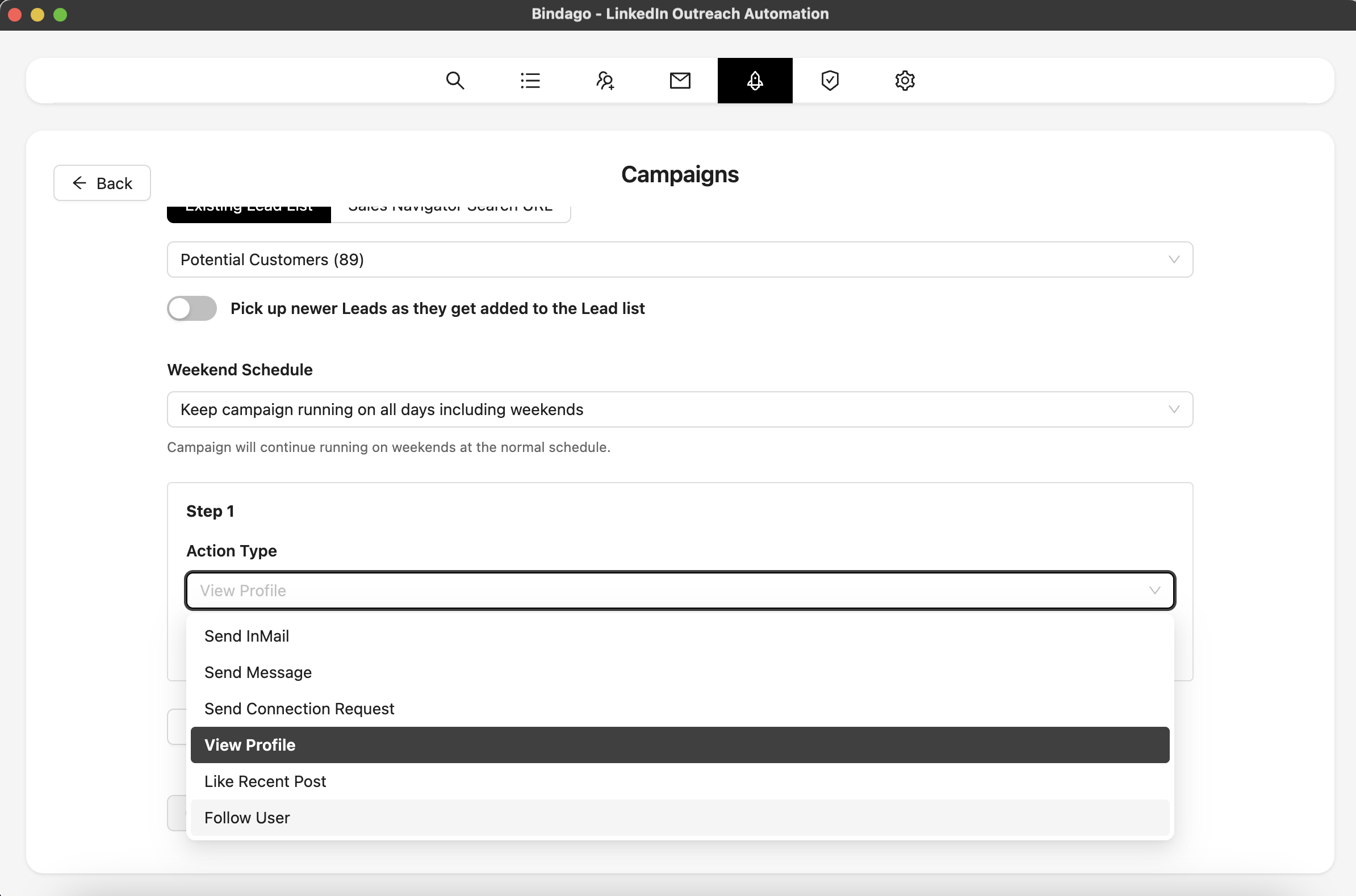
By leveraging Bindago, you streamline the crucial but repetitive tasks of driving traffic and initiating conversations. This frees you to focus on high-value activities: engaging with warm leads, conducting strategic discovery calls, and ultimately, closing more deals.
Conclusion: Your Profile, Your Pipeline
For Account Executives, an optimized LinkedIn profile is no longer a luxury; it's a necessity. It’s your 24/7 digital salesperson, building trust, communicating value, and attracting your ideal customers. By consistently applying these best practices—crafting a compelling headline, an engaging "About" section, impactful experience summaries, and strong visuals—you lay the foundation for a predictable sales pipeline.
Combine this powerful profile with strategic engagement and smart automation, and you transform LinkedIn from a passive networking tool into your most reliable source of high-quality leads.
Start modeling these examples today, and watch your pipeline flourish.
Ready to make your LinkedIn profile a lead-generating asset? Download Bindago today and start your 10-day free trial.