How to Align Your Sales and Marketing Teams on LinkedIn
In most B2B organizations, sales and marketing teams operate in separate silos. Marketing generates leads and lobs them over the fence, while sales complains about lead quality. This misalignment is costly, leading to wasted effort, inconsistent messaging, and a disjointed customer experience. On LinkedIn, this disconnect is even more apparent and damaging.
When sales and marketing are not aligned, prospects see a company with a split personality. They see one message from the company's content and a completely different one from a salesperson's outreach. This erodes trust and kills deals.
However, when these two teams are truly aligned on LinkedIn, they become a force multiplier. They create a seamless customer journey that builds trust at every touchpoint, turning the platform into a predictable engine for revenue. This guide provides a clear, actionable framework to break down the silos and align your sales and marketing teams for explosive growth on LinkedIn.
1. The Foundation: A Unified Brand and a Shared Language
Alignment begins with a single source of truth. Both teams must agree on who the customer is and what story you are telling them.
Develop a Hyper-Specific Ideal Customer Profile (ICP)
Your sales and marketing teams need to collaborate on a single, detailed ICP. This isn't just about industry and company size. It should include:
- Specific pain points: What are the deep-seated problems your customers face?
- Their "watering holes": What influencers do they follow? What LinkedIn Groups are they in? What kind of content do they engage with?
- The buying committee: Who are the key decision-makers, influencers, and blockers involved in a typical deal?
Create Consistent Messaging
Once you know who you're talking to, you need to agree on what to say.
- Sales Profile Optimization: The sales team's LinkedIn profiles should reflect marketing's core messaging. Headlines and "About" sections should be optimized to position reps as expert problem-solvers for the ICP, not just quota-carriers.
- Content-Sales Alignment: Marketing should create content that directly addresses the questions and objections that the sales team hears every day on calls. This makes marketing's content more relevant and gives sales powerful assets to share.
2. The Content-Driven Sales Play: Marketing as Air Cover
The most effective way to align your teams on LinkedIn is through a content-driven sales play. In this model, marketing's role is to provide "air cover," warming up the market and identifying interested prospects, while sales' role is to engage those warm leads and turn them into conversations.
Marketing’s Role: Create High-Value, Problem-Aware Content
Marketing should consistently publish content that educates the target audience and helps them solve their problems. This content—blog posts, case studies, videos, and short-form posts—builds brand authority and acts as a magnet for high-intent prospects.
Sales' Role: Engage with the Engagers
The engagement on marketing's content (likes and comments) is a real-time list of warm leads. These are people who have raised their hands and signaled interest in the problem your content addresses.
The sales team's daily routine should include:
- Monitoring engagement on the company's and key marketing leaders' posts.
- Identifying prospects who fit the ICP and have engaged with the content.
- Sending a contextual connection request that references the engagement.
- Template: "Hi {{firstName}}, I saw you liked our recent post on [Topic]. I'm glad it resonated. Since you're clearly interested in this area, I'd love to connect and share some more insights."
The Critical Feedback Loop
This is the glue that holds the system together. The sales team must have a process for sharing insights from their conversations back to marketing.
- What are the top 3 questions prospects are asking?
- What objections are coming up most frequently?
- What specific language are prospects using to describe their pain points?
This feedback allows marketing to create even more targeted and effective content, which in turn generates warmer leads for sales.
3. The Account-Based Strategy: A Joint Attack Plan
For high-value target accounts, a coordinated account-based strategy is essential.
- Collaborative List Building: Sales and marketing should work together to build a list of target accounts. Sales brings their on-the-ground knowledge, while marketing brings data insights.
- Orchestrated Multi-Touch Campaign:
- Marketing warms up the accounts with targeted ads, content, and personalized email sequences.
- Sales executes multi-threaded outreach to key stakeholders within those accounts, often referencing the content that marketing is promoting.
4. Systematize Your Alignment with Automation
Manually coordinating this level of engagement and outreach across two teams is not scalable. To execute this effectively, you need to build a system that automates the repetitive tasks while maintaining personalization.
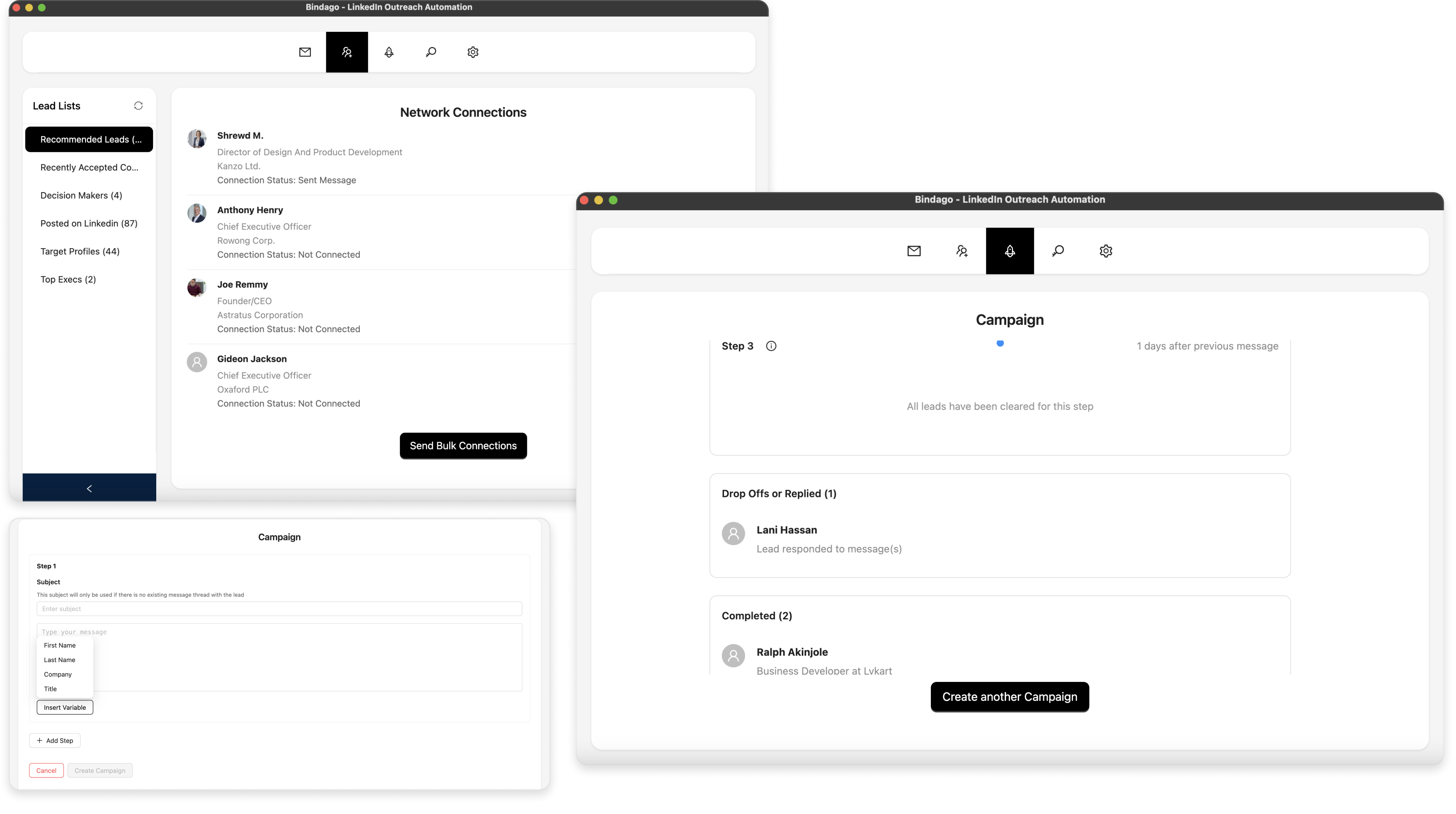
This is where a powerful and secure automation tool like Bindago becomes your central nervous system for alignment. Bindago is a desktop application that helps you automate your LinkedIn outreach safely and efficiently.
Here’s how Bindago facilitates sales and marketing alignment:
- Turn Engagement into Outreach: Marketing can identify a high-performing post and provide the sales team with a list of engaged prospects. The sales team can then use Bindago to launch a multi-step campaign to connect with and nurture these warm leads.
- Scale Your Account-Based Outreach: For your joint ABM lists, the sales team can use Bindago to send personalized, multi-step message sequences to all the key stakeholders in your target accounts, ensuring consistent and timely follow-up.
- Ensure Brand Consistency: By using Bindago's message templates, marketing can provide sales with pre-approved, on-brand messaging that can be personalized for each outreach campaign.
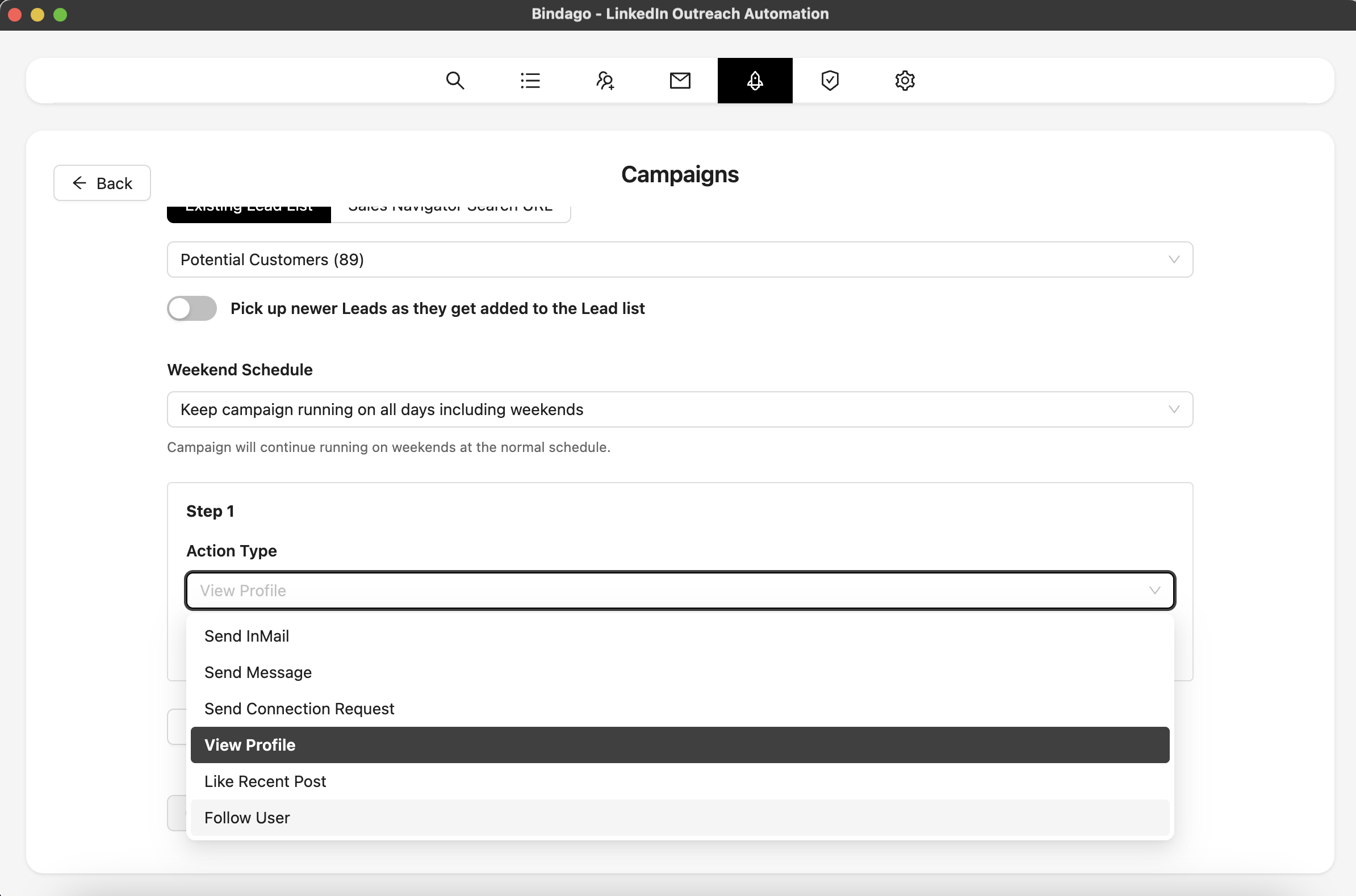
By using Bindago to systematize the outreach process, sales can focus on having high-value conversations, while marketing gets the data and feedback they need to create better content. Because Bindago is a desktop application, it also provides a secure way to manage client accounts if you are an agency running campaigns for other companies.
Conclusion: One Team, One Goal, One Pipeline
Aligning your sales and marketing teams on LinkedIn is not just a "nice-to-have"; it's a strategic imperative for any B2B company that wants to build a predictable revenue engine. When both teams are working from the same playbook, with a shared understanding of the customer and a unified process for engagement, the results are transformative.
The framework is simple:
- Build a unified foundation with a shared ICP and consistent messaging.
- Implement a content-driven sales play where marketing warms up the market and sales engages the warm leads.
- Collaborate on targeted account-based strategies.
- Systematize your workflow with automation to do it all at scale.
Break down the silos, and you'll build a pipeline that is stronger, more predictable, and more profitable than ever before.
Ready to align your teams and build a powerful lead generation machine on LinkedIn? Download Bindago today and start your 10-day free trial.