How to Build an Inbound Lead Engine on LinkedIn
For many sales professionals, LinkedIn is a tool for outbound prospecting—finding lists of people and sending them cold messages. This is a tough, numbers-driven game with low response rates. But what if, instead of you chasing leads, the right leads came to you?
This is the power of an inbound lead engine. An inbound engine is a system that consistently attracts, nurtures, and converts your ideal prospects by positioning you as a trusted authority in your niche. It’s about moving from "hunting" to "harvesting"—creating a predictable stream of warm, qualified leads who are already interested in what you have to say.
This guide provides a clear, actionable framework for building a powerful inbound lead engine on LinkedIn.
1. Pillar 1: Optimize Your Profile as a Lead Magnet
Your inbound engine starts with your profile. It's not a resume; it's a landing page for your personal brand, and it needs to be optimized for conversion. When your ideal prospect lands on your profile, it should be immediately clear that you understand their world and can help them solve their problems.
-
Craft a Prospect-Centric Headline: Go beyond your job title. State who you help and the outcome you provide.
- Instead of: "Sales Director at Tech Solutions Inc."
- Try: "Helping FinTech companies build scalable revenue engines and enter new markets."
-
Write a Compelling "About" Section: Use the Problem-Agitate-Solve (PAS) framework to show you understand their challenges.
- Problem: Identify the core challenge your audience faces.
- Agitate: Describe the negative impact of that problem.
- Solve: Explain how you help solve it.
-
Use the Featured Section: Pin your best content—case studies, client testimonials, or a high-value article—to provide instant social proof and credibility.
2. Pillar 2: Create Content That Attracts Your Ideal Prospects
Content is the fuel for your inbound engine. It's how you build authority and attract your ideal customer profile (ICP) at scale. The key is to stop posting about your product and start posting about your prospects' problems.
- Answer Common Questions: What questions do you hear on every sales call? Each one is a potential post. By answering these questions publicly, you demonstrate your expertise and pre-handle objections.
- Share Niche-Specific Insights: Don't just share general industry news. Provide your unique perspective on how that news impacts your specific niche. This positions you as an expert, not just a reporter.
- Tell Customer Stories: Share anonymized stories of how you've helped clients overcome challenges. Stories are more memorable than facts and provide powerful social proof.
The goal of your content is to be so valuable that your ideal prospects can't afford to ignore it.
3. Pillar 3: Convert Engagement into Conversations
A successful inbound content strategy will generate engagement—likes, comments, and shares. These are not vanity metrics; they are buying signals. A prospect who engages with your post about a specific problem is signaling that the topic is relevant to them. These are your warmest leads.
But how do you systematically turn that engagement into a real business conversation? Manually tracking every "like" and "comment" and sending a personalized message to each person is not a scalable strategy. This is where you need a system to convert interest into opportunity.
Systematize Your Engagement Follow-Up with Bindago
While you focus on creating valuable content, a smart automation tool like Bindago can work in the background to turn your engaged viewers into a pipeline of warm leads.
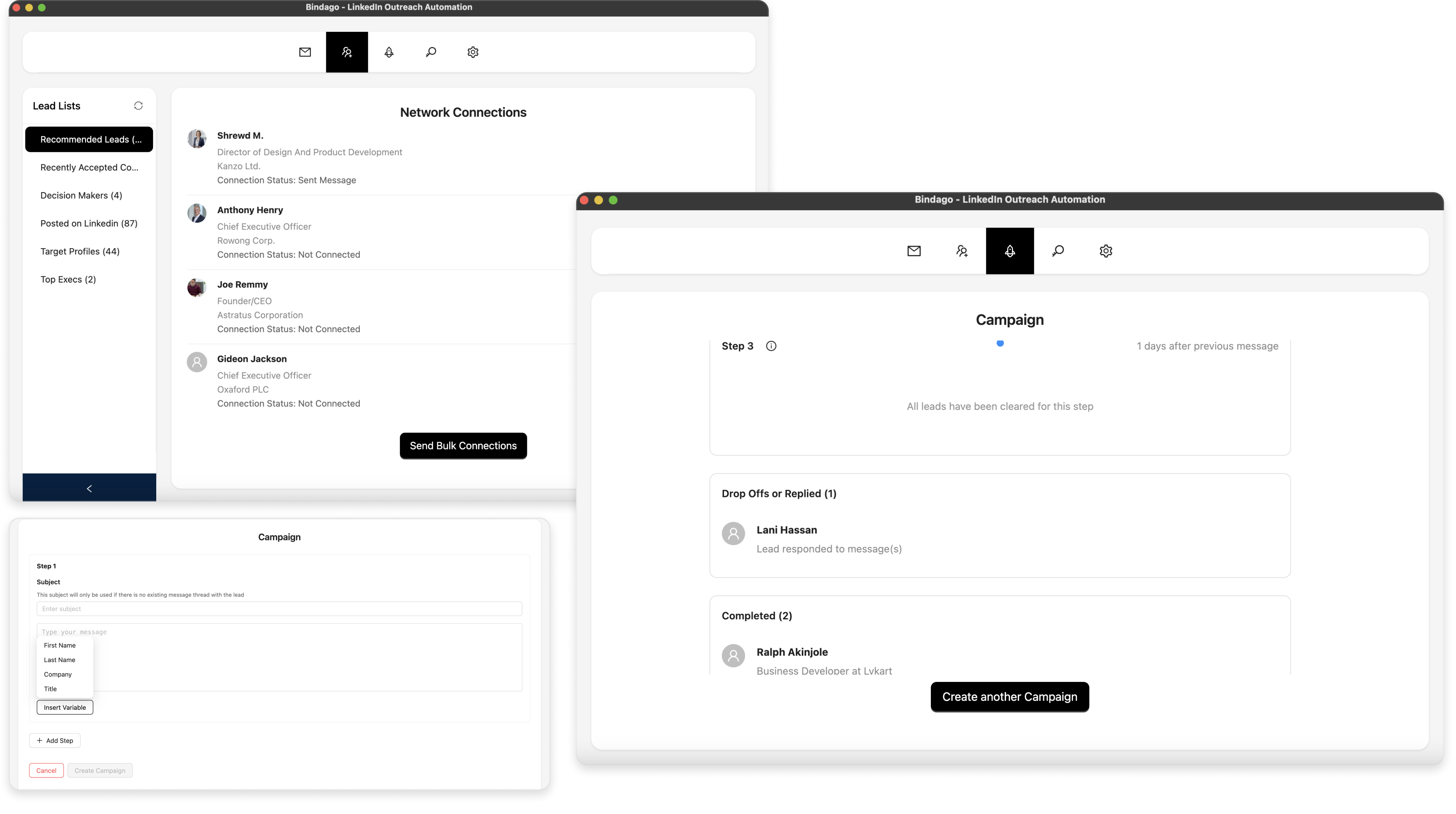
Bindago is a desktop application that helps you automate your LinkedIn outreach safely and efficiently. Here’s how you can use it to build your inbound engine:
- Identify Your Engaged Prospects: After your post has been live for a day or two, you have a list of people who have liked or commented. These are your high-intent leads.
- Launch a Targeted Outreach Campaign: You can create a list of these prospects and use Bindago's Campaigns feature to launch a multi-step outreach sequence.
- Step 1: Send a Contextual Connection Request.
- Template: "Hi {{firstName}}, thanks for engaging with my post on [Topic]. Since you're clearly interested in this area, I thought it would be great to connect."
- Step 2 (3 days after connecting): Send a Value-Driven Follow-Up.
- Template: "Thanks for connecting! As you're interested in [Topic], I thought you might find this in-depth guide on the subject useful. [Link to a longer article or resource]"
- Step 1: Send a Contextual Connection Request.
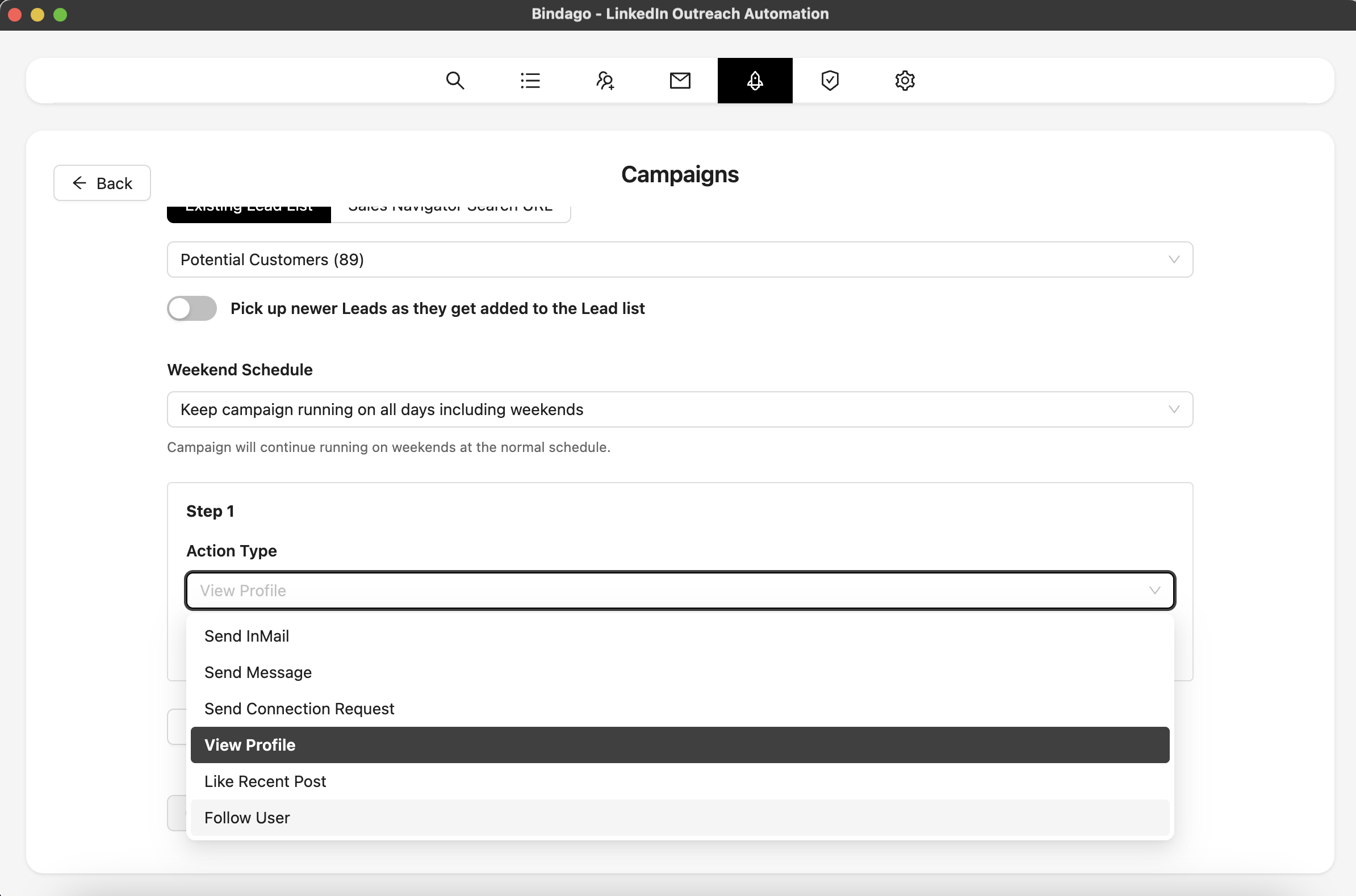
By using Bindago to automate this process, you can systematically turn every high-performing post into a pipeline of warm, qualified conversations. It allows you to focus on creating great content while the system handles the initial outreach. And because it's a desktop app, your LinkedIn credentials remain securely on your computer.
Conclusion: Build a Machine That Works for You
An inbound lead engine transforms your LinkedIn presence from a series of manual, time-consuming tasks into a predictable system for generating revenue. It allows you to build a powerful personal brand that attracts your ideal customers, making the sales process smoother and more effective.
The framework is simple:
- Attract the right audience with an optimized, prospect-focused profile.
- Engage them with high-value content that solves their problems.
- Convert that engagement into conversations with a systematic, automated outreach process.
Build this engine, and you'll spend less time chasing cold leads and more time having meaningful conversations with prospects who already know, like, and trust you.
Ready to build your inbound lead engine on LinkedIn? Download Bindago today and start your 10-day free trial.