How to Build a Content Identity That Feels Authentic
In the crowded digital world, professionals are constantly told to "build a personal brand" and "post content consistently." This pressure often leads to a common pitfall: mimicking what seems popular. You see a certain style of post getting a lot of likes, so you try to copy it, even if it doesn't feel like you. The result is content that feels generic, forced, and inauthentic. It fails to connect with your audience and quickly leads to burnout.
The most successful professionals on platforms like LinkedIn don't just create content; they build a content identity—a unique and authentic voice that attracts their ideal audience and builds deep, lasting trust. This guide will provide you with a clear framework for building a content identity that is both authentic to you and highly effective for your professional goals.
1. The Mindset Shift: From "Creator" to "Documenter"
The biggest hurdle to authenticity is the pressure to be a "creator" of brilliant, original ideas every single day. The solution is to shift your mindset from creating to documenting.
Your job isn't to invent new theories; it's to document your professional journey. Your daily work is a goldmine of authentic content:
- The challenges you're facing.
- The lessons you're learning from wins and losses.
- The insightful conversations you're having with clients and colleagues.
- Your unique perspective on industry news.
When you start documenting your real experiences and insights, your content naturally becomes authentic. You're no longer trying to be someone else; you're simply sharing your own valuable perspective.
2. Define the Three Layers of Your Content Identity
An authentic content identity is made up of three distinct layers. Understanding each one will help you build a brand that is both unique and consistent.
Layer 1: Your Niche (Who You Help)
You cannot be everything to everyone. The foundation of a strong identity is a clearly defined niche. The more specific you are, the more authentic and authoritative you will sound.
- Instead of: "I'm a sales consultant."
- Try: "I'm a sales consultant who helps early-stage B2B SaaS companies build their first outbound sales playbook."
Layer 2: Your Perspective (What You Believe)
Your perspective is your unique point of view, shaped by your experiences, values, and expertise. This is what makes your content stand out.
- Ask yourself:
- What is a common industry belief that I disagree with?
- What is a lesson I learned the hard way that others could benefit from?
- What is my core philosophy on my area of expertise?
Layer 3: Your Voice (How You Sound)
Your voice is the personality of your content. Are you witty and humorous? Analytical and data-driven? Inspirational and motivational? Direct and to the point? There is no right or wrong voice, but it must be yours. Write the way you naturally speak.
3. Develop Your Content Pillars
Once you understand your identity, you need to define your content pillars. These are the 3-5 core topics you will consistently talk about. They should be at the intersection of:
- What your audience cares about.
- What you are an expert in.
- What is related to your professional goals.
For example, a sales consultant's content pillars might be:
- Prospecting & Lead Generation
- Sales Team Leadership
- Negotiation & Closing
- The Psychology of Sales
Having defined pillars keeps your content focused and reinforces your authority in your chosen niche.
4. Turning Authentic Engagement Into Business Opportunities
When you consistently create authentic content, you'll attract a highly engaged audience of your ideal prospects. The likes and comments you receive are not just vanity metrics; they are buying signals. A prospect who engages with your content is signaling that your message resonates with them.
The challenge is, how do you convert this engagement into a real business conversation without losing the authentic, value-driven spirit you've worked so hard to build? Manually tracking every interaction and sending personalized follow-ups is not a scalable system.
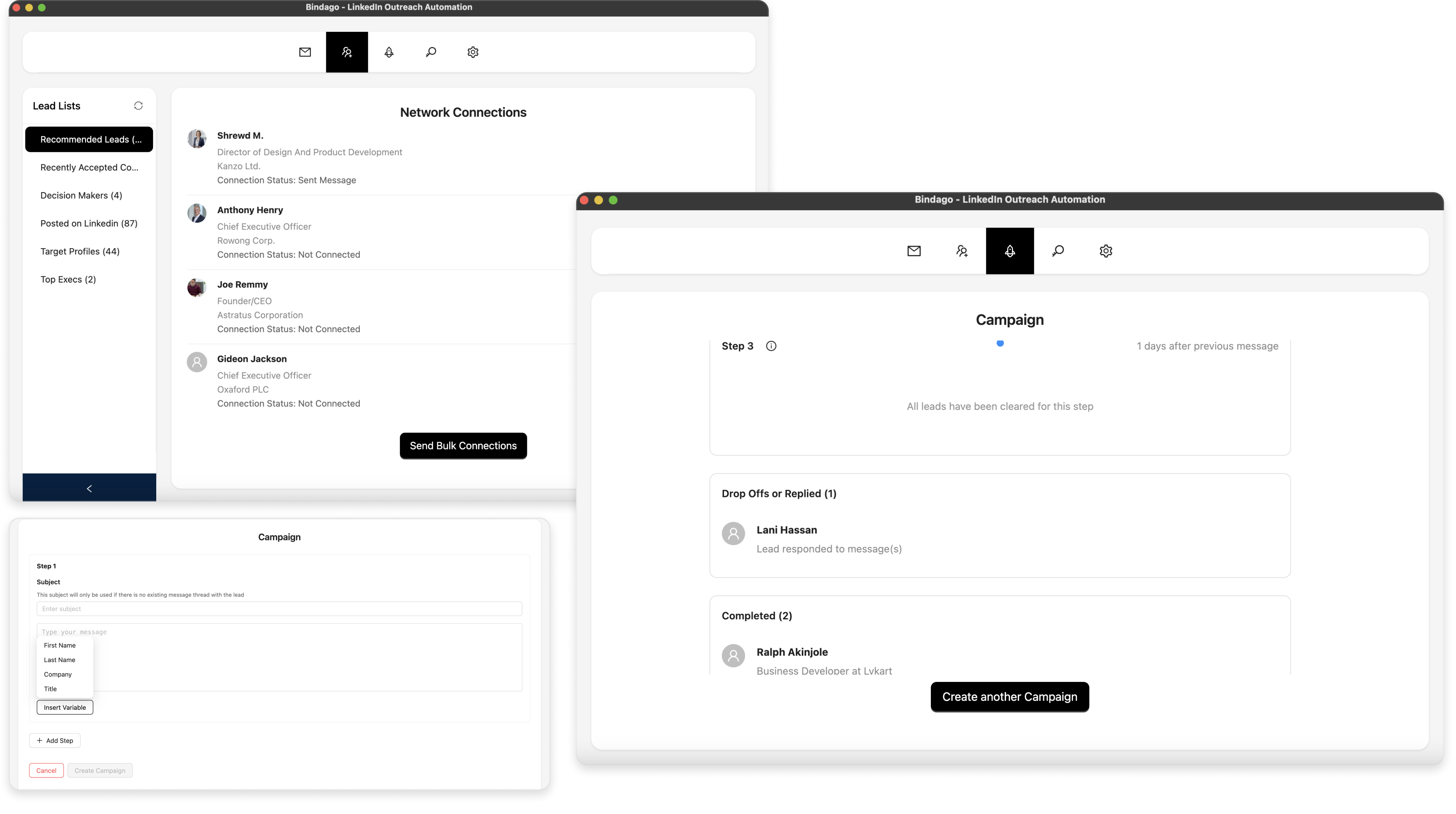
This is where a tool like Bindago can systematize your outreach. As a desktop application, Bindago helps you automate your LinkedIn engagement safely and efficiently, keeping your credentials secure on your machine.
Here’s how you can use Bindago to turn your authentic engagement into pipeline:
- Identify Engaged Prospects: After a post generates engagement, you have a list of warm leads who fit your ICP.
- Launch a Contextual Outreach Campaign: Use Bindago's Campaigns feature to create a multi-step sequence that feels just as authentic as your content.
- Step 1: Send a Contextual Connection Request.
- Template: "Hi {{firstName}}, thanks for engaging with my post on [Topic]. Since you're clearly interested in this area, I thought it would be great to connect."
- Step 2 (3 days after connecting): Send a Value-Driven Follow-Up.
- Template: "Thanks for connecting! As you're interested in [Topic], I thought you might find this in-depth guide I wrote on the subject useful. [Link to a high-value resource]."
- Step 1: Send a Contextual Connection Request.
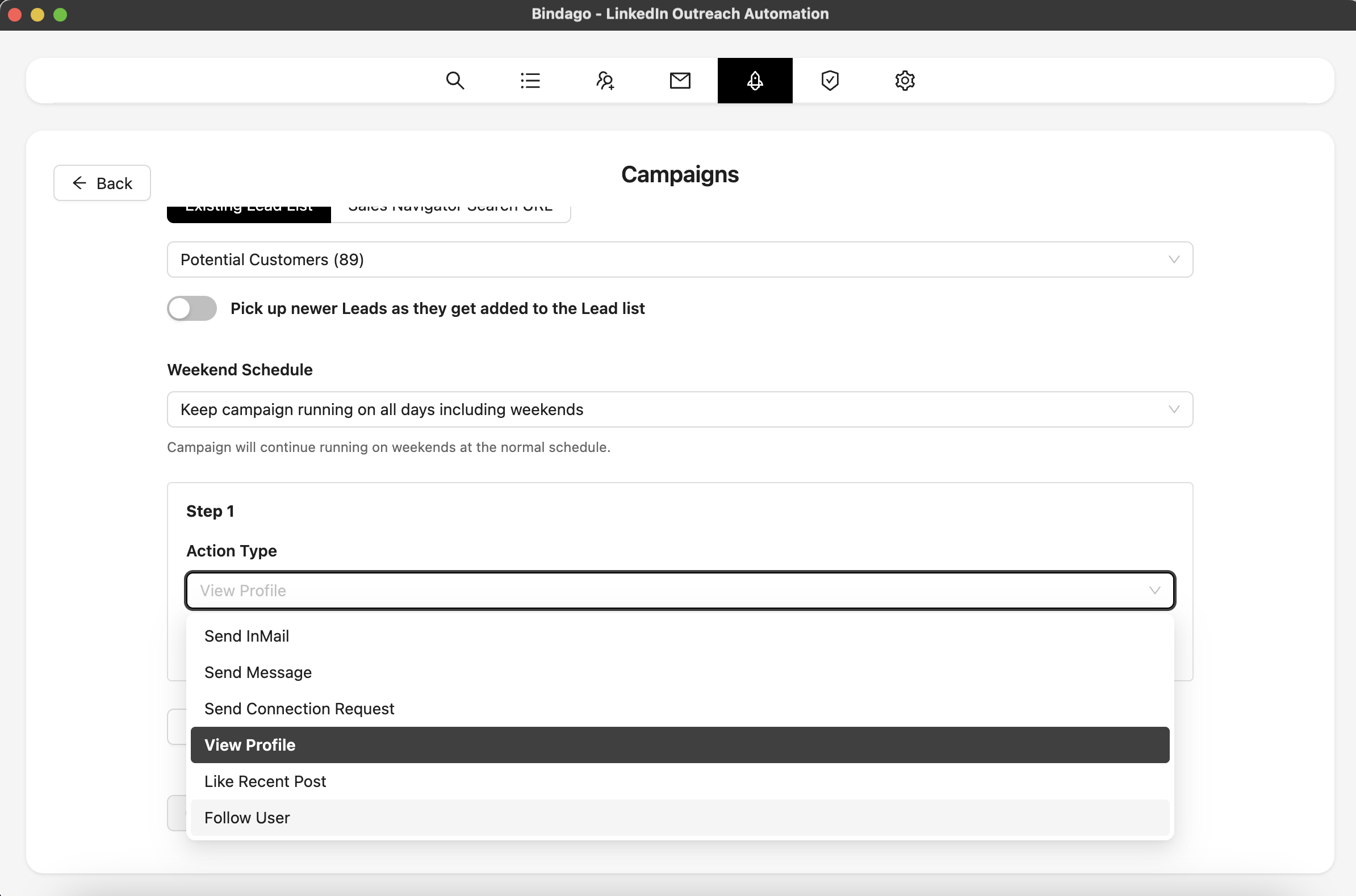
By using Bindago to automate this process, you create a seamless bridge from authentic content to genuine business conversations, allowing you to focus on creating while your system converts.
Conclusion: Your Authenticity is Your Advantage
In a sea of generic content, your authentic voice is your greatest competitive advantage. Stop trying to be like everyone else. Define your niche, share your unique perspective, and document your professional journey.
By building a content identity that is true to you, you will not only avoid burnout but also build a powerful, magnetic brand that attracts the right people and the right opportunities.
Ready to build your authentic content engine? Download Bindago today and start your 10-day free trial.