How to Create a Follow-Up System That Feels Personal
Following up is the engine of sales and networking. Studies consistently show that 80% of sales require at least five follow-ups, yet a staggering 44% of salespeople give up after just one. Why? Because most follow-ups feel awkward, pushy, and impersonal. We've all sent and received the dreaded "just checking in" email, and we all know it doesn't work.
The problem isn't the act of following up; it's the way we do it. A great follow-up doesn't feel like a reminder; it feels like a continuation of a valuable conversation. It builds trust, provides value, and keeps you top-of-mind without being annoying.
This guide will provide you with a clear, actionable framework for building a follow-up system that is both scalable and deeply personal, helping you turn silence into conversations and conversations into opportunities.
1. The Mindset Shift: From "Checking In" to "Adding Value"
The most critical step is to change your mindset. Stop thinking of a follow-up as a way to "check in" or "bump this to the top of their inbox." These phrases are self-serving. They signal to the prospect that you want something from them.
Instead, every follow-up should be an opportunity to add new value. Before you hit send, ask yourself: "What can I give in this message that would be genuinely helpful to this person, even if they never buy from me?"
- Old Mindset: "Have you had a chance to look at my proposal?"
- New Mindset: "I saw this article about a challenge in your industry and thought of our conversation. Here's a key insight that might be useful..."
When you consistently provide value, you're no longer a salesperson chasing a deal; you're a trusted advisor offering help.
2. The Anatomy of a Personal Follow-Up
A follow-up that feels personal has three key ingredients, regardless of the medium.
- Context: It references a previous conversation, interaction, or shared interest. This immediately reminds the prospect who you are and why you're reaching out.
- Value: It provides a new piece of information, a helpful resource, or a relevant insight.
- A Clear, Low-Friction Call-to-Action (CTA): It guides the prospect toward a simple next step.
3. Five Actionable Follow-Up Strategies That Work
Here are five proven strategies for following up that add value and keep the conversation moving forward.
1. The "Value-Added" Follow-Up
This is the gold standard. Instead of asking for something, give something.
- Action: Share a resource you think they would find interesting—a blog post, a case study, an industry report, or a relevant news article.
- Template:
"Hi {{firstName}}, I was just reading this article on the future of [Their Industry] and it made me think of our conversation about [Topic]. The section on [Specific Point] might be particularly relevant for you. Here's the link: [Link]. Hope you find it useful!"
2. The "Thought of You" Follow-Up
This shows you are actively thinking about their specific challenges.
- Action: Reference a recent company announcement, a post they made, or a challenge you know they are facing.
- Template:
"Hi {{firstName}}, I saw that {{companyName}} just announced [Company News]. That's exciting! I've worked with a few other companies during a similar growth phase, and a common challenge was [Relevant Challenge]. Thought I'd share a quick insight that helped them..."
3. The Congratulatory Follow-Up
Celebrating a prospect's success is a great way to re-engage in a positive, personal way.
- Action: Use LinkedIn's notifications to see when a prospect gets a promotion or is mentioned in the news.
- Template:
"Hi {{firstName}}, just saw the news about your promotion to [New Title]—congratulations! It's great to see your success at {{companyName}}. Wishing you all the best in the new role."
4. The Insightful Question Follow-Up
Instead of making a statement, ask a thoughtful question that encourages them to reply.
- Action: Ask a question related to their industry, a recent post, or a challenge you suspect they have.
- Template:
"Hi {{firstName}}, I'm still thinking about your post on [Topic]. It made me wonder, how are you seeing [Industry Trend] affect your team's strategy for the upcoming quarter? Curious to hear your thoughts."
5. The Graceful Exit (with a Door Left Open)
If you've followed up a few times with no response, it's time to gracefully bow out. This shows respect for their time and often gets a reply because it removes the pressure.
- Action: Acknowledge that the timing might not be right and politely close the loop.
- Template:
"Hi {{firstName}}, I know you're likely very busy, so I won't continue to follow up on this. If you ever find that [Your Value Proposition] becomes a priority, please don't hesitate to reach out. Wishing you and the team at {{companyName}} all the best."
4. Building a System: How to Follow Up Consistently Without Going Crazy
These strategies are effective, but manually tracking who to follow up with, when to do it, and what message to send is a logistical nightmare. This is where most people fail. To follow up effectively at scale, you need a system.
A follow-up system is a repeatable process that ensures no prospect slips through the cracks. The key is to automate the process, not the personalization.
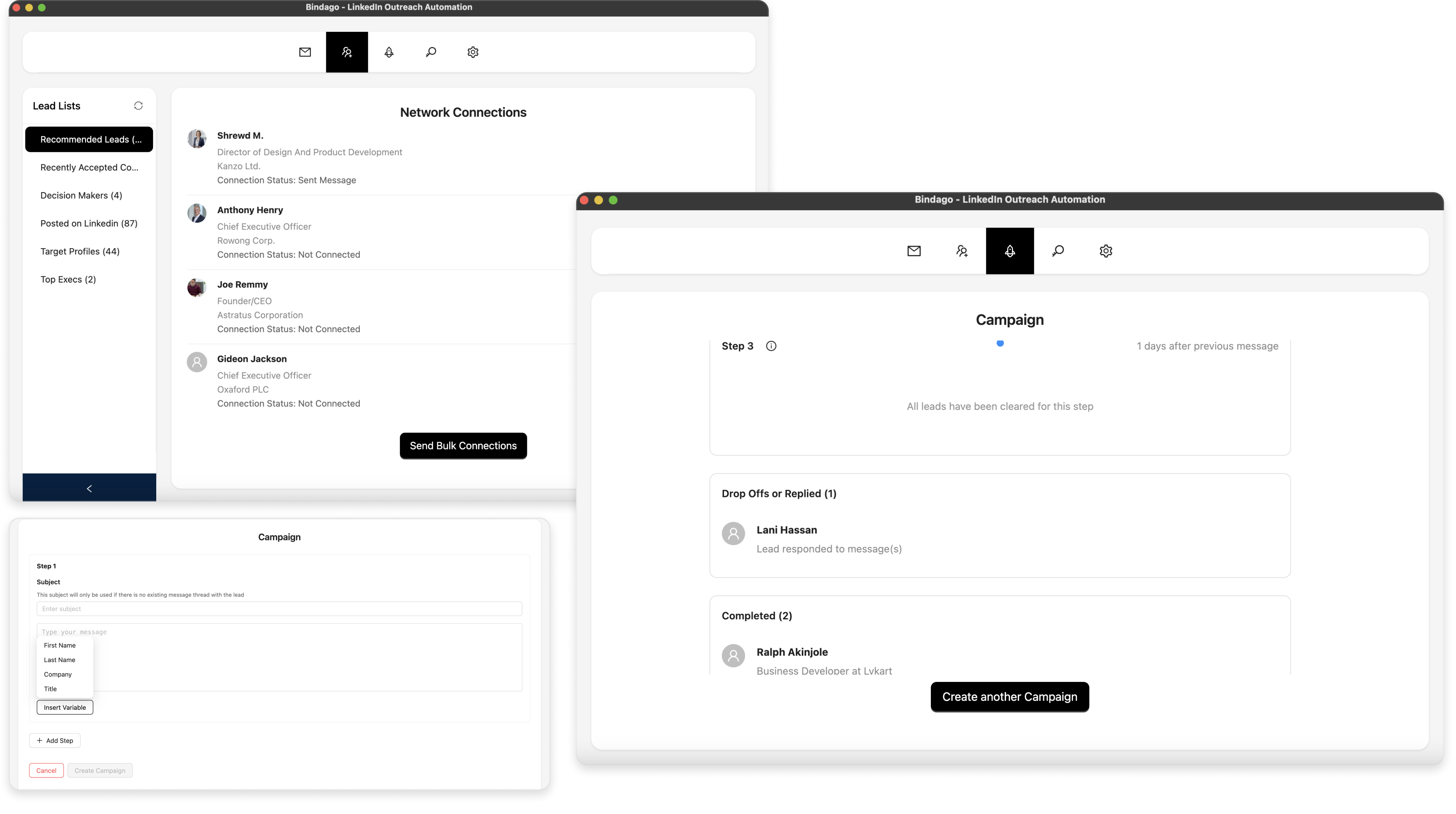
This is exactly what Bindago is designed for. Bindago is a desktop application that allows you to build multi-step message sequences, so you can systematically follow up with your prospects without losing the human touch.
Here’s how you can use Bindago to build a follow-up system that feels personal:
-
Create a Value-Driven Sequence: In Bindago's Campaigns feature, you can create a sequence of messages based on the templates above. For example:
- Message 1 (3 days after connecting): The Value-Added Follow-Up.
- Message 2 (7 days later): The Insightful Question Follow-Up.
- Message 3 (14 days later): The Graceful Exit.
-
Personalize Your Templates at Scale: Use Bindago's personalization variables (
{{firstName}},{{companyName}}, etc.) to make each message in your sequence feel one-to-one, even when you're sending it to hundreds of people. -
Let Automation Handle the Timing: Bindago will automatically send each message at the interval you set. Most importantly, it will automatically stop the sequence for a prospect as soon as they reply, allowing you to step in and have a real, human conversation.
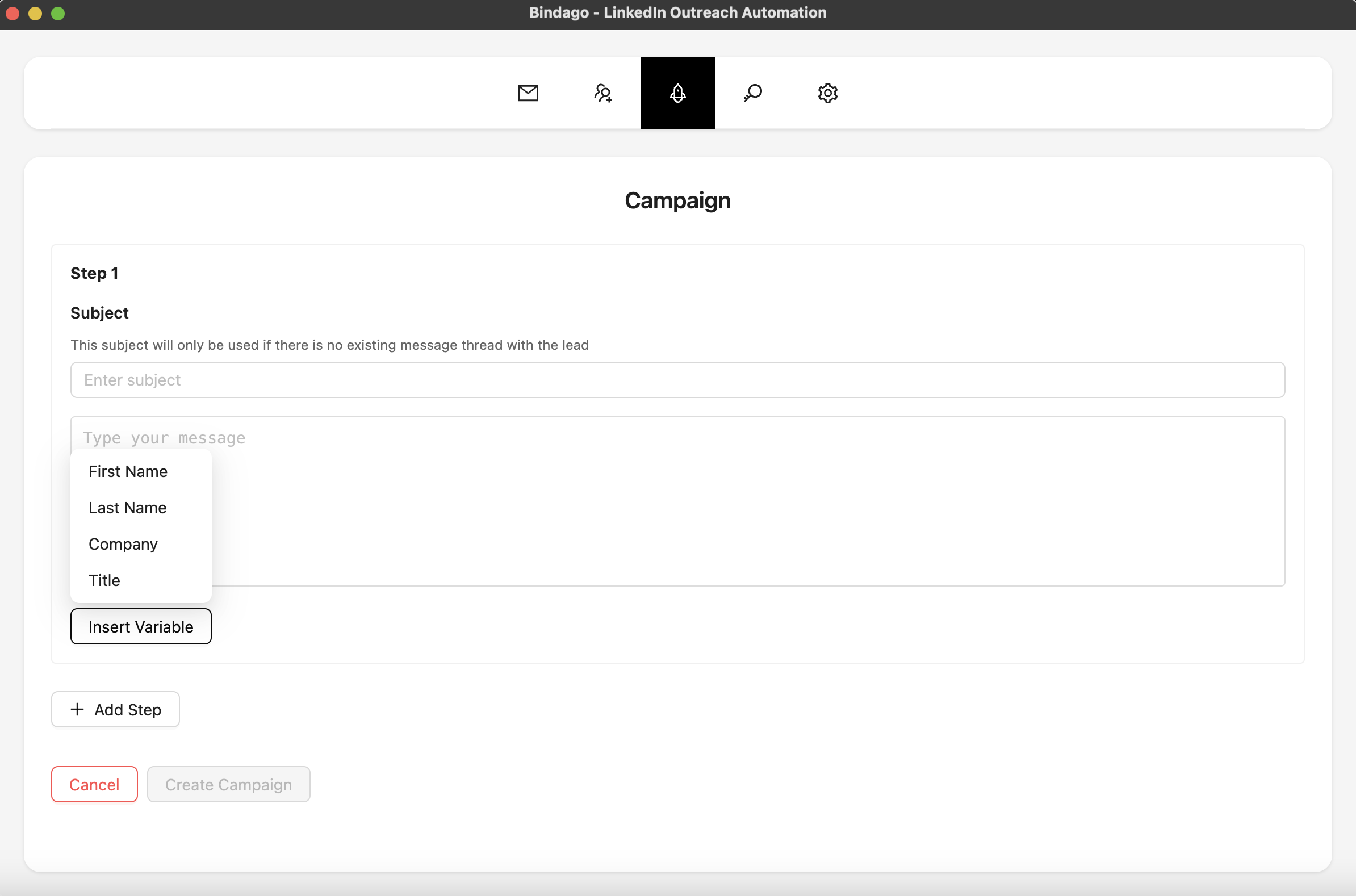
By using Bindago, you can ensure that every prospect receives a thoughtful, value-driven follow-up sequence, dramatically increasing your chances of getting a reply. And because it's a desktop app, your LinkedIn credentials and data remain securely on your computer.
Conclusion: Persistence with a Personal Touch
Following up is an art that balances persistence with professionalism. The key is to always provide value and focus on the prospect's needs. By ditching the "just checking in" messages and adopting a value-first approach, you can turn follow-ups from a dreaded chore into one of your most effective sales tools.
Combine these strategies with the smart automation of a tool like Bindago, and you have a scalable system for building relationships and generating a consistent stream of warm, qualified leads.
Ready to master the art of the follow-up? Download Bindago today and start your 10-day free trial.