How to Turn Your Career Experience Into a Personal Brand Narrative
Your career is more than just a list of jobs on a resume. It’s a story, complete with challenges, turning points, and valuable lessons learned. In today’s competitive professional landscape, the ability to shape your career experience into a compelling personal brand narrative is what separates you from the crowd. It transforms you from a passive job applicant or a cold salesperson into a sought-after expert that opportunities find.
A strong narrative doesn’t just recount what you’ve done; it explains why it matters. It builds an emotional connection, establishes your authority, and makes you memorable. This guide provides a clear, actionable framework to help you uncover and articulate your unique professional story.
1. The Mindset Shift: You Are the Protagonist of Your Career
The first step is to stop thinking of your career as a series of disconnected roles and start seeing it as a journey. Like any good story, your career has a protagonist (you), a plot (your progression), conflicts (challenges you've overcome), and a theme (the unique value you bring).
- Old Mindset (The Resume): "I was an Account Executive at Company X, then a Sales Manager at Company Y."
- New Mindset (The Narrative): "I started my career on the front lines of sales, which taught me the deep-seated challenges that sales teams face. This experience fueled my passion for building scalable systems that empower reps, not just measure them."
This narrative approach provides context and purpose to your experience.
2. Identify Your Core Themes
Look back at your career and identify the recurring themes. What are the common threads that connect your different roles, even if they seem unrelated on the surface?
- What problems do you consistently solve? (e.g., "I'm always the one brought in to fix broken processes.")
- What skills do you gravitate towards? (e.g., "I'm passionate about using data to make informed decisions.")
- What audience do you serve best? (e.g., "I have a knack for building trust with C-level executives.")
These themes are the pillars of your personal brand. They are the core message you want your narrative to communicate.
3. Structure Your Narrative: The Three-Act Story
Every great story has a beginning, a middle, and an end. You can apply this structure to your own career.
Act 1: The Origin
Where did your journey begin? This isn’t just your first job; it’s the "why" behind your career path.
- Example: "My fascination with sales began not in a boardroom, but in a bustling retail store, where I first learned that connecting with a customer's needs was more powerful than any sales script."
Act 2: The Turning Point
This is the core of your story. It’s about the challenges you faced and the key lessons you learned.
- Example: "As a sales manager, I saw my team drowning in manual data entry. We were spending more time in our CRM than we were with customers. I knew there had to be a better way. This challenge sparked my obsession with sales process automation."
Act 3: The Resolution (Your Current Value Proposition)
This is where you are now and the value you provide, framed by the journey that got you here.
- Example: "Today, I help sales leaders implement the very automation strategies I had to build from scratch. My experience on the front lines gives me a unique perspective on what actually works for a sales team."
4. Weave Your Narrative into Your LinkedIn Profile
Your LinkedIn profile is the primary stage for your personal brand narrative.
- Your Headline: It should be a concise summary of your story's resolution.
- Instead of: "Sales Director at Acme Inc."
- Try: "Sales Leader | Building Predictable Revenue Engines for B2B SaaS Companies"
- Your "About" Section: This is where you tell the full story. Use the three-act structure to write a compelling summary that hooks the reader, explains your journey, and clearly states the value you provide.
- Your Experience Section: Don't just list your responsibilities. For each role, add a short sentence that connects it to your larger narrative.
- Example: "At Acme, I led the charge on our first-ever sales automation project, which validated my belief that..."
5. Amplify Your Narrative Through Content and Engagement
Your profile tells your story, but your activity brings it to life.
- Share Stories, Not Just Stats: When you share a win, frame it as a story. "Here was the problem, here's what we did, and here was the result."
- Engage with Context: When you comment on posts, your narrative should inform your perspective. Your comments should reinforce your position as an expert in your chosen field.
6. Scale Your Story with Strategic Outreach
Once you have a compelling narrative and a profile that tells it effectively, you need to get it in front of the right people. This is where you can leverage smart automation to scale your outreach without losing the personal touch that your story provides.
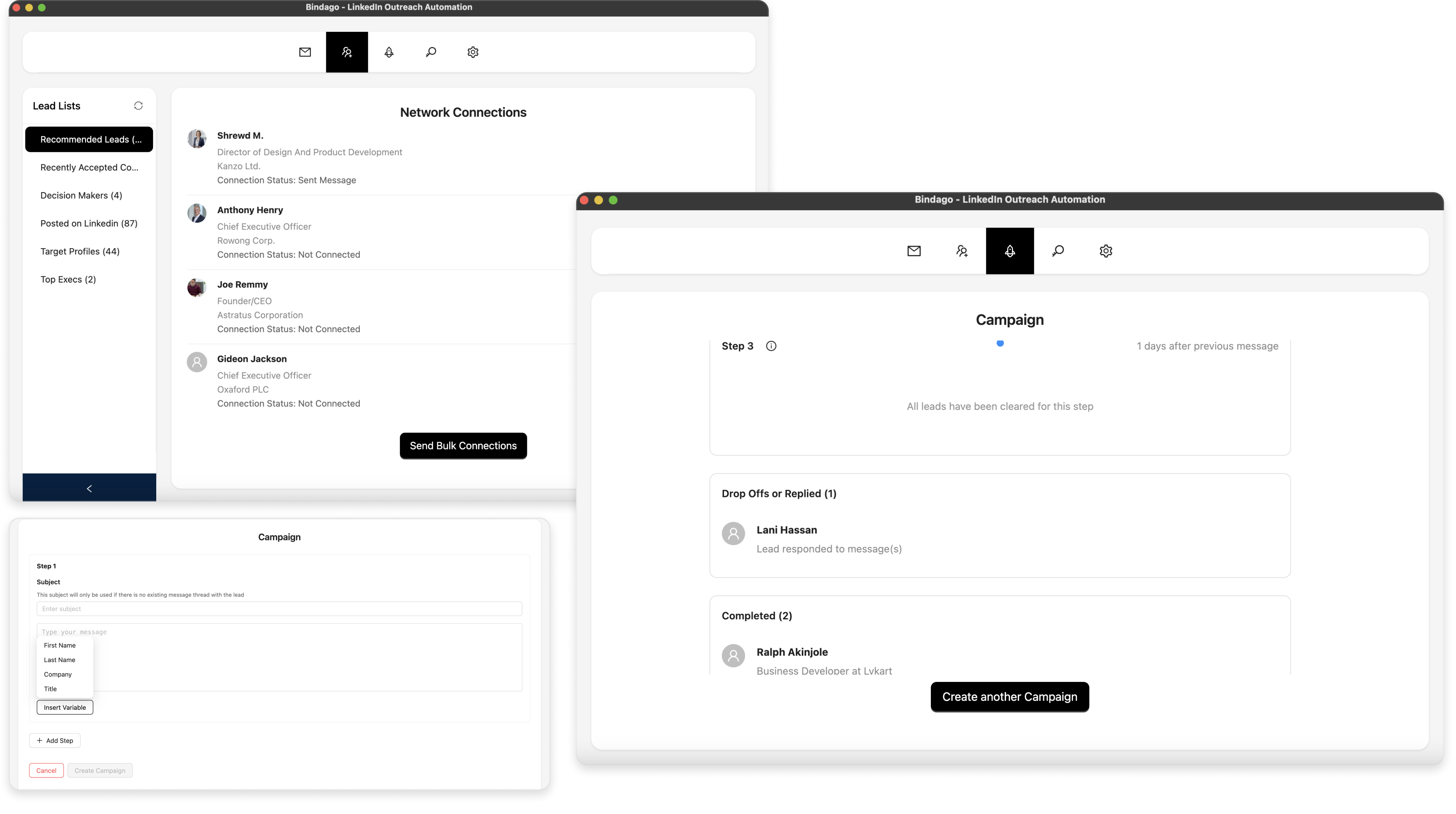
A tool like Bindago can be your engine for this. As a secure desktop application, it allows you to build outreach campaigns that are consistent with your personal brand.
- Build Segmented Campaigns: Create prospect lists segmented by industry or job title. For each segment, you can craft a personalized connection request and follow-up sequence that subtly weaves in your narrative.
- Automate Your Value-Driven Outreach: Use Bindago’s Campaigns feature to create a multi-step sequence.
- Connection Request: "Hi {{firstName}}, I saw you're also in the [Industry] space. My journey in this field has been focused on solving [Problem], and I'd love to connect with other leaders in the space."
- Follow-Up Message (3 days after connecting): "Thanks for connecting! As promised, here's a brief story about how we helped a company similar to yours overcome [Challenge]. Hope you find it insightful."
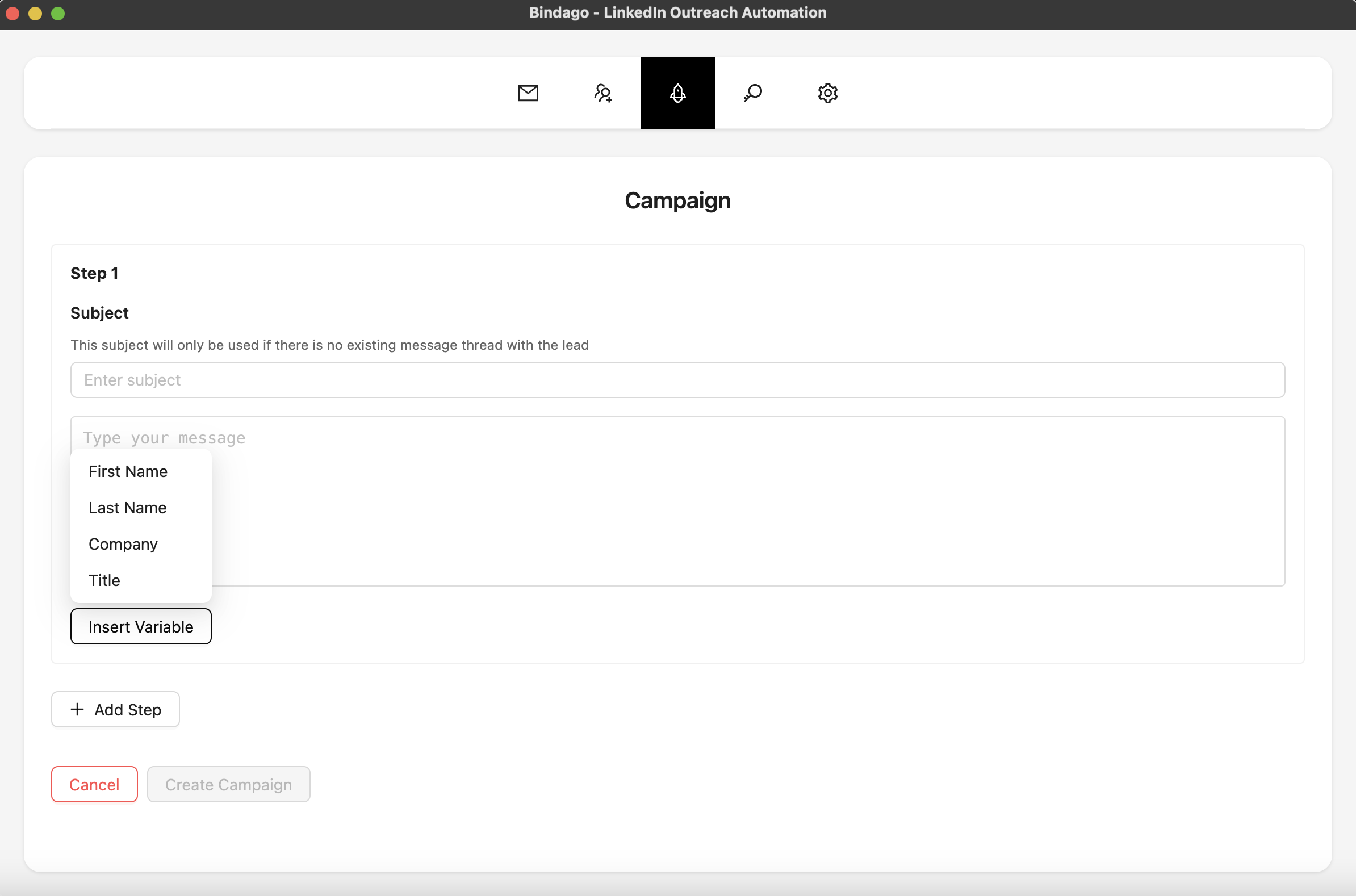
By using Bindago to systematize your outreach, you can focus on perfecting your story, while the system works to share it with the right audience, turning your personal brand into a predictable source of opportunities.
Conclusion
Your career experience is your most valuable asset. Don't let it be a dry list of facts on a resume. By shaping it into a compelling narrative, you build a powerful personal brand that builds trust, communicates your unique value, and attracts the right people and opportunities to you.
Find your themes, structure your story, and start telling it. Your career is worth more than a bullet point list.
Ready to build your personal brand and generate more inbound leads? Download Bindago today and start your 10-day free trial.