How to Position Yourself for Strategic Partnerships on LinkedIn
In today's interconnected business world, strategic partnerships are a powerful engine for growth. They can unlock new markets, provide access to new technologies, and create a competitive advantage that is difficult to replicate. For professionals tasked with building these alliances—whether in business development, sales, or leadership—LinkedIn is the ultimate hunting ground.
However, simply being on the platform is not enough. To attract and secure high-value partnerships, you must strategically position yourself as a credible, valuable, and collaborative leader. This guide provides a clear, actionable framework for transforming your LinkedIn presence into a magnet for strategic partnership opportunities.
1. Optimize Your Profile as a Partnership Hub
Your LinkedIn profile is not just a resume; it's the front door to your professional brand. When a potential partner lands on your page, it should immediately be clear that you are someone who understands collaboration and can create mutual value.
- Craft a Partnership-Oriented Headline: Go beyond your job title. Frame your role in the context of collaboration.
- Instead of: "Business Development Manager at Acme Corp"
- Try: "Business Development Leader | Building Strategic Partnerships to Drive Growth in the SaaS Ecosystem"
- Write a "Why Partner With Me" About Section: Your summary should tell a story about your approach to partnership.
- Example: "I believe the most successful companies are those that build powerful ecosystems. My focus is on identifying and nurturing win-win relationships with complementary businesses. I specialize in creating joint go-to-market strategies that drive revenue for both partners..."
- Use Your Featured Section to Showcase Success: Pin content that demonstrates your partnership prowess, such as a co-branded webinar, a case study about a successful integration, or a post celebrating a partner's success.
2. Identify and Research Potential Partners with Precision
The most successful partnerships are built on a foundation of shared goals and complementary strengths. Your first task is to identify companies and individuals who fit this description.
- Use LinkedIn Sales Navigator: This is your most powerful tool. Use advanced filters to find companies that serve a similar customer base but are not direct competitors. Look for companies in adjacent industries or those that offer a complementary product or service.
- Analyze Their Content and Engagement: What are their strategic priorities? Look at the content they post and the conversations they engage in. Are they talking about challenges that your company can help solve?
- Map the Key Stakeholders: Once you've identified a target company, find the right people to talk to. Look for titles like "Head of Partnerships," "VP of Business Development," or "Strategic Alliances Manager."
3. Engage Before You Pitch: The Warm-Up Strategy
Just as in sales, a cold pitch for a partnership is rarely effective. You need to warm up your potential partners first.
- Follow Their Company Page and Key Executives: This is a simple, non-intrusive way to show you're interested.
- Leave Insightful Comments: Engage with their content in a meaningful way. A thoughtful comment that adds to the conversation is far more powerful than a simple "like." It positions you as a peer who is thinking about the same challenges.
- Share Their Content: Share one of their posts with your own insightful commentary. This is a generous act that builds goodwill and gets you on their radar.
4. Crafting the Initial Outreach Message
After you've warmed them up, it's time to reach out. Your initial message should be concise, personalized, and focused on exploring mutual value.
Template for a Partnership Connection Request:
"Hi {{firstName}}, I've been following {{companyName}}'s work in the [Industry] space and I'm impressed with your approach to [Specific Area]. I see a lot of potential synergy between our companies. Would love to connect."
Template for a Follow-Up Message:
"Thanks for connecting, {{firstName}}. As I mentioned, I see a real opportunity for our companies to create value together. We both serve [Shared Customer Base], and I have a few ideas on how a partnership could benefit both of us.
Would you be open to a brief, 15-minute exploratory call next week?"
5. Systematize Your Partnership Outreach with Automation
Manually tracking and engaging with dozens or hundreds of potential partners is not a scalable strategy. To build a predictable pipeline of partnership opportunities, you need to systematize your efforts.
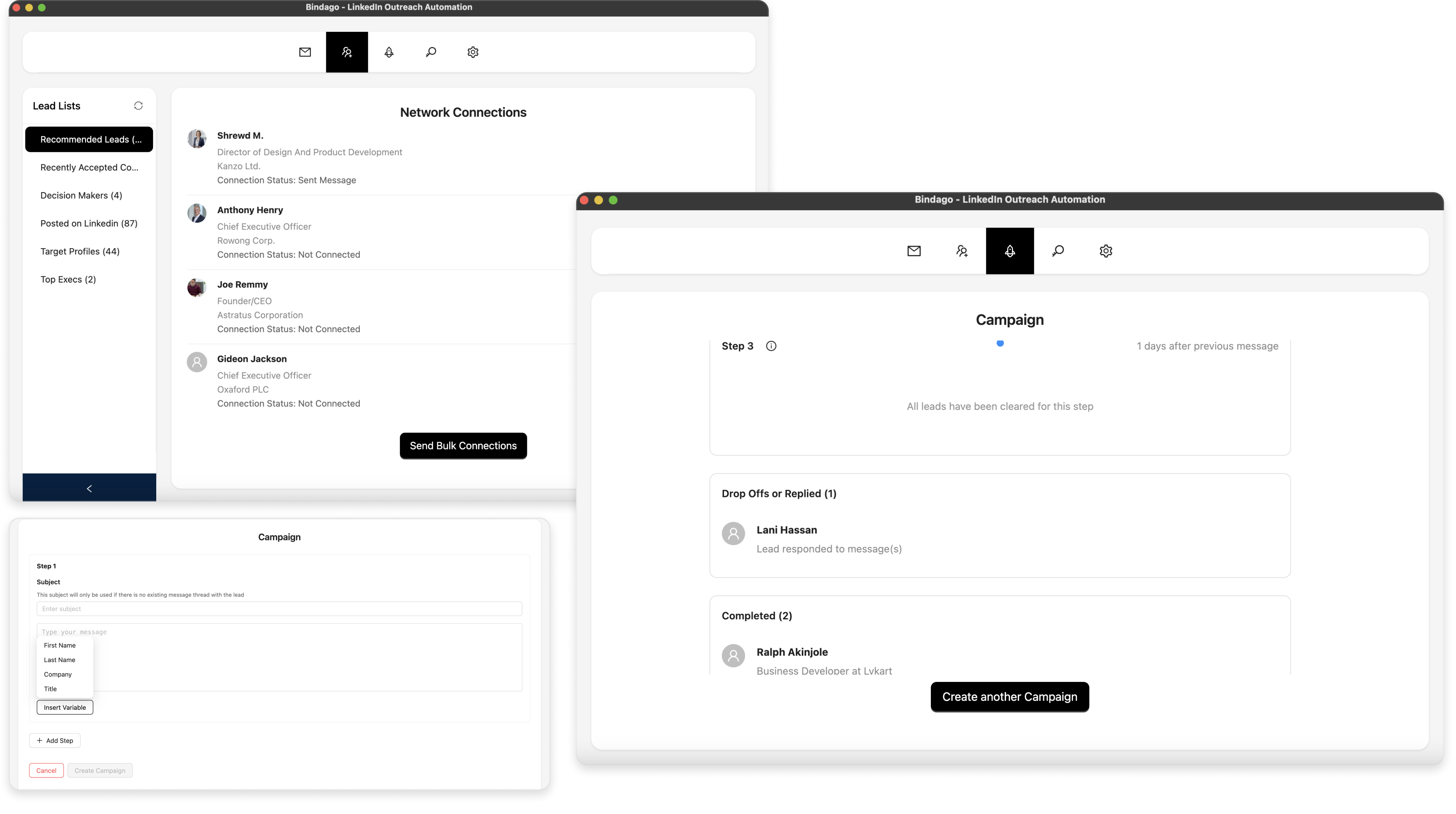
This is where a secure and powerful automation tool like Bindago becomes invaluable. Bindago is a desktop application that allows you to automate your LinkedIn outreach safely and efficiently.
Here’s how you can use Bindago to build your partnership pipeline:
- Build and Export Your Partner Lists: Use Sales Navigator to create hyper-targeted lists of potential partners. You can then export these lists to a CSV file using Bindago for easy management.
- Create a "Warm-Up" Campaign: Use Bindago's Campaigns feature to create a multi-step sequence that automatically warms up your entire list by viewing profiles and liking recent posts.
- Automate Your Outreach: Launch a campaign to send your personalized connection requests and a sequence of value-driven follow-up messages. The automation stops the moment a prospect replies, allowing you to step in and have a strategic conversation.
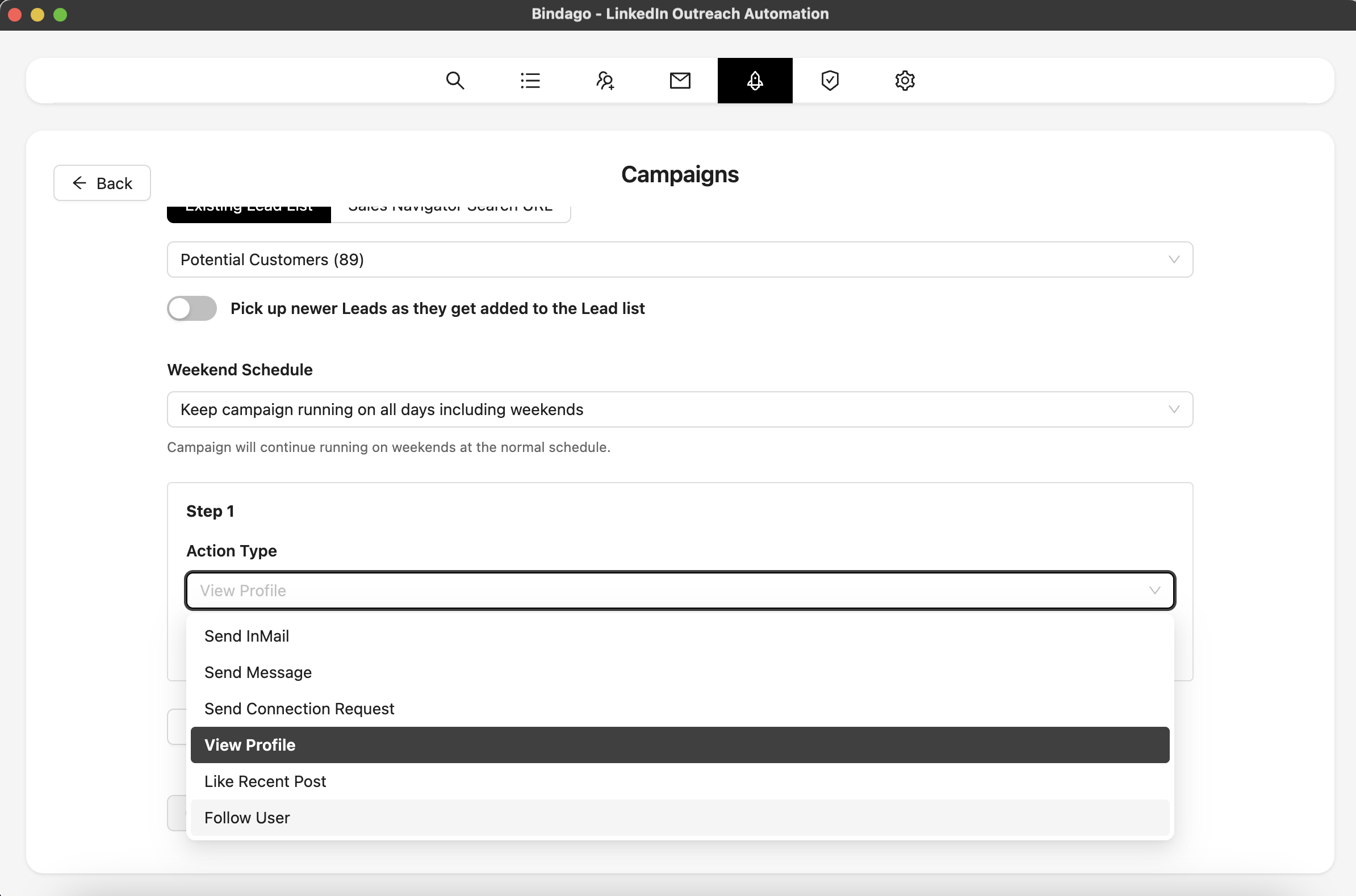
By using Bindago to automate the repetitive tasks, you can focus your time on the high-value work of negotiating and structuring partnerships. And because it's a desktop app, your LinkedIn credentials remain securely on your computer.
Conclusion: From Connection to Collaboration
Positioning yourself for strategic partnerships on LinkedIn is about playing the long game. It requires a shift from transactional thinking to a focus on building relationships and creating mutual value.
The framework is simple:
- Optimize your profile to signal your collaborative intent.
- Identify and research the right potential partners.
- Engage and warm them up before you reach out.
- Systematize your efforts with smart automation to do it all at scale.
By following these steps, you can transform your LinkedIn presence into a powerful engine for building the strategic alliances that will drive your company's growth.
Ready to build your partnership pipeline? Download Bindago today and start your 10-day free trial.