How to Onboard Your Sales Team to LinkedIn the Right Way
In B2B sales, simply telling your team to "use LinkedIn" is not a strategy—it's a recipe for inconsistent results, brand damage, and wasted time. A sales rep with a poorly optimized profile sending generic, pushy messages can do more harm than good. To transform your sales team into a high-performing lead generation engine on LinkedIn, you need a structured, repeatable onboarding process.
Effective onboarding isn't about teaching your team to send more messages; it's about teaching them to build trust, provide value, and start meaningful conversations at scale. This guide provides a clear, actionable framework for onboarding your sales team to LinkedIn the right way, turning the platform into your most predictable source of pipeline.
1. The Foundation: Standardize and Optimize Your Team's Profiles
The first step is to ensure every member of your team has a LinkedIn profile that is a sales asset, not a resume. It must be optimized to speak directly to your Ideal Customer Profile (ICP).
Create a Consistent Brand Image
- Headshots and Banners: Invest in professional, consistent headshots for the entire team. Design a branded LinkedIn banner that every team member can use, featuring your company logo and value proposition.
Craft a Prospect-Centric Headline Formula
Provide your team with a clear formula for their headlines.
- Formula:
[Job Title] | Helping [Your ICP] Achieve [Specific Outcome] - Example:
Account Executive | Helping Retail Brands Increase E-commerce Conversion Rates
Develop a Compelling "About" Section Template
Give your team a template for their "About" section based on the Problem-Agitate-Solve framework. This ensures a consistent and powerful message across the board.
- Problem: "Many retail brands struggle to..."
- Agitate: "This leads to..."
- Solve: "I help them by..."
2. Build a Shared Prospecting and Outreach Playbook
Consistency comes from a shared playbook. Your team should not be guessing how to find or message prospects.
Define Your ICP as a Team
Collaborate with your sales and marketing teams to create a single, hyper-specific ICP. This document should be the source of truth for all prospecting efforts.
Master LinkedIn Sales Navigator Together
Train your team on the advanced filters in Sales Navigator. Create a shared list of "saved searches" that automatically find new leads matching your ICP. Focus on high-intent filters like "Changed jobs in last 90 days" and "Posted on LinkedIn in past 30 days."
Create a Library of Message Templates
You can't personalize every message at scale, but you can create personalized templates for different segments. Develop a library of approved, on-brand templates for:
- Connection requests (segmented by industry, title, or trigger event).
- The first follow-up message after connecting.
- A 3-4 step nurture sequence for prospects who don't reply immediately.
3. Systematize and Scale Your Team's Outreach
This is where most teams fail. It's one thing to have a playbook, but another to execute it consistently across multiple accounts. Manually managing this process is a logistical nightmare. To scale effectively, you need a centralized platform to manage and automate your team's outreach.
This is where a powerful and secure tool like Bindago becomes essential for sales leaders. As a desktop application, Bindago provides a secure environment to manage multiple LinkedIn accounts without the risks associated with cloud-based tools that require you to share client credentials.
How Bindago Helps You Onboard and Scale Your Team:
-
Centralized Account Management: With Bindago's Scale plan, a sales manager can manage unlimited LinkedIn accounts from a single dashboard. This allows you to set up, run, and monitor campaigns for your entire team, ensuring consistency and quality control.
-
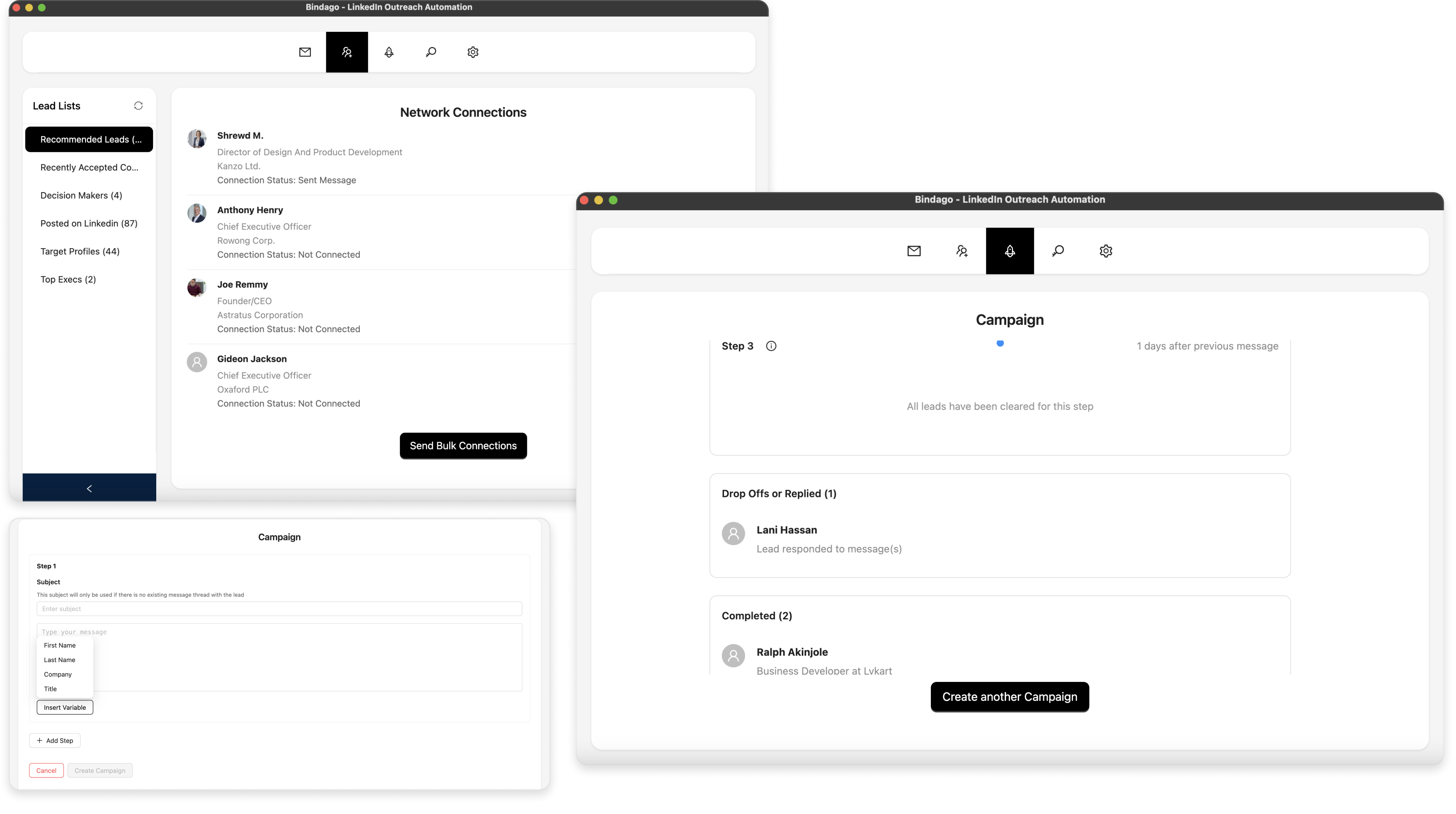
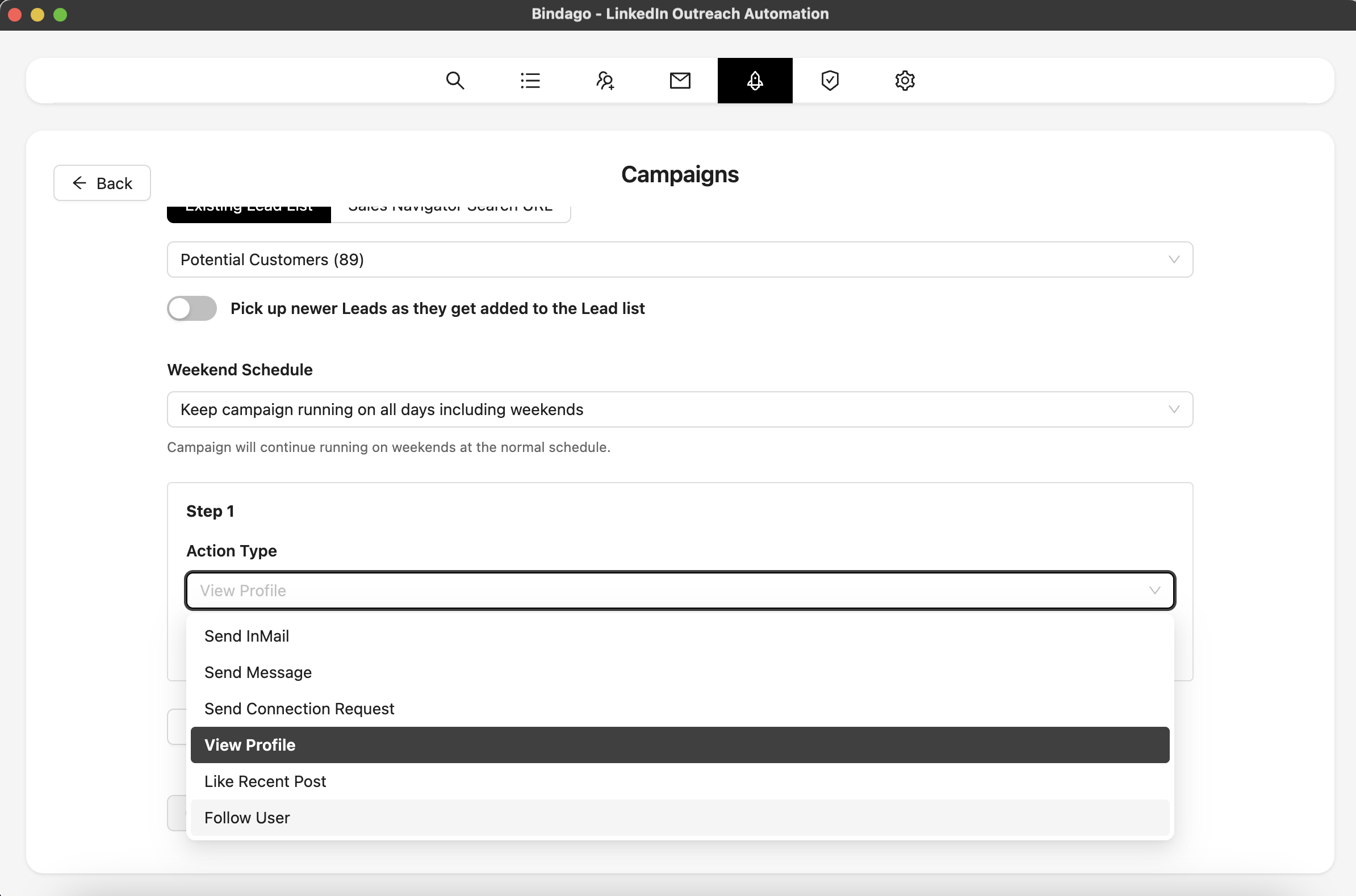
Automate the Playbook: You can take your standardized outreach playbook and build it directly into Bindago's Campaigns feature. Create multi-step campaigns that automatically:
- Warm-up prospects by viewing profiles and liking posts.
- Send personalized connection requests using your approved templates.
- Execute a value-driven follow-up sequence to nurture new connections.
-
Ensure Brand Consistency and Safety: By managing campaigns centrally, you can ensure that every message sent by your team is on-brand and professional. Bindago's built-in safety features, like smart delays, mimic human behavior to protect each team member's account.
Using Bindago, you can onboard a new sales rep, provide them with your proven playbook, and use the system to execute it for them, allowing them to focus on what they do best: having conversations with the warm leads the system generates.
4. Training on Etiquette and Best Practices
A tool is only as good as the strategy behind it. Your onboarding must include training on:
- The 90/10 Rule: 90% of your activity should be providing value; only 10% should be asking for something.
- Personalization: Even with templates, each message should be reviewed for opportunities to add a touch of genuine personalization.
- Account Health: Teach your team the importance of withdrawing old pending invitations to keep their accounts in good standing. A feature like Bindago's bulk invitation withdrawal makes this easy.
5. Measure What Matters: Team Performance Tracking
To ensure your LinkedIn program is successful, you need to track your team's performance. Focus on these key metrics:
- Connection Acceptance Rate: Are your team's connection requests being accepted? (Aim for 30%+)
- Message Response Rate: Are prospects replying to your follow-up sequences? (Aim for 20-40%)
- Meetings Booked: The ultimate output metric. How many sales conversations are being generated from LinkedIn activity?
Review these metrics as a team weekly or bi-weekly to identify top performers, share best practices, and refine your playbook.
Conclusion
Onboarding your sales team to LinkedIn is not a one-time event; it's the implementation of a system. By standardizing your profiles, building a shared playbook, and using a secure automation tool like Bindago to execute your strategy at scale, you can transform your team from a group of individual prospectors into a predictable revenue-generating machine.
Stop leaving your LinkedIn strategy to chance. Build a system, train your team, and start generating the consistent, high-quality pipeline your business needs to grow.
Ready to build a high-performing sales team on LinkedIn? Download Bindago today and explore how it can help you scale your outreach securely and efficiently.