How to Turn LinkedIn Engagement Into Revenue KPIs
For many B2B professionals, LinkedIn engagement is a source of validation. A post gets a hundred likes, and it feels like a win. But when your sales manager asks about the ROI of your time on LinkedIn, "I got a lot of likes" is not a business answer. Likes and views are vanity metrics; they don't pay the bills. Revenue does.
The most effective sales and marketing professionals know how to connect the dots between a simple "like" and a closed deal. They have a system for translating LinkedIn engagement into tangible Revenue KPIs (Key Performance Indicators). This guide provides a clear, actionable framework to help you move beyond vanity metrics and build a predictable engine that turns your LinkedIn activity into measurable revenue.
1. The Mindset Shift: From Vanity Metrics to Buying Signals
The first step is to stop thinking of engagement as the end goal and start seeing it for what it is: a buying signal.
- Views: The weakest signal. Someone scrolled past your content.
- Likes: A slightly stronger signal. The prospect agrees with your point or finds the topic relevant. It's a passive nod.
- Comments: A strong signal. The prospect was compelled to invest time and thought into a public response. This often reveals their priorities and pain points.
- Shares: The strongest signal. Your content was so valuable that the prospect was willing to endorse it to their own network.
Your job is to build a funnel that captures these signals and converts them into conversations, opportunities, and ultimately, revenue.
2. The Engagement-to-Revenue Funnel
To measure what matters, you need a funnel that tracks a prospect's journey from a casual interaction to a signed contract.
Top of Funnel (TOFU): Content Engagement
This is where you measure how well your content resonates with your target audience.
- Metrics: Likes, Comments, Shares, Post Views.
- KPI to Track: Engagement Rate (Total Engagements / Total Views). This tells you how compelling your content is. A high engagement rate means you are hitting on relevant pain points.
Middle of Funnel (MOFU): Conversation & Pipeline
This is the most critical and often untracked stage. It measures your ability to turn engagement into meaningful business conversations.
- Metrics: Connection requests sent to engagers, connection acceptance rate, conversations started in DMs, positive reply rate.
- KPIs to Track:
- Engagement-to-Conversation Rate: (Conversations Started / Total Engagers) * 100.
- Meetings Booked from Engagement: The number of sales calls scheduled with prospects who originated from a post engagement.
Bottom of Funnel (BOFU): Revenue
This is where you connect your LinkedIn activities directly to the bottom line.
- Metrics: Opportunities created in your CRM, pipeline value generated, deals closed.
- KPIs to Track:
- Social-Sourced Pipeline: The total value of opportunities in your CRM that started with a LinkedIn engagement.
- LinkedIn-Influenced Revenue: The total value of closed-won deals where LinkedIn engagement was a key touchpoint.
- Sales Cycle Length: Compare the sales cycle of leads from LinkedIn engagement vs. traditional cold outreach. (It's almost always shorter).
3. How to Build a System to Track and Convert
Tracking this funnel manually is nearly impossible. You need a systematic approach and the right tools.
Step 1: Identify Your Engaged Prospects
After you publish a post, you have a list of prospects who have raised their hand by liking or commenting. These are your warmest leads. Your first step is to identify those who fit your Ideal Customer Profile (ICP).
Step 2: Systematize Your Outreach
This is where most people fail. Manually reaching out to every person who likes a post is time-consuming and inconsistent. To do this at scale, you need to automate the outreach process.
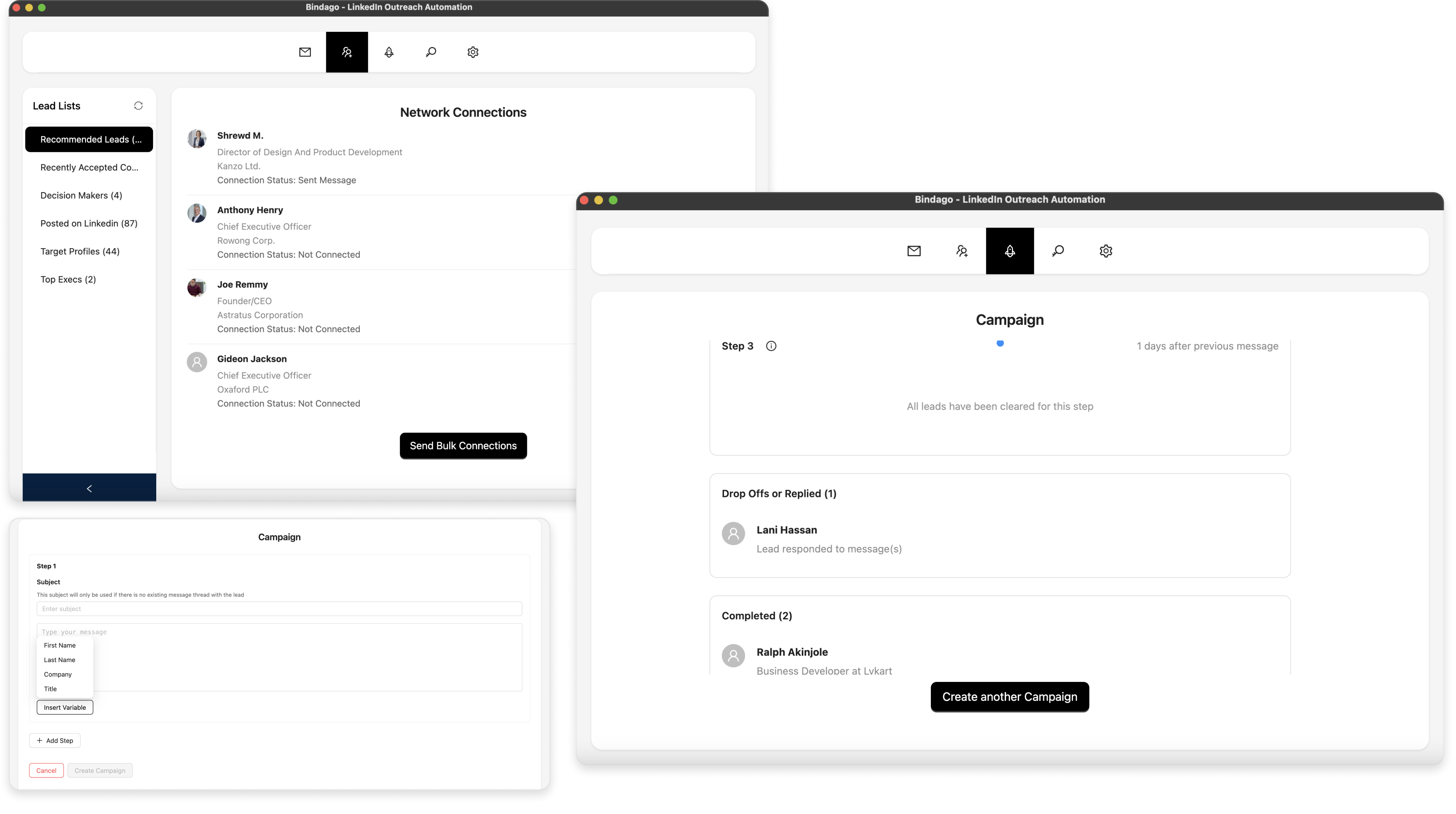
A powerful and secure tool like Bindago is designed for this exact workflow. As a desktop application, it keeps your sensitive LinkedIn credentials secure on your computer.
Here’s how you can use Bindago to turn engagement into conversations:
- Create a List of Engagers: Gather the profile URLs of the prospects who engaged with your post and fit your ICP.
- Launch a Contextual Outreach Campaign: Use Bindago's Campaigns feature to create a multi-step sequence.
- Step 1: Send a personalized connection request.
- Template: "Hi {{firstName}}, thanks for liking my post on [Topic]. Since you're clearly interested in this area, I'd love to connect and share more insights."
- Step 2 (3 days after connecting): Send a value-driven follow-up message.
- Template: "Thanks for connecting! As you're interested in [Topic], I thought you might find this in-depth guide we wrote on the subject useful. [Link to resource]."
- Step 1: Send a personalized connection request.
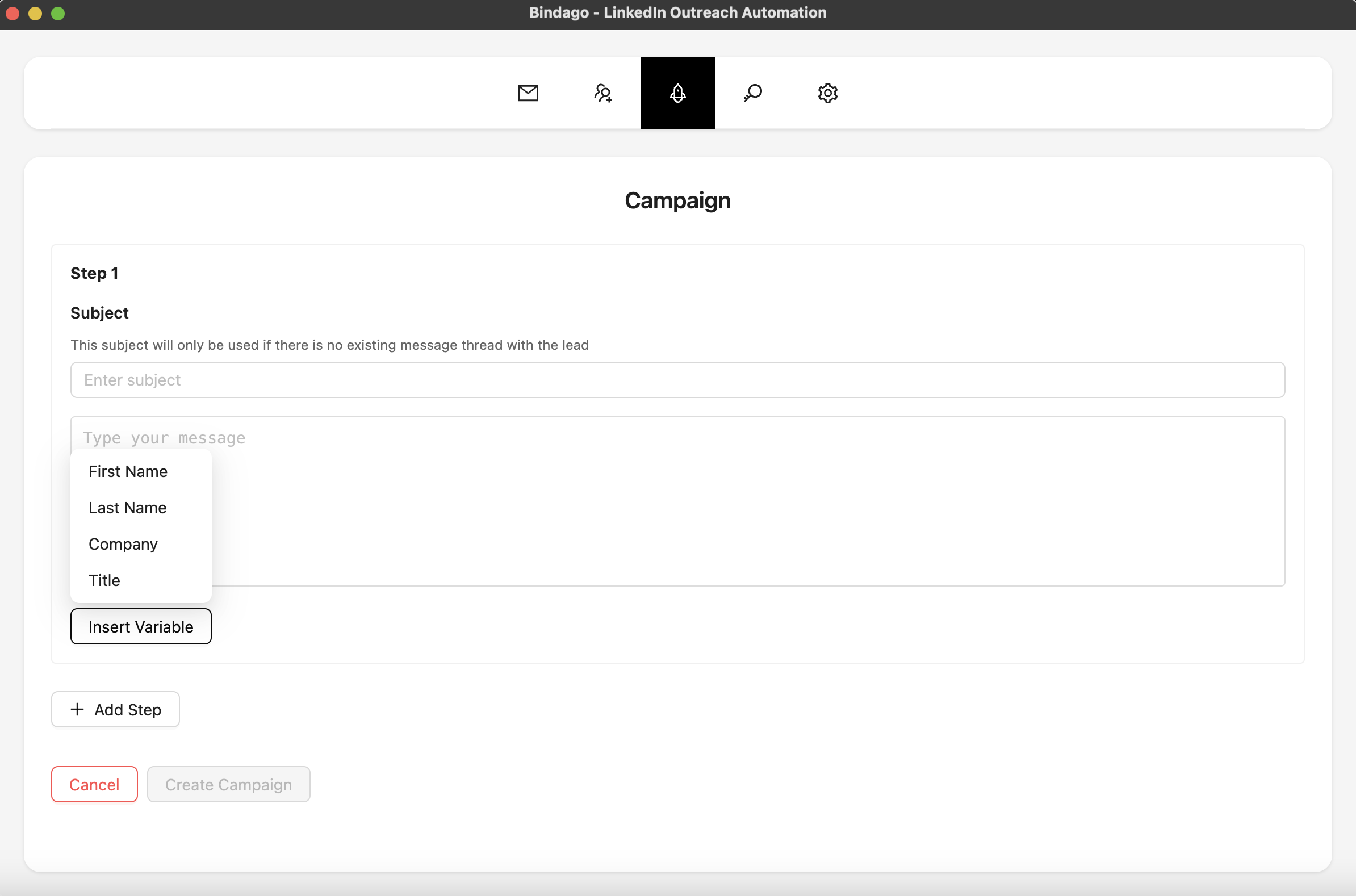
This system ensures every valuable engagement is acted upon, turning your content into a predictable source of warm conversations.
Step 3: Track Everything in Your CRM
When a conversation moves to a meeting, create an opportunity in your CRM and set the "Lead Source" to "LinkedIn Engagement." This is the crucial step that allows you to tie your LinkedIn activity directly to revenue.
4. Building Your Revenue KPI Dashboard
With this system in place, you can now build a simple dashboard (even in a spreadsheet) to track the KPIs that matter to your C-suite or sales leader.
Your weekly dashboard should include:
- Total Post Engagements
- New Connections from Engagers
- Conversations Started
- Meetings Booked (Your #1 Leading Indicator)
- New Pipeline Value Added (from those meetings)
By tracking these metrics weekly, you can demonstrate a clear, data-driven link between your time spent on LinkedIn and the revenue you are generating.
Conclusion: From Socializing to Selling
Stop treating LinkedIn as a social club and start treating it like a strategic revenue channel. By moving beyond vanity metrics and building a system to track the entire engagement-to-revenue funnel, you can prove the ROI of your social selling efforts.
The framework is simple:
- Create content that resonates with your ICP.
- Identify engagement as a buying signal.
- Systematize your outreach to turn engagement into conversations.
- Track the entire process in your CRM to measure revenue KPIs.
Combine this strategy with a secure automation tool like Bindago, and you'll have a powerful, predictable machine for turning LinkedIn engagement into a core driver of your company's growth.
Ready to turn your LinkedIn engagement into a revenue-generating machine? Download Bindago today and start your 10-day free trial.